
I know people thought I was crazy when I picked Colombia of all destinations to vacation this summer. It never occurred to me as somewhere I’d visit, but with it’s rise in popularity this year, and the beautiful pictures from other bloggers, I decided to do some research on it. I’m glad I gave it a shot, because it ended up being ideal for what I was looking for. It had different landscapes and scenery, was easy to travel, had delicious food, grand and bright architecture, and was very, very affordable.
Is it safe?
When one thinks of Colombia, the first thing that probably comes to mind is drugs. So many people expressed concern when they learned I was going to Colombia. I’d read on many blogs that it was a much safer place than what it used to be, but I was still concerned. Were those over-exaggerated reviews? After traveling, I can vouch that Colombia is overall safe. I felt just as safe there as any other country. I definitely felt safer there than Cuba. The Colombian people are helpful, and are not out to try to scam you or gain a buck. I did get offered cocaine once by a street vendor after we did not express interest in his bracelets, but I said no and kept on going. No problem. So, if you are considering going to Colombia and worried about safety, don’t be. I would not be able to enjoy myself if I was constantly worried about my security, and this was one of the best vacations I’ve had.
What kind of money will I need?
I used 80 USD and converted it to Colombian pesos at the airport in Bogota. I probably could’ve used 20-40 more dollars for souvenirs. For anything other than small markets, souvenirs, tips (tips for restaurants are already factored in on the check) , or cab rides, a credit card will work fine. I used my Visa with no problem. As always I kept my currency calculator handy on my phone, but in general 1 USD= 3,000 Colombian pesos.
How is best to get around?
Colombia has Uber, but it is illegal for the drivers there. I had no problems using Uber in Bogota, and rides were super cheap (~$2 USD/ 10 minute ride). Do not be alarmed if the drivers ask you to sit in the front seat. I did this most every time. This is done so they do not look suspicious to police. I used Uber in Cartagena too, but cars were much harder to come by. It seems like they do not have as many drivers. We had to resort to using a regular taxi a couple of times, but the app Cabify helps tremendously. It is set up in the same way as Uber. Thankfully Jeremy’s friend, who was born in Colombia, suggested it. I noticed this app has a problem when trying to connect to an American credit card, so it is easiest to set up payment through PayPal. The costs tend to be the same as Uber.
When traveling from city to city, it is inexpensive to fly. Round trip from Bogota to Cartagena is generally around 50 USD! There’s a few airlines to use to fly domestically. I used both Viva and LATAM. Viva is a little strict on their luggage, and can have hidden fees. For this reason I would suggest LATAM. The price for carry on luggage is included in the ticket, and the seats were nice.
Any other tips?
Yes, first of all, make sure you bring clothing that’s appropriate for whichever city you’re visiting. Bogota was mountainous and cold, with on and off rain (think jeans, layers, umbrella), and Cartagena was murderously hot (wear as little clothing as you can possibly get away with! haha).
Another tip is to either know a good deal of Spanish, or download Google Translate before you go. We had to use Google most of our trip. People who spoke English here were super rare, and usually if they could speak it they knew very little, so just come prepared.
Be prepared to spend a lot of time in restaurants. The slower pace compared to the United States doesn’t equate to poor service, but rather a more laid-back dining experience. It always took a while to get a check, even when asking for it. Just be aware if you want to make a quick stop at a restaurant, that it will actually probably take twice as long as it would in the States.
First Up: Bogota
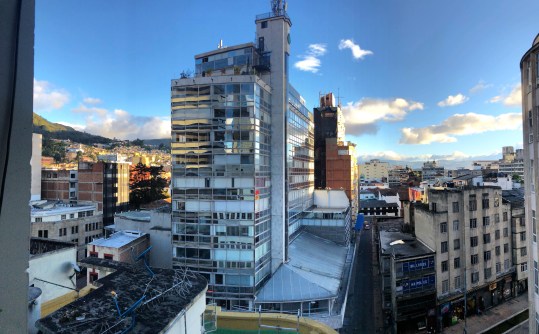
Bogota is the capital and biggest city in Colombia, with a population of ~7 million people. It is a big, spread out city, but it honestly doesn’t feel that way. There are a few neighborhoods one could pick to stay in. Even though La Candelaria has a bad rep, we chose to stay there because its close proximity to everything. There were a few homeless people out on the streets late at night that were sketch. For that reason, if we ever went out at night, we used Uber. Other than that, we had no problems, and enjoyed being in walking distance to everything.
There are a few things one should definitely have on the itinerary when visiting Bogota:
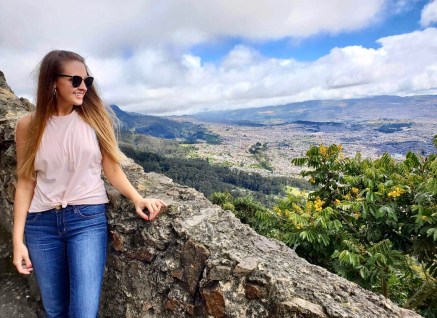
1.) Monserrate Hill– This is a sacred hill that has a church from the 17th century, and a shrine. Pilgrims visit here for religious purposes, but it’s also a famous tourist attraction due to the magnificent all-encompassing views of the city. There are 3 ways to get to the top: funicular, rail, or walking. We took the funicular up, but honestly the rail had a short line, and was a much better trip, as we found out by taking it on the way down. They also have a couple of restaurants, and a nice marketplace at the top.

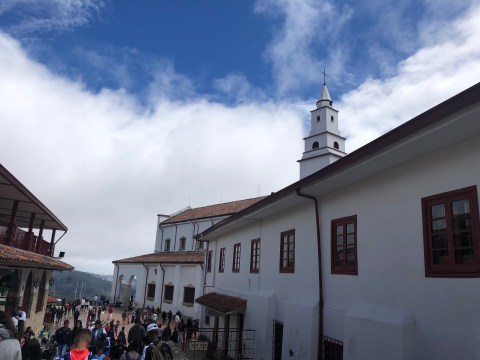

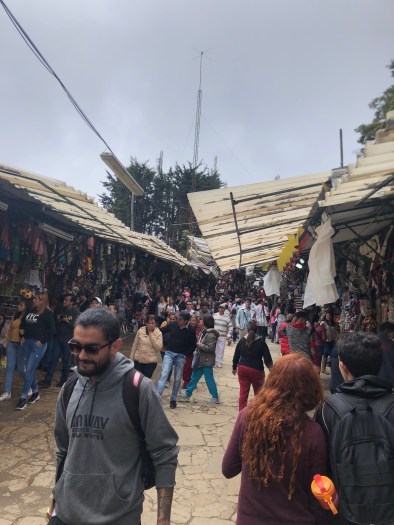
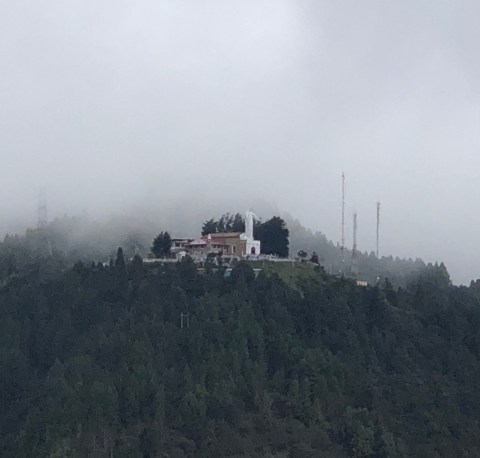
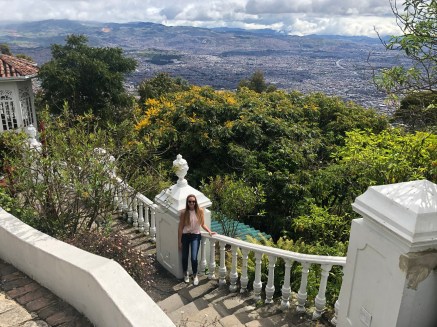
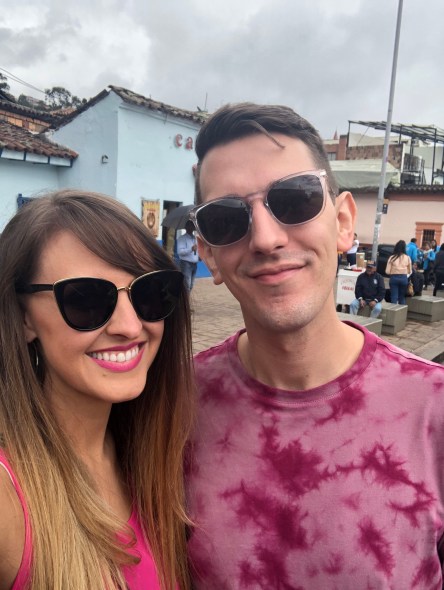
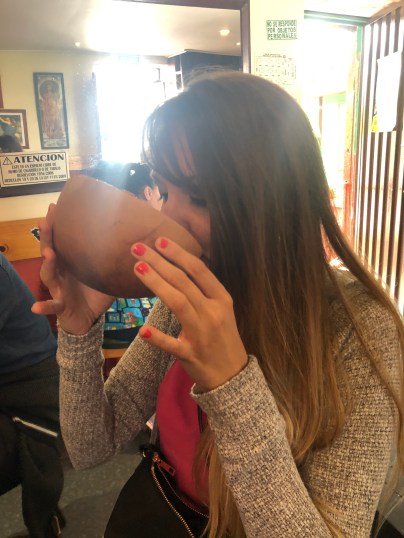
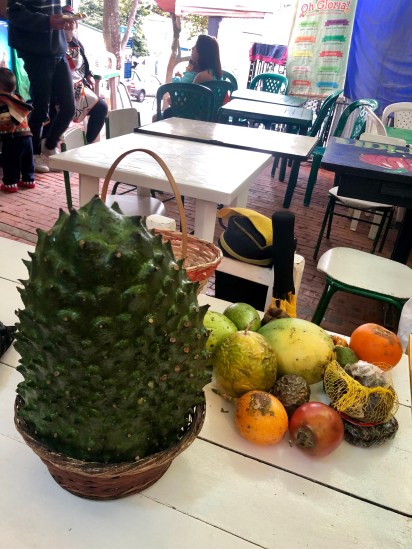
2.) Take a walking tour– We booked a $10/ person tour through Trip Advisor, but you can find them everywhere for incredibly cheap. Our tour was around 3 hours long. Our guide took us through the city to learn the history (as expected on any walking tour), but what I really loved was that we got to try and learn about local foods and drinks. We tried chicha, a local alcoholic drink derived from corn. Next, we went to a market where we learned about Colombia’s unique fruits and got to sample all of them. We finished the trip at a local cafe, where we gained some insight into Colombian coffee and how it is prepared. We gave a tip at the end, as expected, but this was still a really good bang for our buck. Don’t leave Bogota without doing this!
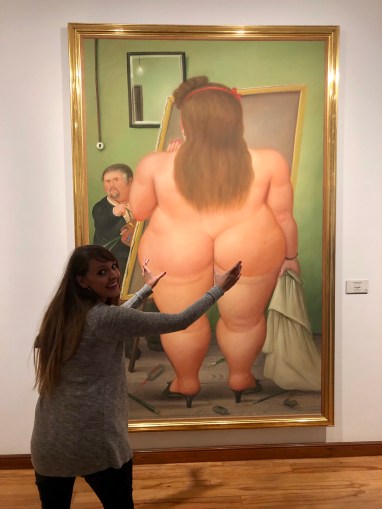
3.) Botero Museum- This is incredible first of all because it’s completely free. The famous painter/ sculptor, Fernando Botero, donated 100 pieces of his work to the museum, and around 85 of his personal collection of other artists’ work on the basis that it would be free to the public. If you are not familiar with Botero’s name, you will surely recognize some of his paintings, as they have a distinct theme: chubby characters. Not in many art museums does one genuinely have a fun time, but with the feelings his art evokes, one can’t help but to enjoy themselves. There’s also a very lovely little courtyard inside that’s nice to check out.

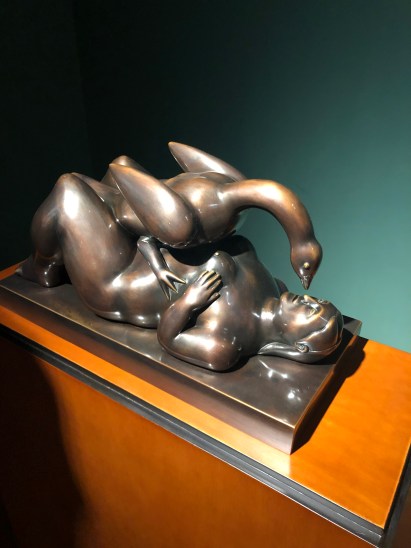
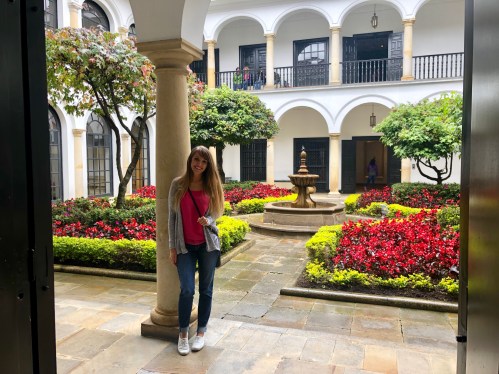
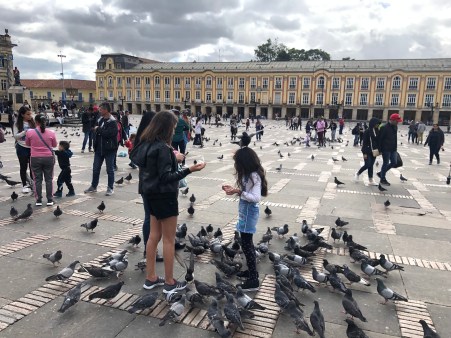
4.) Plaza Bolivar– This is the historic main square of the city that houses the Capitol, Palace of Justice, the mayor’s residence, and the Primary Cathedral of Bogota. Inside the square, you’ll find people feeding pigeons. Tons of street vendors line the streets around the square selling souvenirs, fruits, and handmade goods.
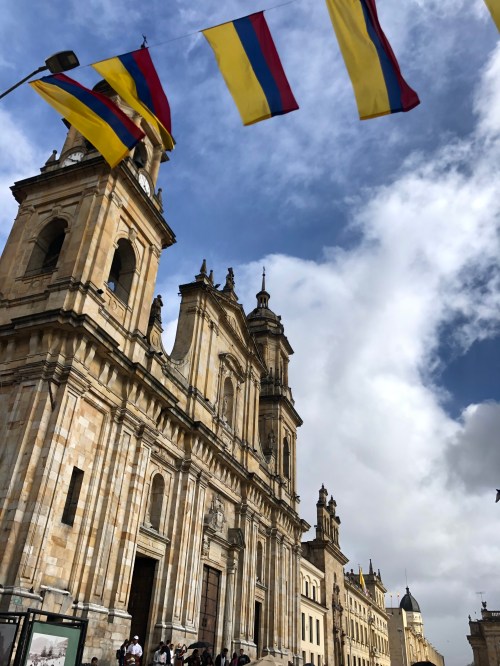
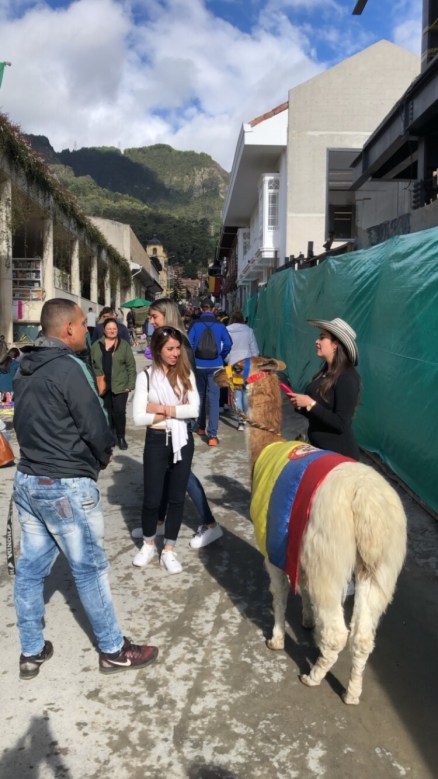
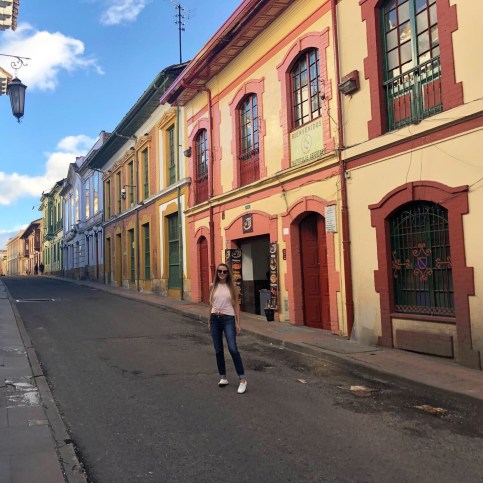
5.) Grab a cup of Colombian hot chocolate at La Puerta Falsa– This tiny old cafe (established over 200 years ago) located near Plaza Bolivar is famous for its hot chocolate. Colombian hot chocolate is different in that it contains a chunk of cheese, which becomes gooey with the heat of the chocolate. Jeremy and I got ours on the go, which was no problem. This place is consistently busy, so unless you want to spend a lot of time there or check out their famous tamales, I’d suggest doing the same.
6.) Andres Carne de Res– 5 story bar, restaurant, and club. We went here for dinner, but the kitchen was already closed, so we had drinks. The menu alone is like a book! I loved the eclectic atmosphere. The dance floor was a happening place, but not too busy. This is rated as one of the top places to visit in Bogota, and I can understand why.

7.) Azahar– This was our favorite place to eat in all of Colombia. Thankfully a lot of people here speak English. The food was amazing and super cheap. We ended up going here a couple times. Other food looked delicious, but we couldn’t pass up another meal here while we had the chance.
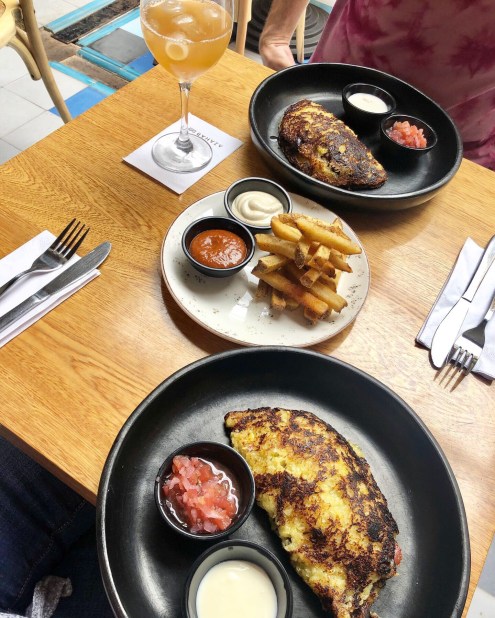
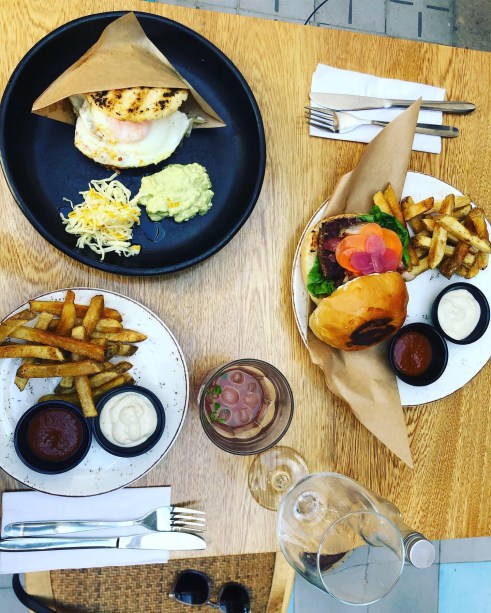
Length of time in Bogota: 2 days. This was ideal for me considering we only had a week in Colombia. We could have stayed for an extra 1/2 day to a day, but I think we would have been bored after this. (If you’re more into city life and shopping, you might want to consider a longer stay.)
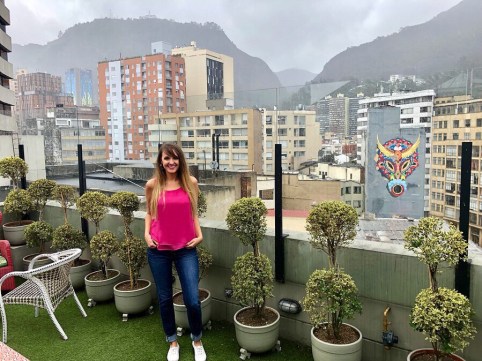
Stay: Hotel Regina- Charming historic hotel with a great location and cute rooftop terrace, very affordable and highly recommended.
Other things to check out, that we didn’t get around to, but heard are worth the time you’ll have in Bogota:
Gold Museum (Museo del Oro)– This place has really high reviews, and is one of the most visited tourist spots in the country. Not only can one learn a lot about gold, but a lot about the history of Colombia.
Cooking Classes– We loved Colombian food (only had one bad meal, and the rest were heavenly!). Bogota is a great place to take a cooking class. Spanish classes are also pretty popular here.
La Fragata Giratorio– 360 degree spinning restaurant in the World Trade Center supposedly offers beautiful views of the city.
Zona Rosa– Upscale part of town with a plethora of shops, restaurant, and nightlife.
Graffiti Tours– After a teen was killed by police in 2011 after trying to tag one of his masterpieces, there was public outcry, and the laws on graffiti were loosened. This incident caused Bogota’s graffiti scene to spring up. It is covered with interesting and beautiful masterpieces. Graffiti tours occur every day and last a couple of hours. Once again, these tours are very cheap.
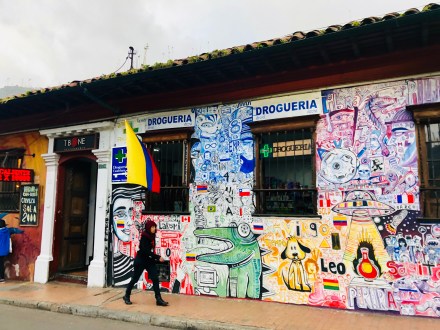


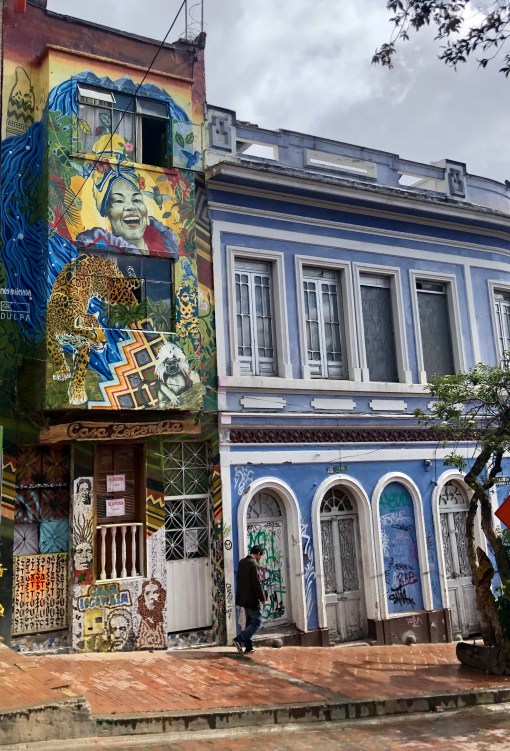
Second Up: Cartagena
I call this the “Charleston of Colombia”. It’s colorful, historic, somewhat touristy, classy, and a beach city. Just be aware that afternoons are pretty much miserable here year-round. The heat is sweltering. For this reason, I suggest getting up early and exploring, taking a break or find somewhere to hang indoors from the hours of 12-4, then get back out and explore some more! Cartagena is definitely a LOT smaller than Bogota, but there are still plenty of places to explore. We spent 4 days here, which seemed like an adequate amount of time, though I could have spent an extra day or two easily. I really loved Cartagena.
While here, definitely stay within the historic walled city. It’s walking distance to pretty much everything. We did Uber to the fort, Getsemani, and to the beach, but it was quick and affordable.
Things to check out in Cartagena (in no particular order):
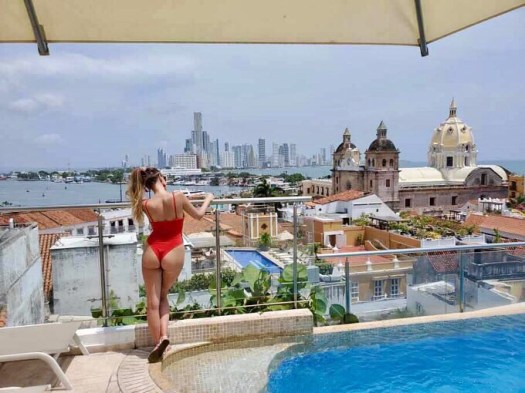
1.) Movich Hotel– The rooftop bar/ pool area offers a 360 degree view view of the city. You can either stay here, get a daily pool pass (from what I understand around $100/person/day), or to visit the rooftop bar to check it out. We went for cocktails, which were just ok, but the gorgeous views of both the historic walled city and the skyscrapers dotting Barranquilla’s coast made it one of my favorite places to visit. I could’ve stayed here all day.

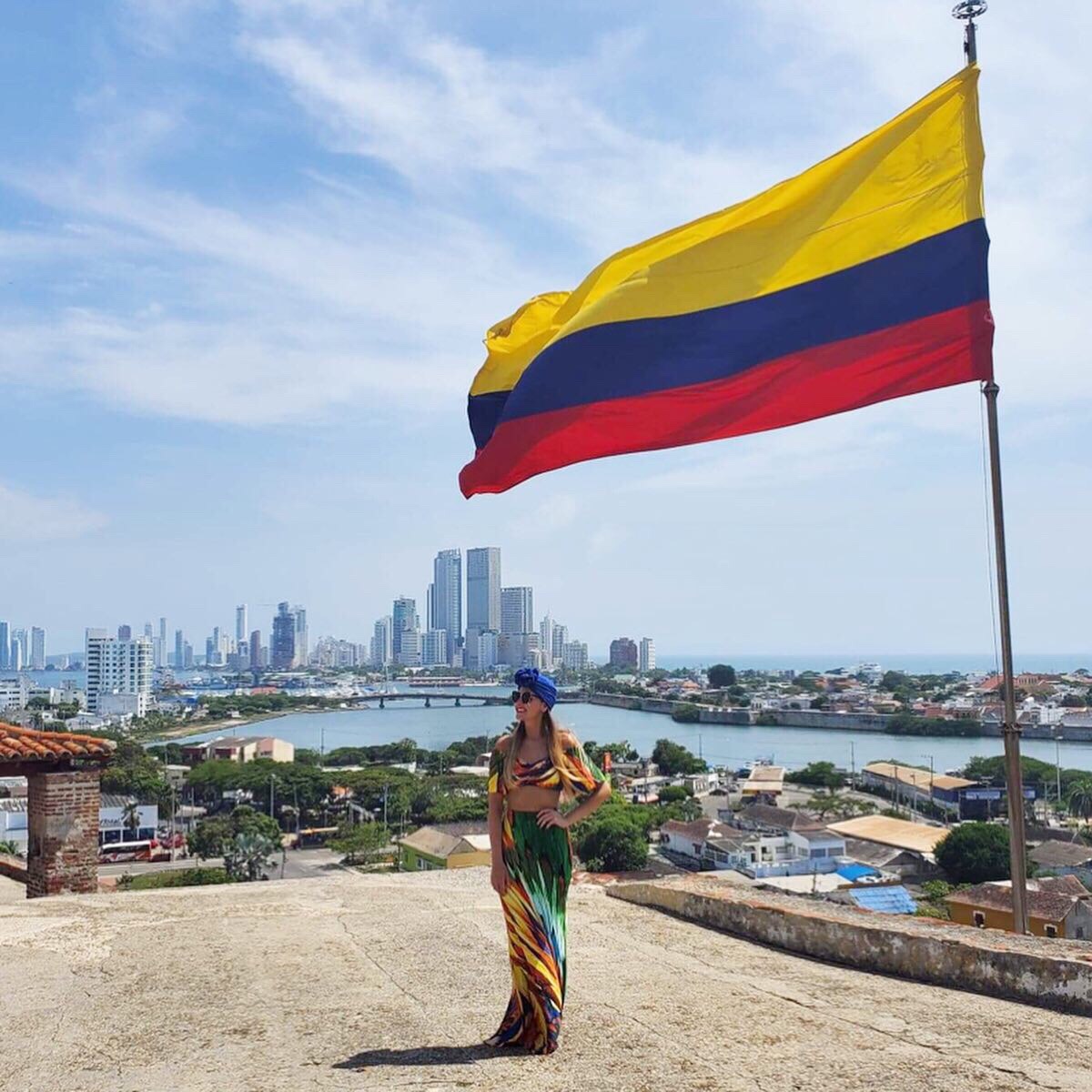
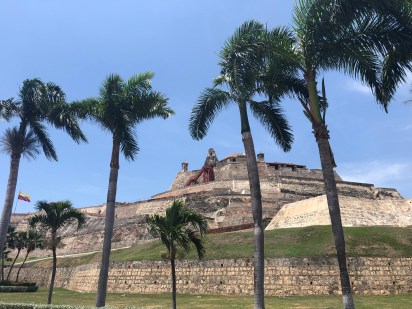
2.) Castillo de San Felipe de Barajas– It was built in 1657 by the Spanish to fend off the English and French, since Cartagena is right on the coast and was very susceptible to invasion. Operating hours are Monday to Sunday, 8 am to 6 pm. Admission is around 25,000 pesos for adults. Another blogger suggested getting an English audio guide. It wasn’t that expensive, but I wouldn’t personally recommend it, as we really did not gain much from it. I would recommend looking up the history before hand to take full appreciation of the fort. If you prefer, a private tour guide is also available at the gate, who can speak multiple languages. The fort is pretty big, and was impressive in that it also has amazing views, a huge Colombian flag (great for photo ops), and a chain of tunnels that were fun to explore. Bring some cash if you might be interested in buying some ice cream or souvenirs as you walk up the ramps of the fort. It is one of the 7 wonders of Colombia, and was a gem to see.

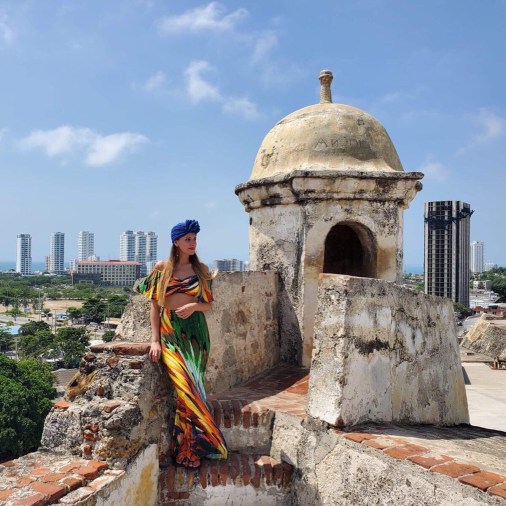
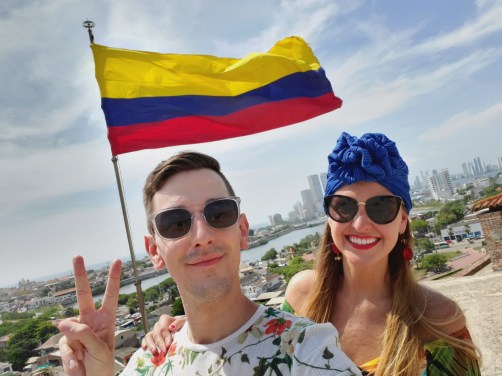
3.) Walk on top of the walls of the old city– Yes, you can actually walk on top of the historic walls that surround the city. While you’re eye-level with the rooftops, you can watch people below on the colonial streets, appreciate the architecture of the colorful buildings, and even find restaurants to grab a bite to eat. I’d definitely recommend this for a romantic stroll at sunset or at night, as you can feel the breeze coming in from the ocean and can find places to sit and peer out to the ocean. All of the walls are very wide, and generally safe to walk on.

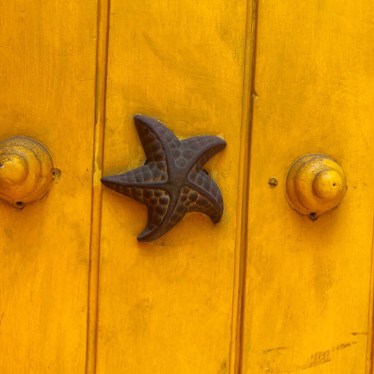
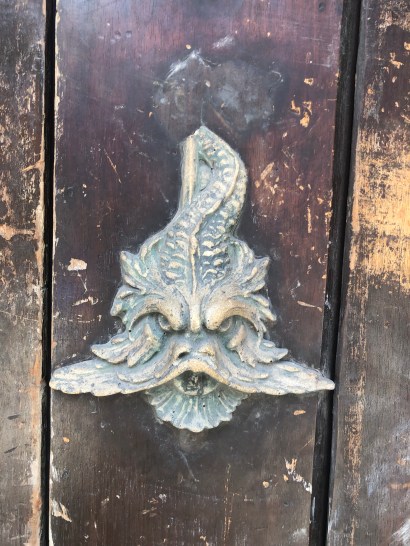
4.) Take note of the Aldabas (Cartagena door knockers)– Originating in medieval times, the size and symbol of the door knocker portrays the profession and wealth of the family inside of the home. (Lions represent military. Lizards represent royalty. Mermaids represent sea merchants.) The larger the aldaba, or greater the number of knobs on the door, the greater the family’s social position.


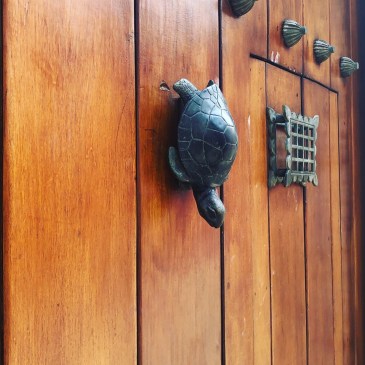
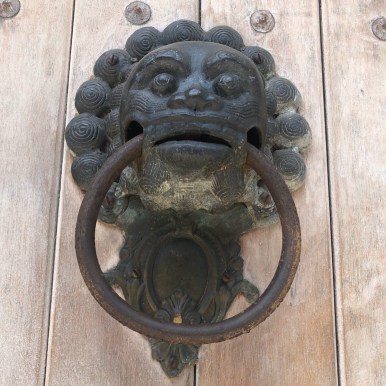
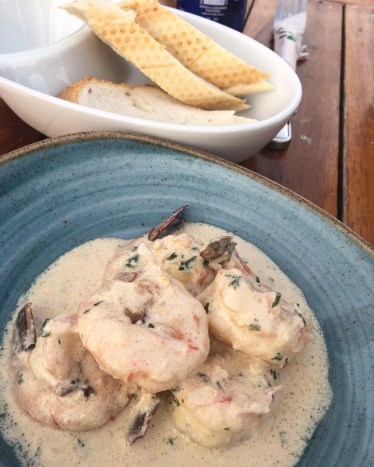
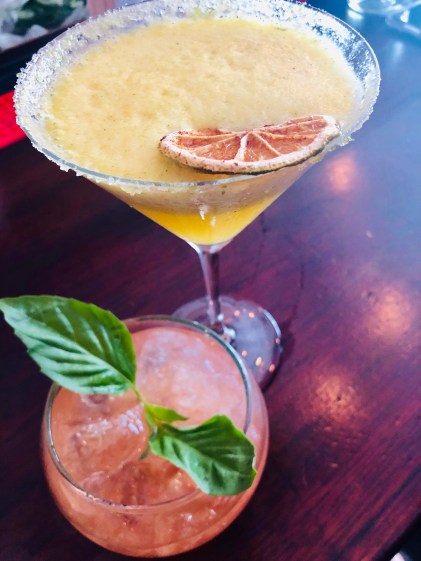
5.) Cafe del Mar– Located on top of the city walls, make sure to catch a sunset here. They have a huge cocktail menu. They had a dj, Colombian flags, and a very happening atmosphere which made for a great time. We ordered the shrimp appetizer which was perfect to hold us over until dinner. This place is a definite stop for drinks in Cartagena. Probably the best cocktail I had all trip.


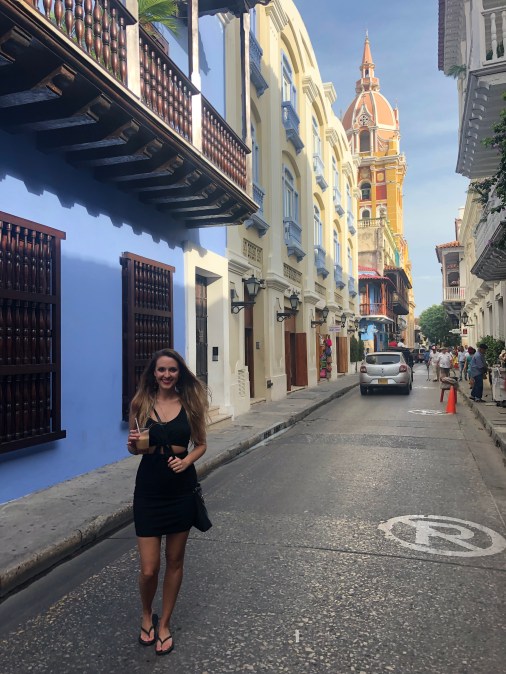
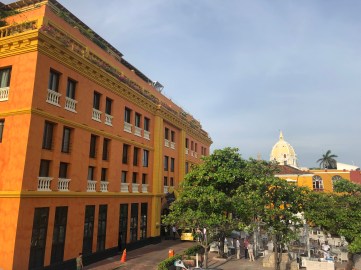
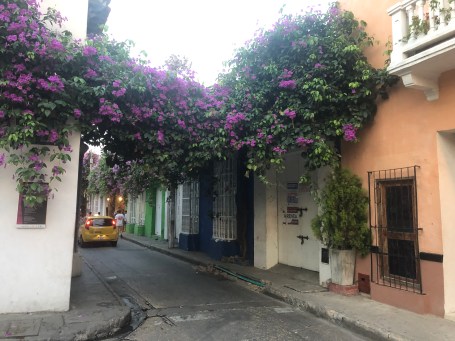
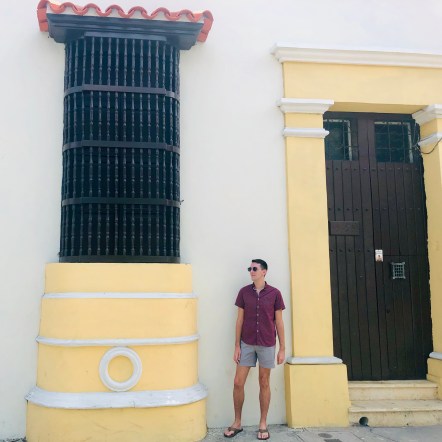
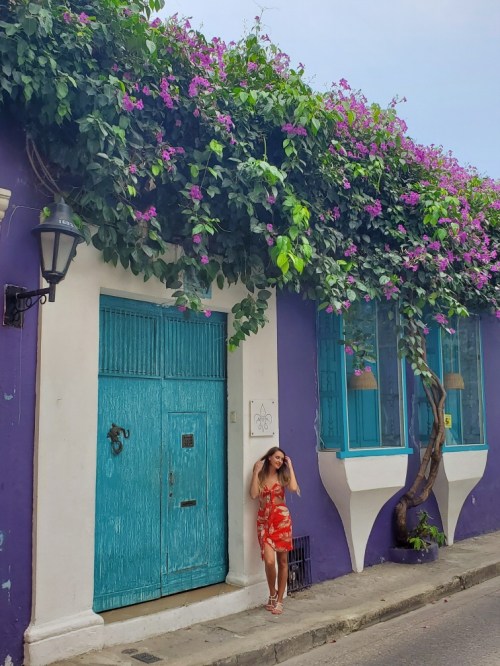
6.) Explore the colorful streets– This is a city that is not scared to use color, and I loved it! Many people take horse-drawn carriage rides here to view all of them, but we had fun just walking around, trying to spot some of the most colorful and prettiest places.

7.) La Cevicheria– Anthony Bourdain made this place famous on his show “No Reservations” when he visited in 2008 and raved about their ceviche. I’d never had ceviche before, but had to try it in the place it’s supposedly the best. Even though it’s a very popular spot, we ended up waiting only around 15 minutes for a table. We had the Colombian ceviche which had shrimp, fish, plantains, lime and lemon juice, cinnamon, sugar, and Kola Roman (Colombian drink that is so good). Each of our entrees were huge (If you’re not dying of hunger, splitting a plate will probably suffice). This place was SOOO good and lives up to the hype. I could’ve eaten here every night.


8.) Puerta del Reloj– Old clock tower that was the original entrance to the fortified city. The square here is a very lively. Across from the street from the clock tower is El Portal de los Dulces (portal of sweets), which is basically a row of vendors offering Colombian candy and desserts.
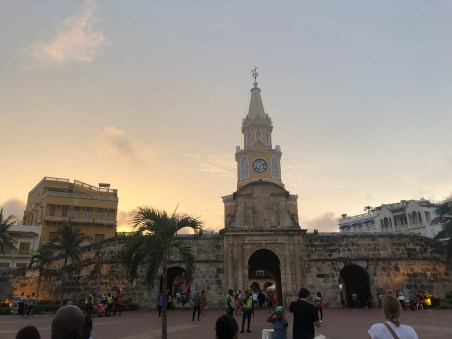

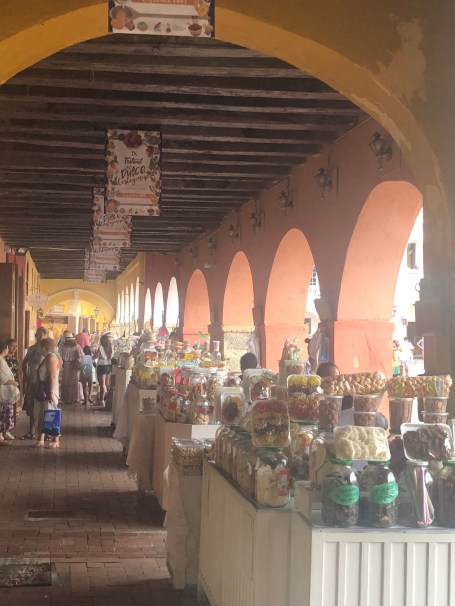
9.) Getsemani– This is the artsy/ hispter neighborhood that is located right outside of the walled city of Cartagena. You could walk here from the clock tower easily. I loved all of the art/graffiti, colorful walls, and the streets decorated with umbrellas, flags, etc. It’s a cool little place to stop by. You can take a tour here that lasts around 2 hours of the graffiti, but we opted just to go check it out ourselves. Before exploring the neighborhood, we stopped at El Arsenal: The Rum Box for some alcoholic beverages, and some amazing appetizers (Get the carimañolas de queso & thank me later.) When you go in, they offer you a free rum and chocolate tasting. When you leave, they give you free hugs! Enter happy, leave happy.

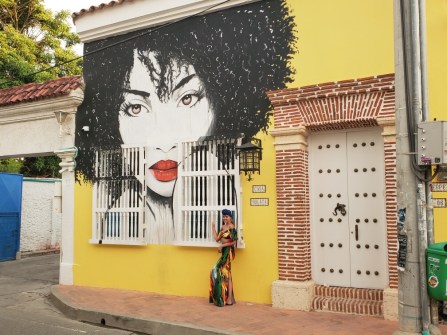
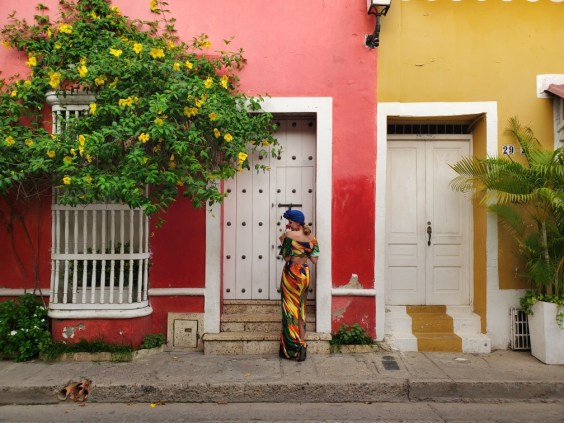
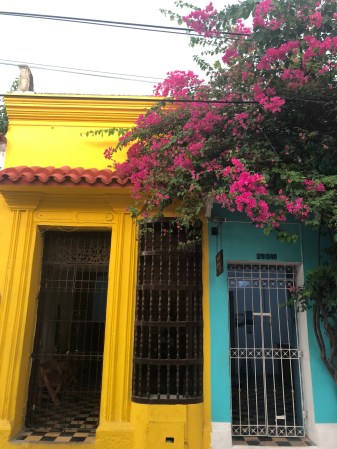
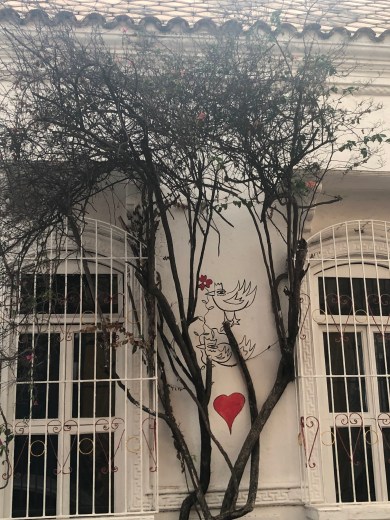
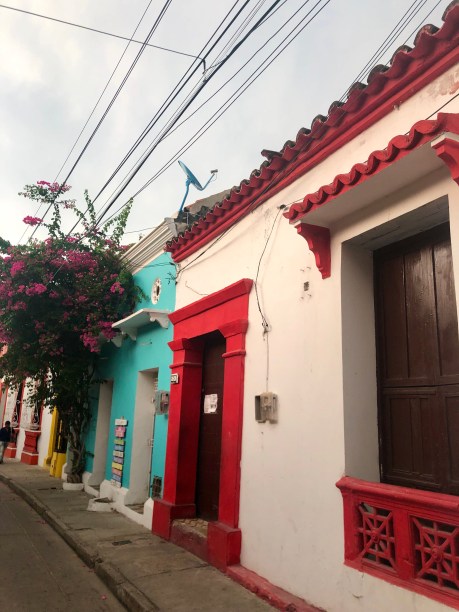

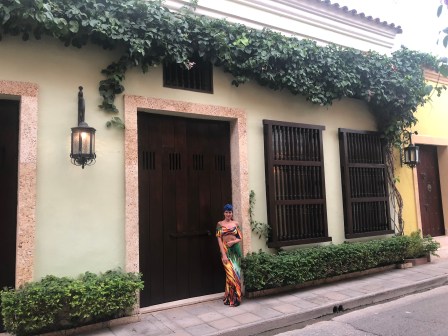

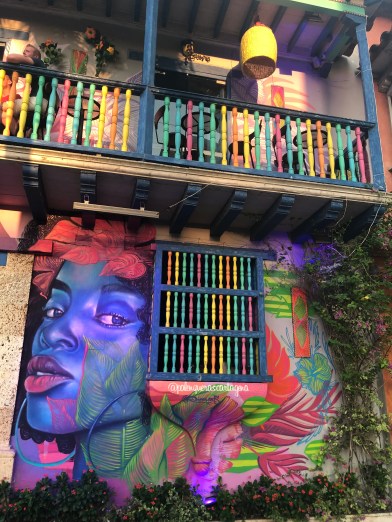
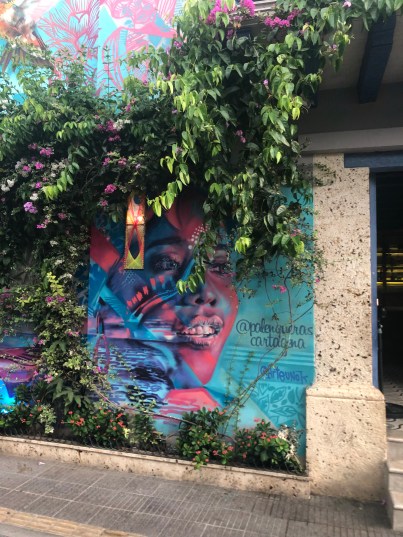

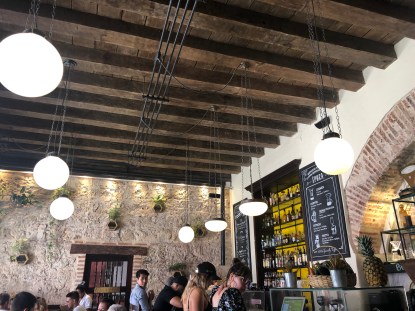
10.) Abaco Libros y Cafe– Book store and cafe that is a popular stop among tourists and locals alike. Take a break here and get a frozen coffee. So very good.

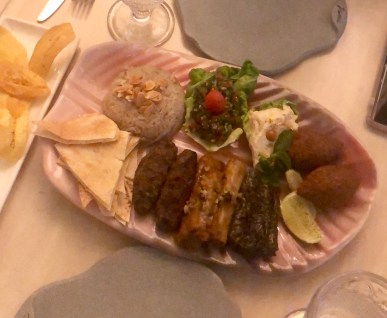
11.) Zaitun– Lebanese/ Mediterranean fusion restaurant that has a very cool vibe, and AMAZING food. We split the mixed plate, and everything was delicious. Yet another restaurant I would visit again if I could. They had great live music, too. If you’re looking for a good shopping experience, post-meal take a stroll along this street and you’ll find plenty of nice boutiques.
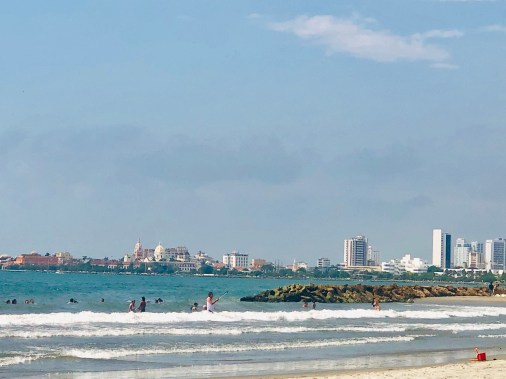
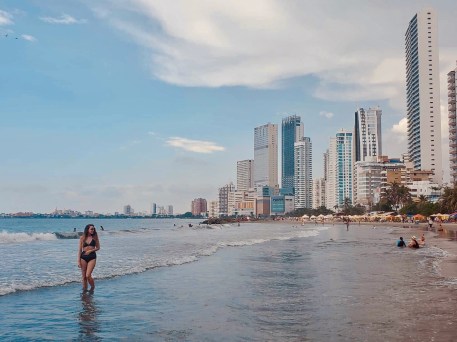
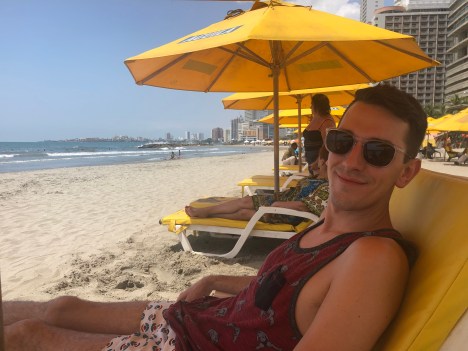
12.) Take a Beach Trip– I hear trips boat trips to nearby islands are the way to really get a wonderful beach experience, but since we only had half a day and didn’t want to spend a lot of money (boat trips range from $40-125 depending on where you’re going), we opted for Playa de Bocagrande, which was just a few minutes ride by Uber from the walled city. It’s a nice beach, but the vendors are EVERYWHERE and come up to you as you’re laying on the beach. Do yourself a favor and avoid eye contact. We said “no gracias” from our beach chairs more times on the beach than we probably did the whole trip. It’s probably the most annoying beach experience you’ll have, but the beach is still the beach. It was nice to put our toes in the sand, get a little sun, and play around in the pretty waters with the historic city in the background. There was a nice mall here, too. The food court was a good place to sample different Colombian food.

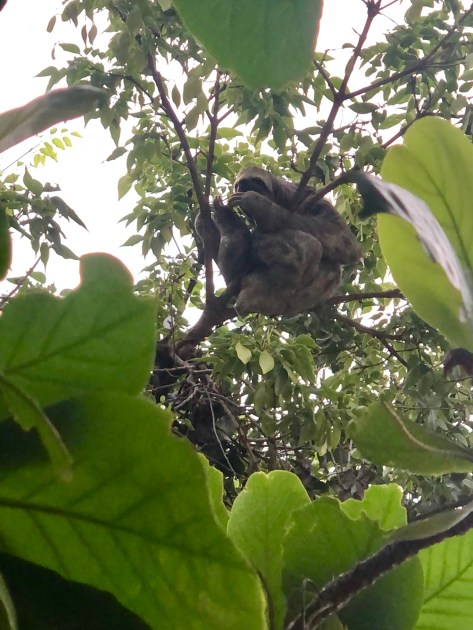
13.) See sloths!– Right outside the walled city from the clock tower is Parque del Centenario. From the outside, it’s a regular, small park that honestly doesn’t look like a whole lot, but the sloths that naturally inhabit this park make it so unique. You can find them hanging in trees by checking around yourself, finding one of the tour groups that come through here and eavesdropping (we tried this first.. haha), or by asking/ walking around until you find one of the people who maintain the park and they will point them out to you for a small tip. I’ve seen sloths before in Costa Rica, but this was different as you were SO CLOSE! Literally you could get inches away from them, and have a very personalized experience. We also saw monkeys and iguanas! There’s a nice little market with souvenirs, leather goods, and clothing you can check out here too.

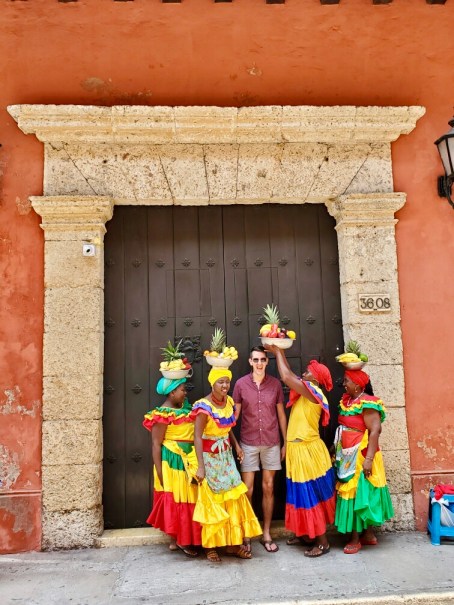
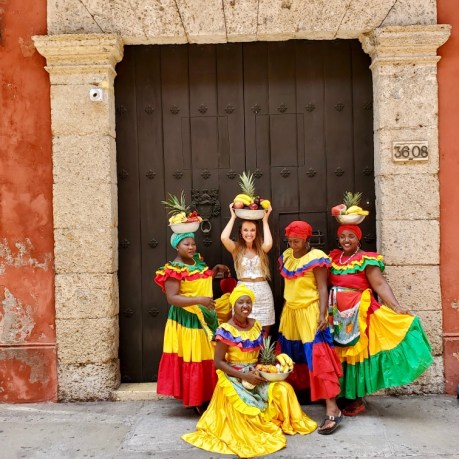
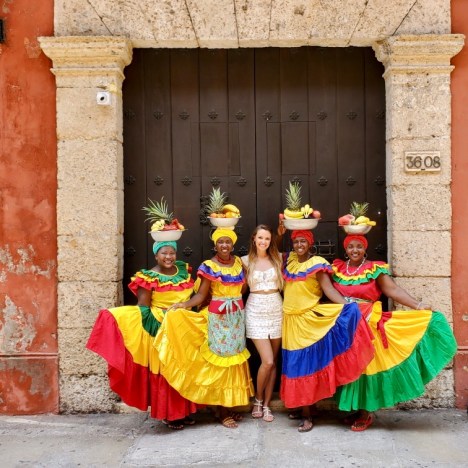
14.) Take pictures with Palenqueras (fruit ladies)– These ladies are dressed in vibrant dresses and balance bowls of fruit on their head. They are always friendly, and enjoy taking pictures with you (they have their poses down!), and you only need to tip. I feel like 5 pesos/ person makes them more than happy. They are usually always outside of Abacos y Libros, but you can also find them at different locations throughout the city. They’re basically Colombian cultural icons, so have fun and get a picture with them!


15.) EAT– I’d go back to Colombia just to eat again. Some other restaurants that were my favorite in Cartagena were Epoca (great for breakfast and coffee), Quero Arepas (cheap arepa restaurant that’s popular with the locals), El Corral (fast food restaurant whose hot dogs were OUT OF THIS WORLD), Alma (Most expensive meal we had in Colombia, but that mouthwatering, life-changing kind of good. The live jazz band and classy atmosphere made it even better.)
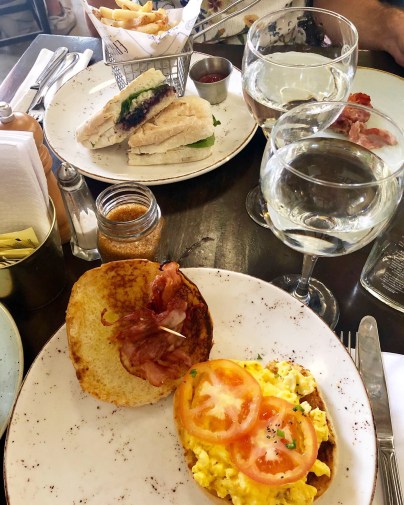
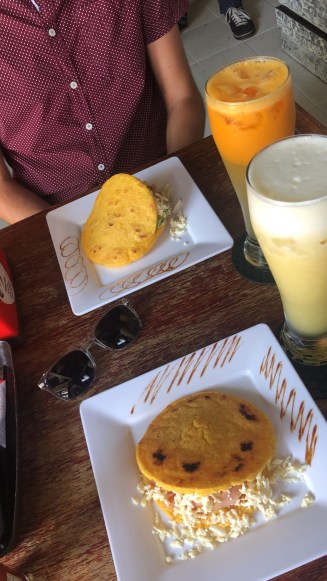
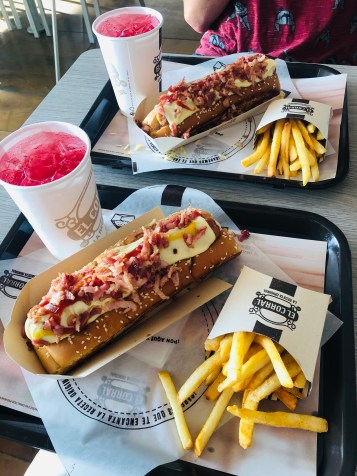

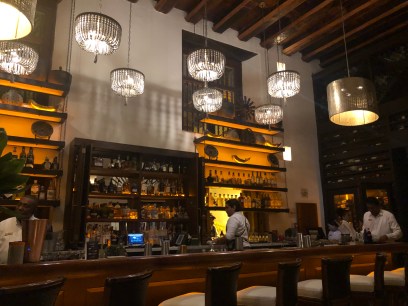

Other things to check out, that we didn’t get around to, but heard are worth the time you’ll have in Cartagena:
Conveto La Popa– A monastery with splendid gardens that is the highest point in Cartagena, and has panoramic views.
La Paletteria– Famous ice pops with a plethora of interesting and tasty flavors.
Palace of the Inquisition– See the fort that was the torture headquarters of the Spanish Inquisition.
I adored Colombia, and like I said, this was one of the best trips I’ve had. My best friend and I always have a great time together, and he contributes a lot to that! I’m thankful I can look back in life, and say I have shared so many wonderful moments with him in so many incredible places. I hope all of you on the fence about Colombia find comfort in this blog that it is a safe and beautiful place to visit. Happy travels, friends!


Love it! The ceviche looks divine and that pic of you pinching those ass cheeks on the painting 😂😂 too funny. Id love to see it too and go eat. #Leggo haha
LikeLike