
The time of Corona is hard when you’re a travel addict.
We’ve been locked in our homes for months, avoiding contact, unable to explore the world freely as our hearts desire… Personally, it’s been one of the hardest aspects of this whole pandemic thing for me.
It took some brainstorming on how to travel safely during this time. Unable to cancel my summer vacation, I had 10 days off, and was itching to go do anything at all.
The Idea
How could we travel safely, avoiding as many people as possible, and have a clean environment to be in?
Planes and trains were definitely out of the picture (too many people in a contained setting). So, perhaps a car would be safe? Maybe. But then we would have to stop to use the bathroom and shower, and would have to jump from motel to motel (too much exposure in too many different places). Even if we got a motel, how would we be able to have food without constantly eating out or going to restaurants? What if we could just travel with everything at our fingertips? What about an RV? After all, it would have everything we need: transportation, a bed, a shower, a toilet, a fridge, and a stove. And if we disinfected it really well, we would have no worries and no outside contamination.
Usually I try to escape to a foreign locale during my summer vacation, but many countries aren’t allowing US residents in. I’ve done some traveling in the US, but still lack seeing quite a few places. An RV trip would allow us to comfortably see multiple states without much planning. Scott and I both enjoy the outdoors, and this seemed like the perfect time to explore national parks. The traditional bars, restaurants, museums, and other tourist attractions I usually have on my travel itineraries just didn’t seem like safe options this time around. This was a trip that was going to be different, and allowed me to explore in a new way. I was ready.
Renting an RV for the First Time
After a little bit of research, I found that you can rent an RV. There are two main platforms to do this in the US: RVShare and Outdoorsy. On both platforms, private owners rent their RVs, much like AirBNB home owners will rent out their homes for a few days.
When browsing RVs, I took a few important things into account:
1.) Miles- Since our trip was a long one (over 1,000 miles), owners that would charge per mile after 150 miles/ day wasn’t going to cut it. Thankfully we found one with unlimited miles, though it was a couple hours out of our way. This was definitely worth it. It was overall cheaper, and made traveling less stressful and restrictive. Who wants to be worried about miles when they’re on vacation, and want full range to explore??
2.) Size- As first time RVers, we were a little nervous about attempting to drive a big motorhome. We opted for a class C RV. It was 24 ft long, which is basically only 10 ft longer than my personal SUV. Thankfully it was pretty simple to drive and wasn’t a hassle to park. It was the perfect size and housed all the amenities we needed!
3.) Condition- Obviously we didn’t want something was old and ran a high risk of breaking down on such a long road trip. And, as first time RVers, we wanted a dependable vehicle that had somewhat modern features that would be easy to work.
4.) Generator Hours- This actually wasn’t as important as I originally thought. Thankfully, the temperature was mild enough at night that we didn’t need to run the fan or the heat. It seems as if most listings will cover for 4 to 5 hours/ night, then charge $4/hour if you use extra. We were actually under our allowed generator hours without even attempting, though if you’re traveling somewhere you would want AC or would be using a lot of power, this might be an important aspect in your RV rental decision making process.
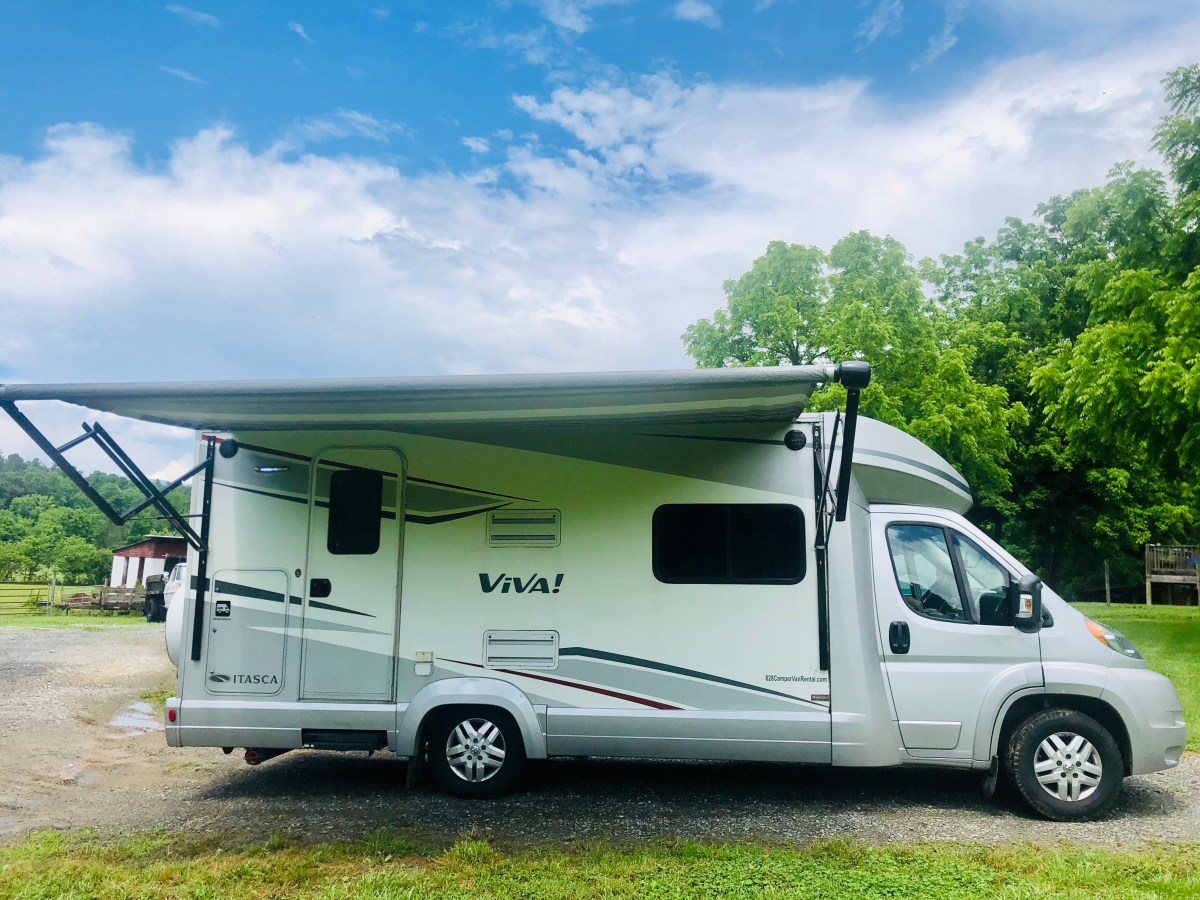
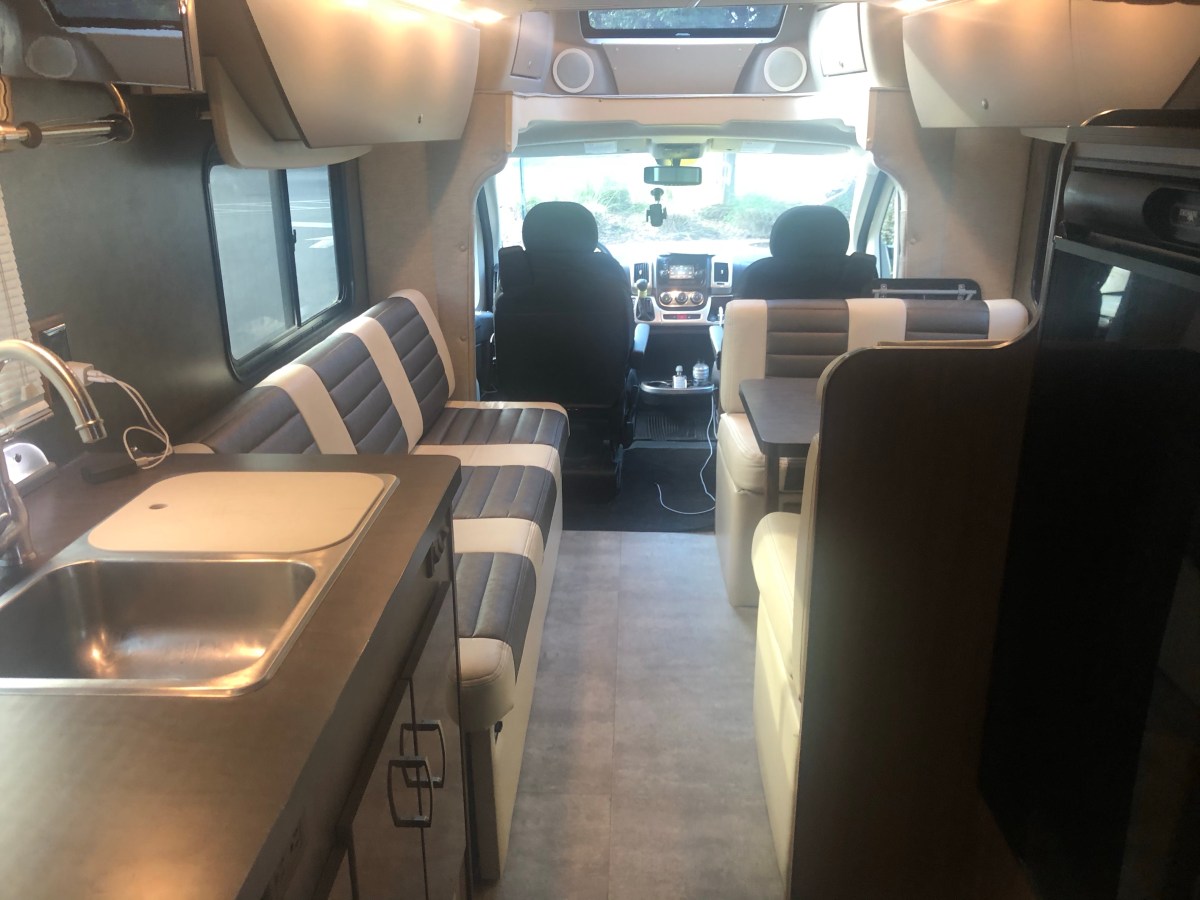
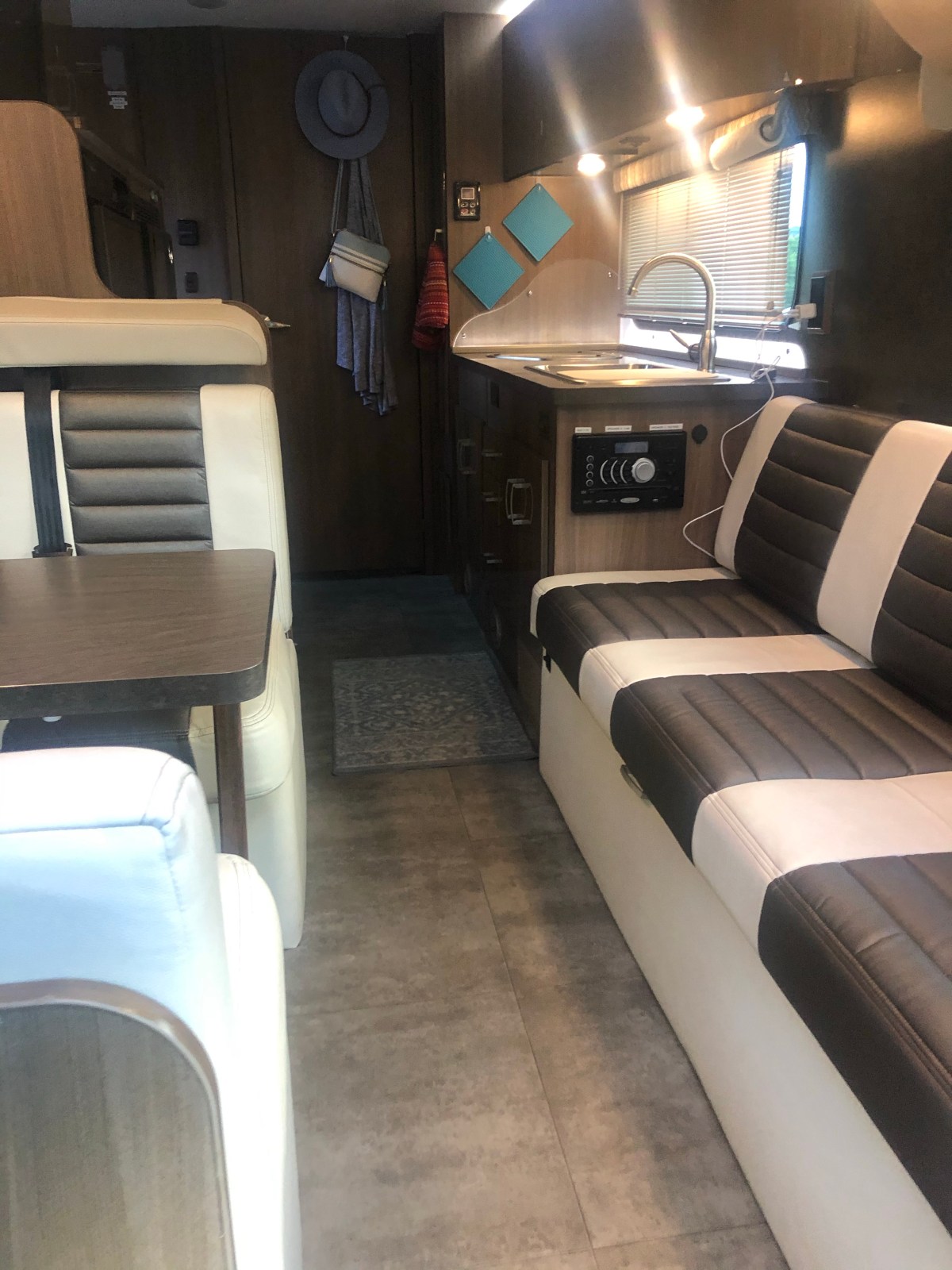
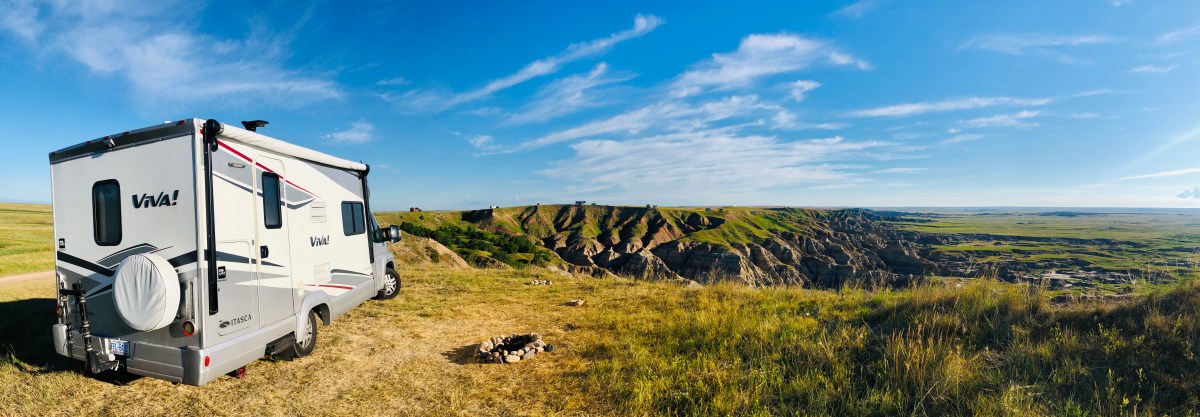
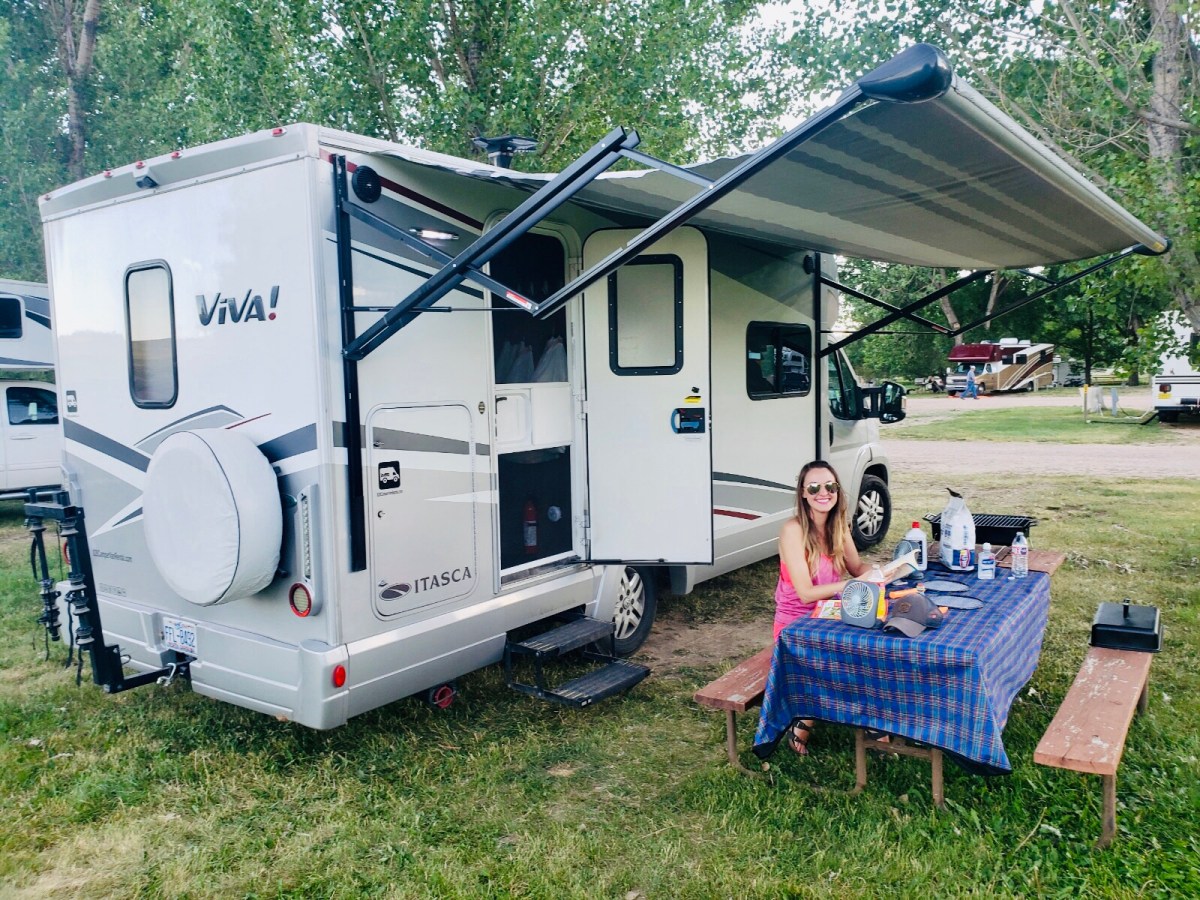
We ended up renting a 2015 Itasca Viva. It had a bed that pulled down from the ceiling that could easily be put up when not in use. The cushions from the sofa also rolled out to create a bed, which we used for napping while en route. I love this little RV.
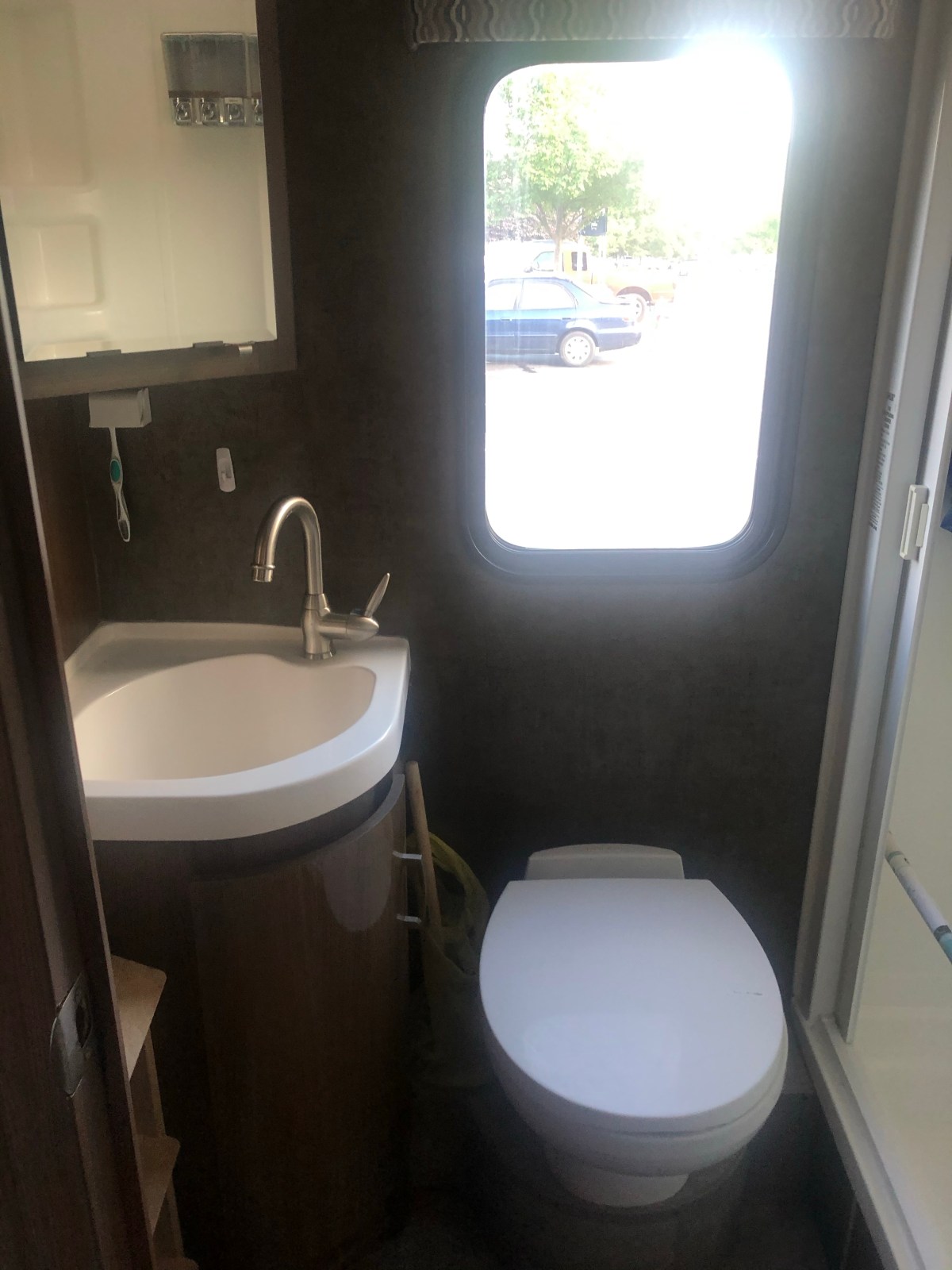
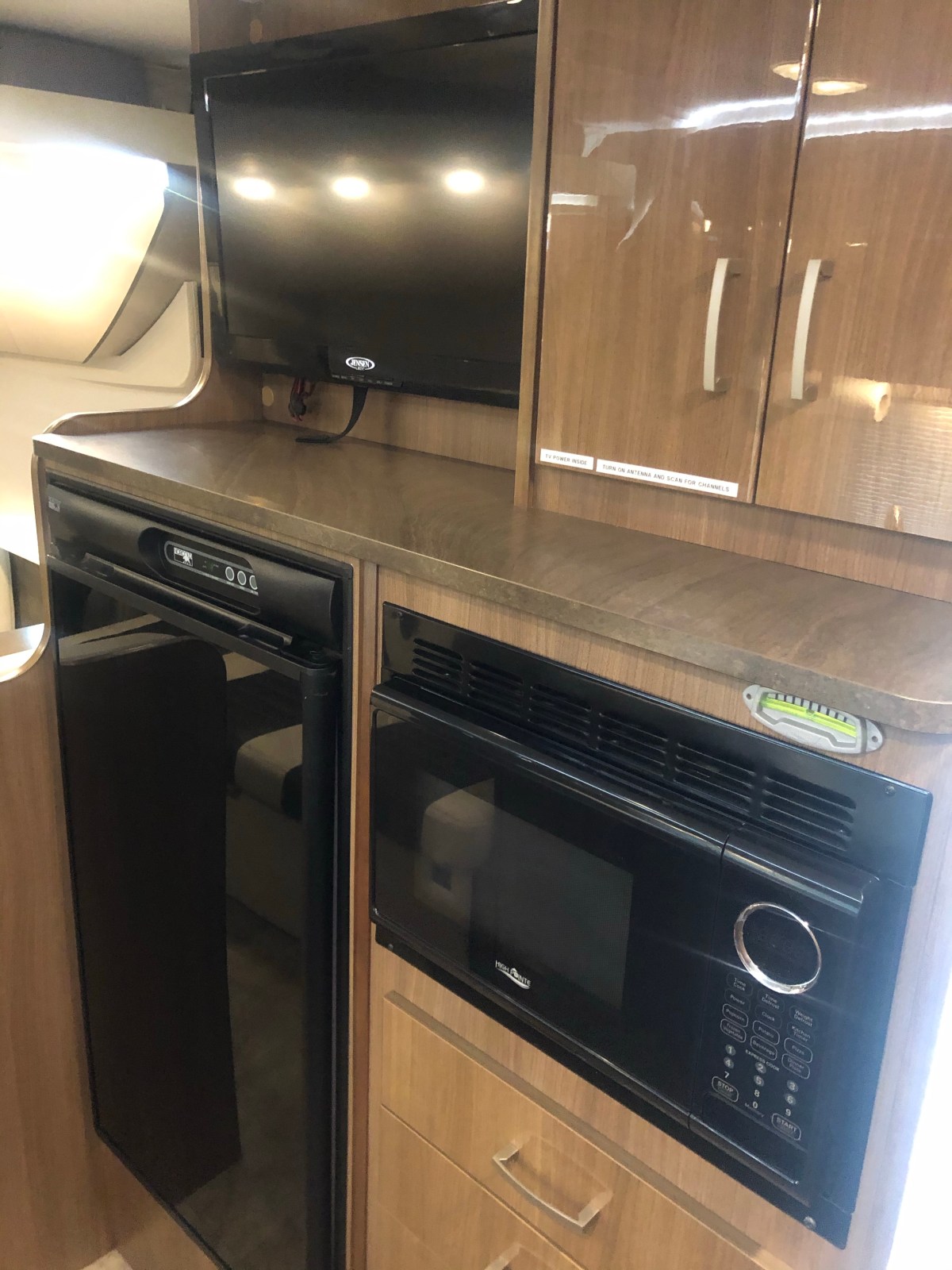
Before you embark on any RV journey, make sure you understand the insurance/ road side assistance portion of the agreement. We encountered a few road bumps, and it would have paid off in the long run if I had added RV on top of personal vehicle coverage on my AAA card. Also, have all of your RV’s specs (height, length, towing capacity) handy if needed.
When renting the RV, the owner gave us a tutorial on how to use it. This was of great help, but I’m glad we researched this a bit beforehand. Scott watched some YouTube videos on our RV, and gained some understanding at the whole tank filling/dumping process before we left. This put me at ease that we weren’t going to get stuck without a clue as to what we were doing. He handled the whole thing like a champ, and took care of all the filling/dumping (what a catch!).
Because RV sales/ rentals have went up so much during this time, many campgrounds were said to be full. This made me a little nervous, but I actually got so busy before our trip, that I didn’t even have time to look at any we would want to use in case of emergency on our trip. I’m so glad I didn’t. We booked absolutely no campgrounds beforehand.
“Boondocking” is basically camping in an RV in the wilderness/ without hookups. This was surprisingly easier to do than we had anticipated. The major tip here is to fill up the water tank each time before attempting to go out in the wilderness. If need be, you can always dump gray/ black waste there if acceptable, or pay a small fee (usually $10) at campgrounds that allow you to use their dump sites later on down the road, as these tanks took longer than a day to become full.
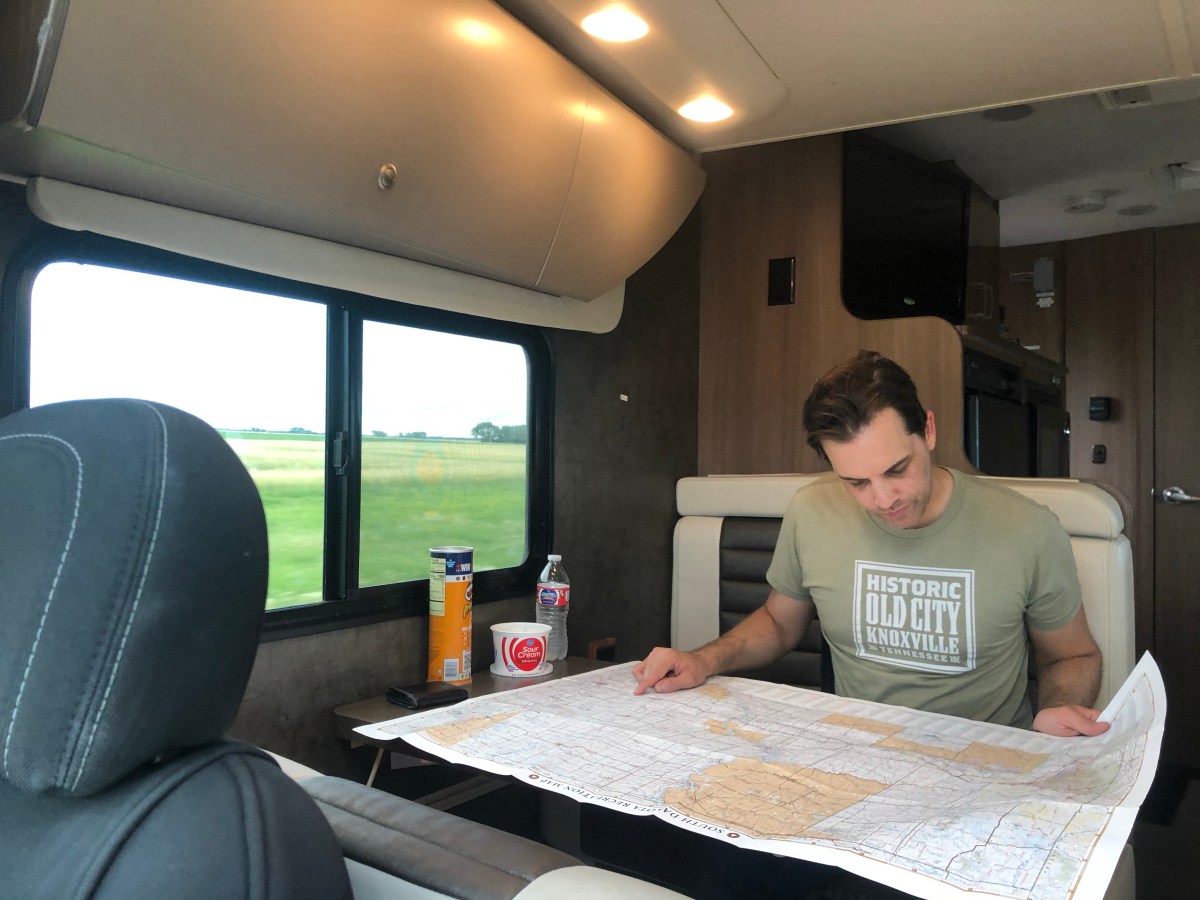
Scott using a map to scout out camping locations.
The RVShare website offers a handy list of locations by site that offer water and dumping for a small portion of the camping fee. We found at certain rest areas and gas stations, water can also be found. If you’re opting for free, gas stations will be your best bet. You just have to find one that has a potable water hookup.
For us, this trip was an adventure and we wanted to get out in nature as much as possible, and to socially distance to the greatest of our ability. Campgrounds were basically pointless for us, other than for times when we didn’t feel like scouting an area to boondock in. It can be nice once in a while to plug everything in, and not have to worry about running the water, cooking, etc.
And because this trip was during the time of Corona, we wanted to make sure we were well stocked to avoid trips to the grocery store or other places to pick up things we needed. Because you’re basically packing for a small house to live in for a week, it requires a bit more preparation than a normal trip. I made sure we had plenty of cleaning supplies, Scott got us a ton of groceries, and we also made sure we had everything that would make the trip easier/ more enjoyable (fans, camping chairs, portable grill, utensils, bathroom supplies, plenty of blankets, etc). I found some nice camping necessities lists online that I used. Someone suggested buying a lot of the necessaries at the Dollar Tree, which was a GREAT tip, because you can get so many useful things there for cheap.
Pay attention to your RV’s wheels, and make sure they are appropriate for the kind of camping you’ll be doing. We got stuck in a grassy field while boondocking, and had to be towed. Our RV wasn’t exactly built like a truck, and wasn’t appropriately equipped for this, as we found out.
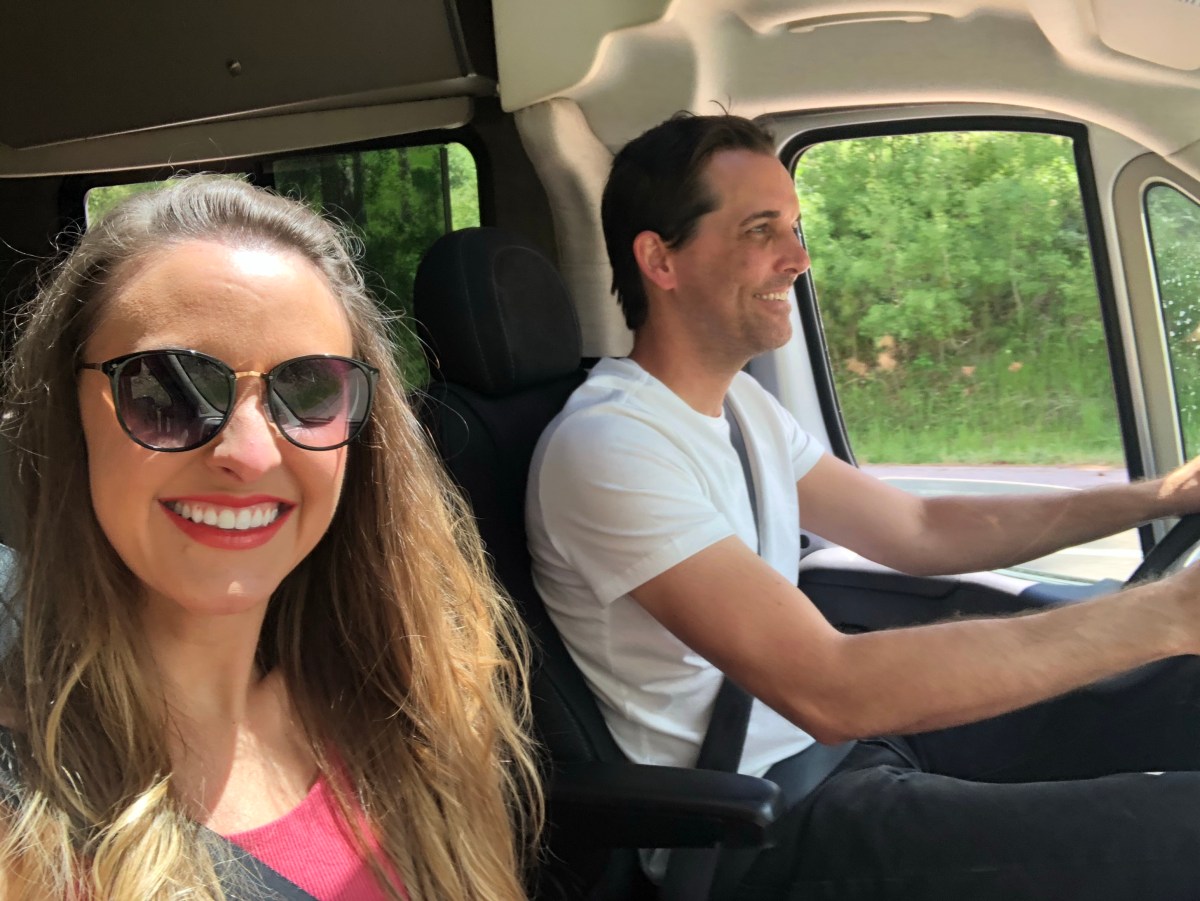
Also realize that your drive time will not be the most accurate when driving in an RV. You really shouldn’t drive over 65 mph if you want to drive safely. For this reason, it will take a bit longer to get from place to place, so just take this into account.
The Destination
After considering various parts of the country, we decided North Dakota and South Dakota would be ideal destinations for our trip. They are some of the least populous states, the weather is much milder in late June compared to the hot Southwest, which we also considered, and thought might be much more miserable to camp in. Neither of us had visited these states (Scott had briefly passed through on a Greyhound in the middle of the night, but that doesn’t count). And lastly, though there are some beautiful landscapes, it’s not somewhere most people automatically think of for vacation, so we hoped they would be less touristy and crowded.
We took the shortest route from NC (where we got our RV) to Sioux Falls, SD, west to Wall, Badlands National Park, Mt. Rushmore, Crazy Horse, Black Hills National Forest, Deadwood, Spearfish Canyon, west to Devil’s Tower, Wyoming, north into Montana, west again into North Dakota to Teddy Roosevelt National Park, then made our way back south to the Badlands for a final epic night to round out our trip.
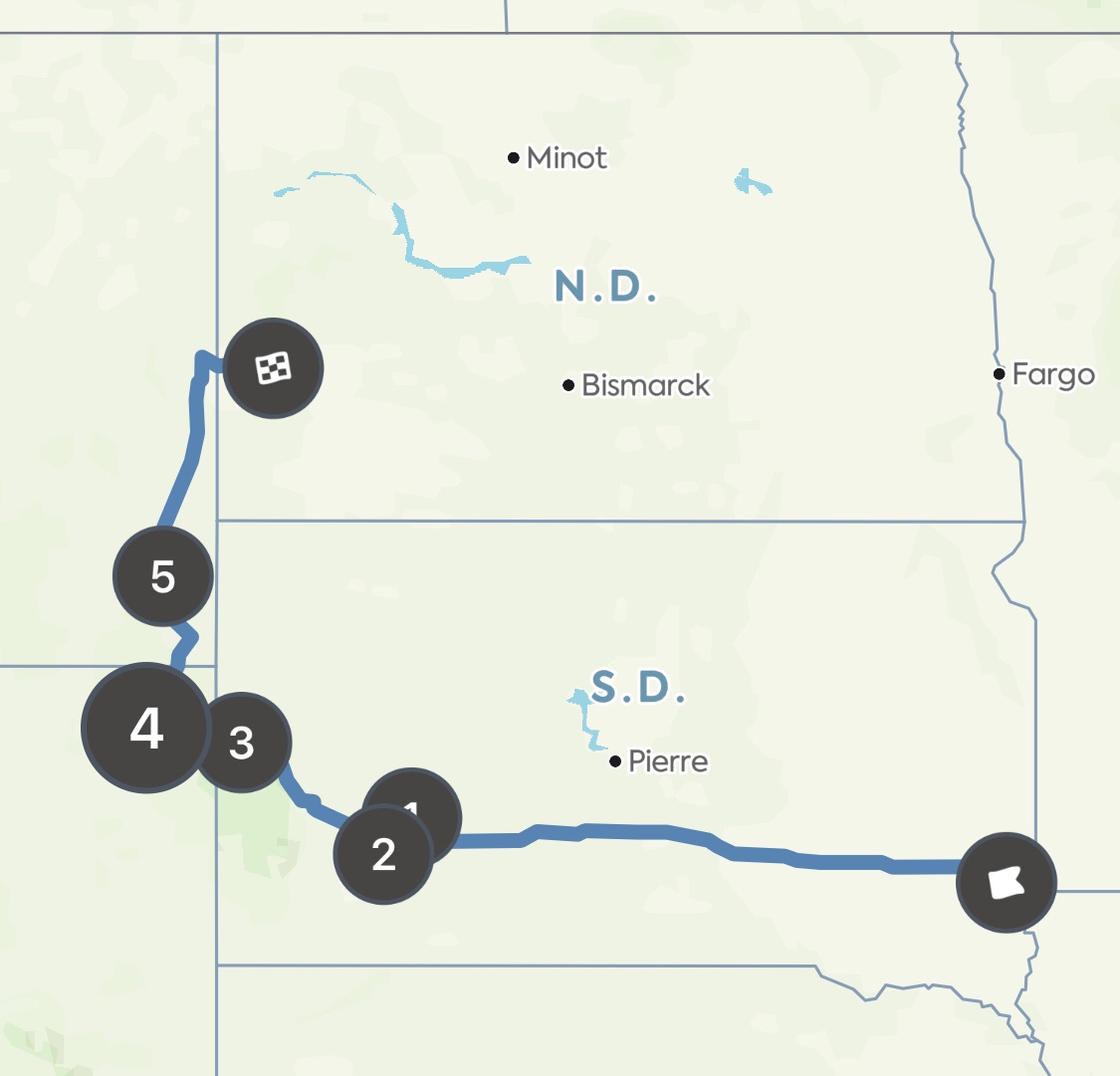
We made a point of having a couple of must-see places (The Badlands, Mt. Rushmore, Teddy Roosevelt), and just went with the flow for the rest of the trip.
Falls Park
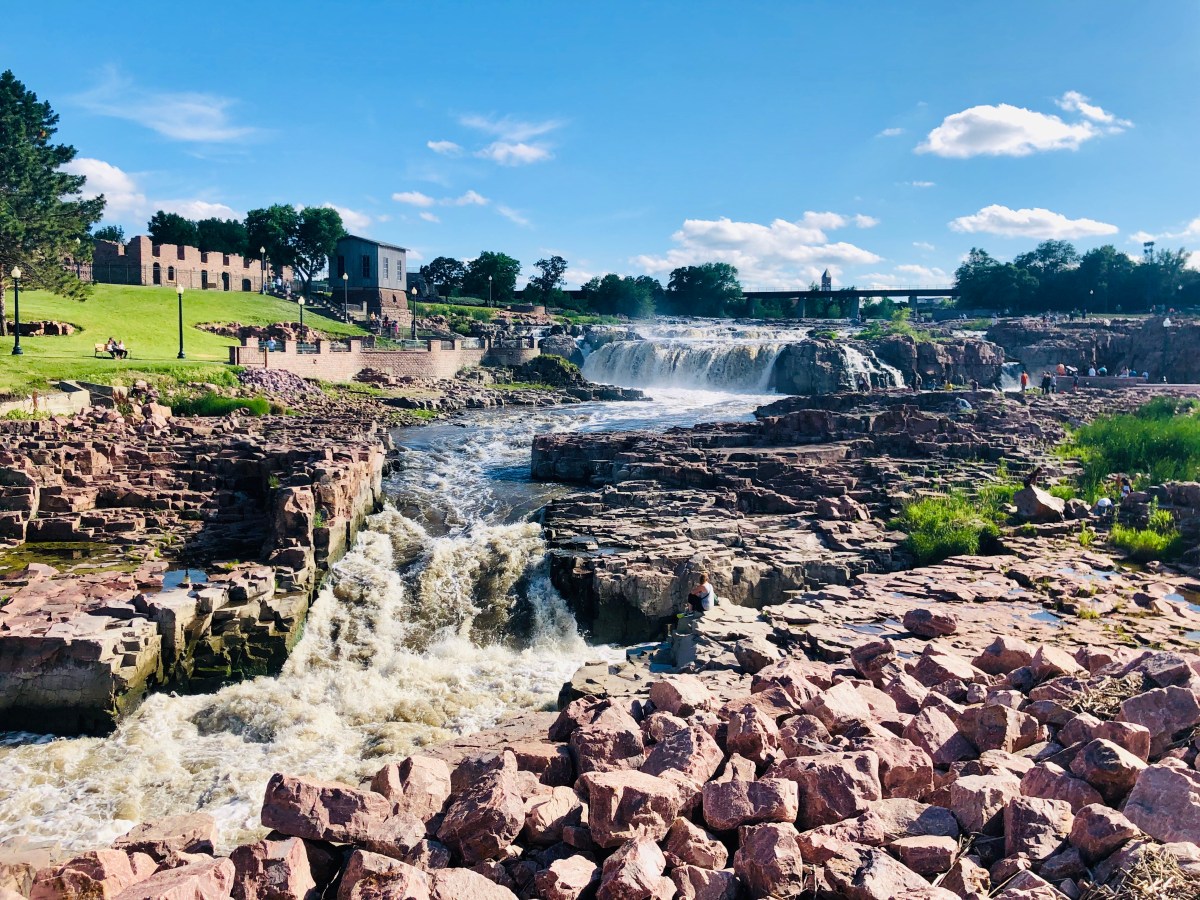
We made some incredible time getting to South Dakota. One would sleep and the other would drive, usually switching off every 4 hours or as far as we could go. We were still trying to make it to the Badlands and had yet to make any stops minus gas, but after researching and finding out that Sioux Falls had a park inside of the town that has an old mill, gift shop, and an impressive waterfall I requested we at least stop and check it out.
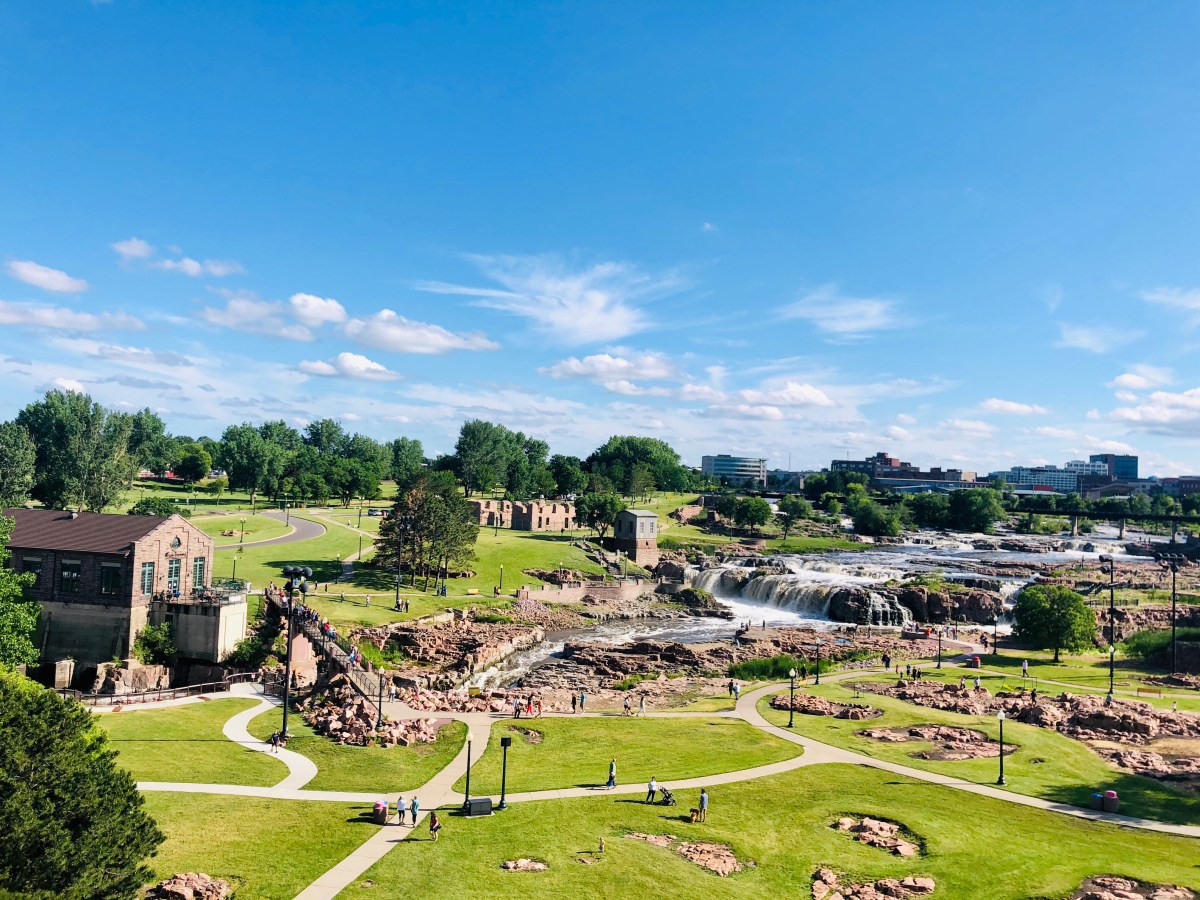
Falls Park was so awesome! I love when cities incorporate the natural resources they’ve been blessed with. So many people were around enjoying this waterfall. There’s a neat little observation tower you can look from too. A really cool experience and worth the pit-stop. It made for a lovely beginning to our trip.
Wall, SD
Wall is the “Gateway to the Badlands.” It’s located 8 miles outside of the park’s entrance as you head west through South Dakota. It’s a small and charming little Western town that seems like it’s stuck in the 1940’s. The population is under 1,000 people, though it draws nearly 2 million visitors annually.
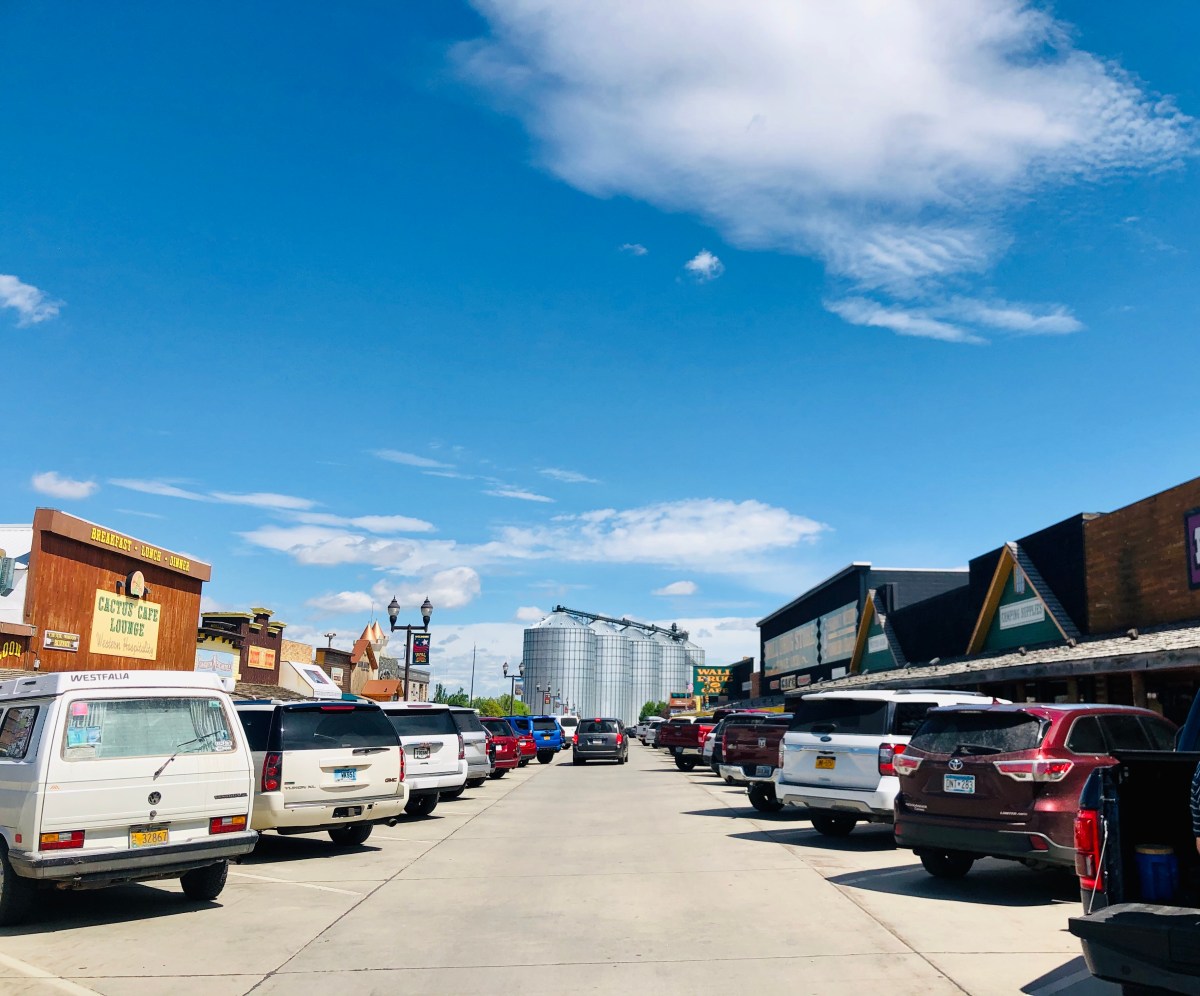
Going west on I-90, you’ll pass a TON of vintage-style hand-painted signs promoting Wall Drug. A couple who owned the drug store made the most of the new road that was being built into the Badlands in 1936, successfully supplementing revenue by pulling travelers off Highway 16, the dusty east-west route across South Dakota in those years before Interstate 90. The bait proposed to lure travelers? Free ice water. Today, Wall Drug is a major tourist attraction. It has a restaurant, gift shop, donut factory, western store, traveler’s chapel, arcade, rock shop, art gallery, book store, pharmacy, and a “back yard” area that features a roaring T-rex, a mini Mt. Rushmore, and a perfect photo op, a 6 ft. tall Jack-a-lope. We were only briefly able to check Wall Drug out, as there were so many people around, and we were trying to avoid crowds as much as possible. If you’re making a trip to the Badlands, you need to at least make a quick trip to Wall Drug as well.
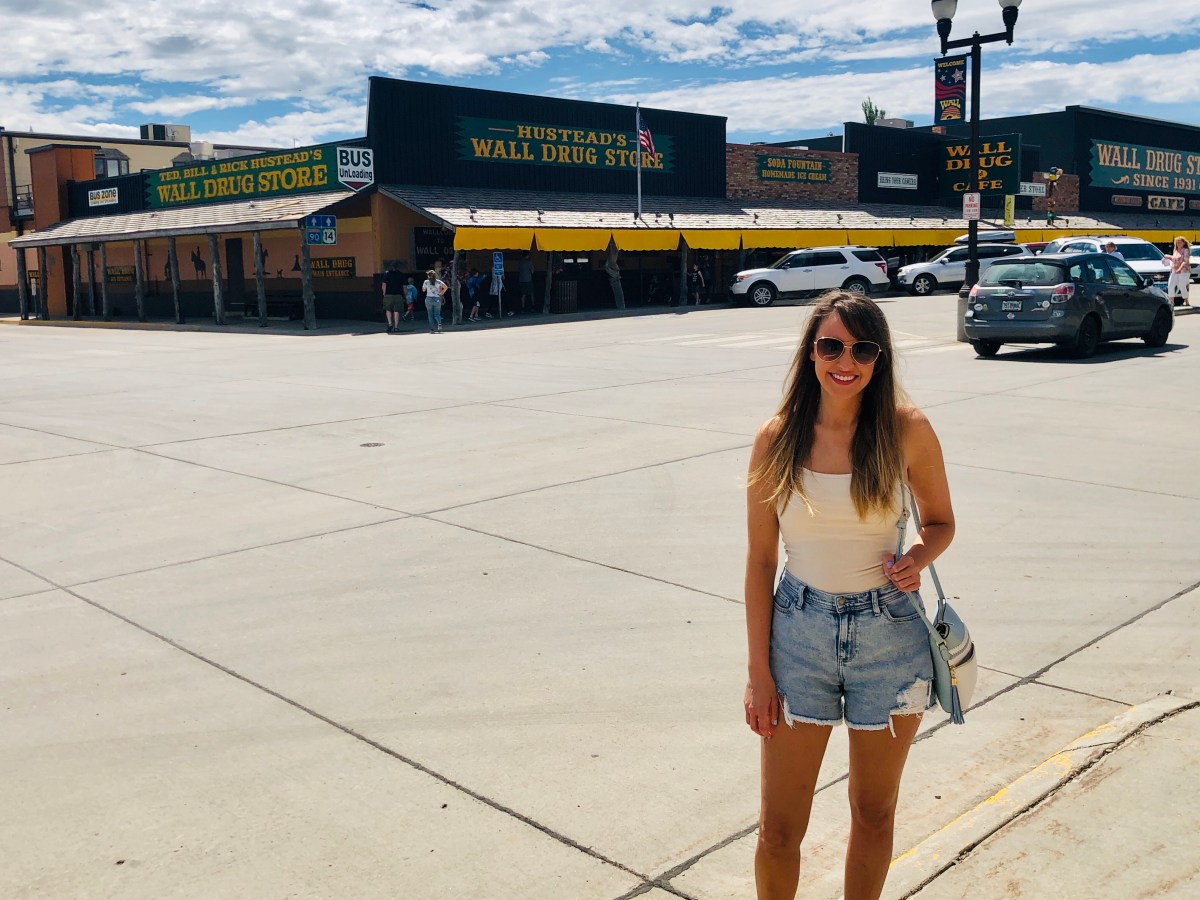
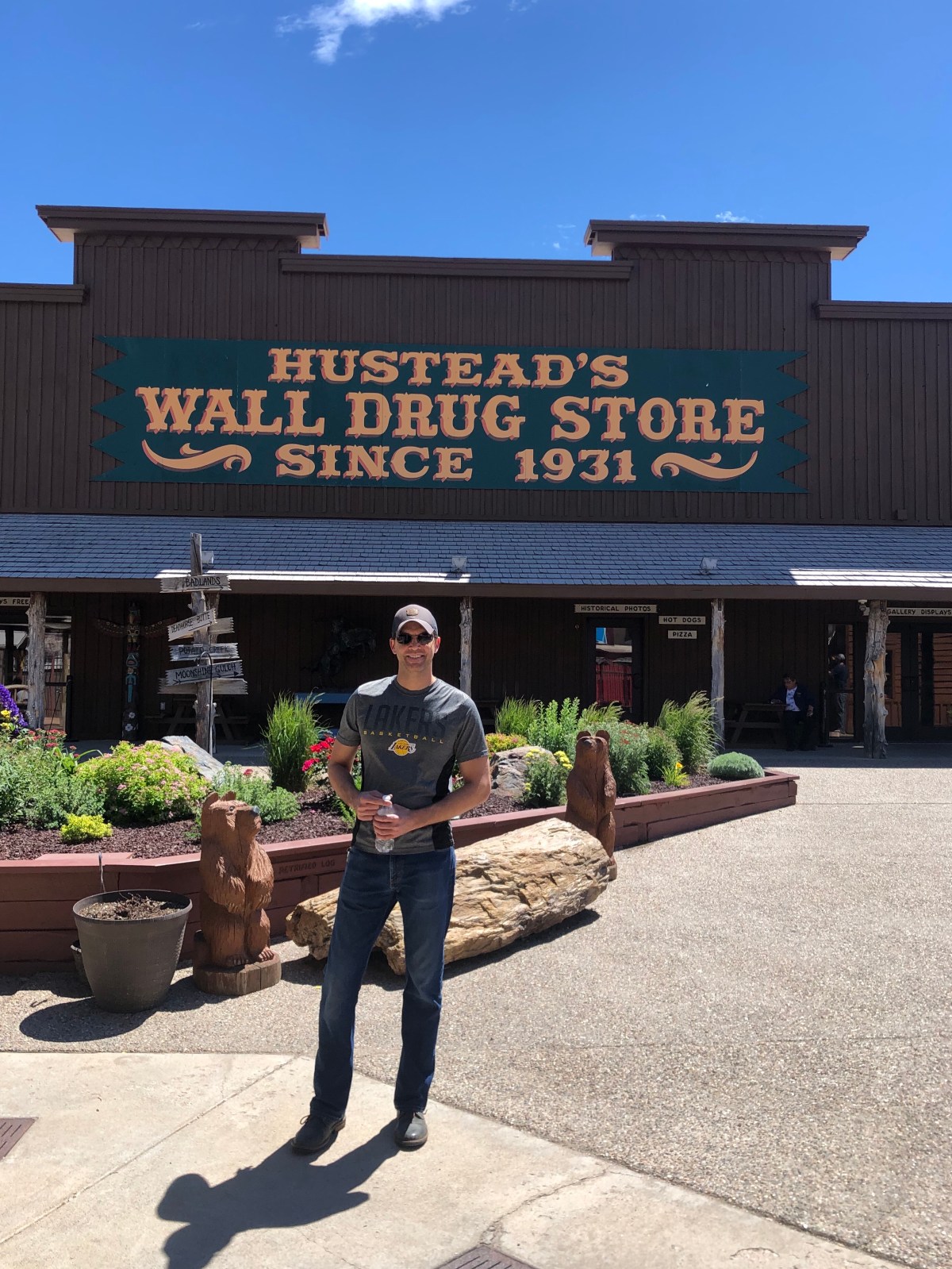

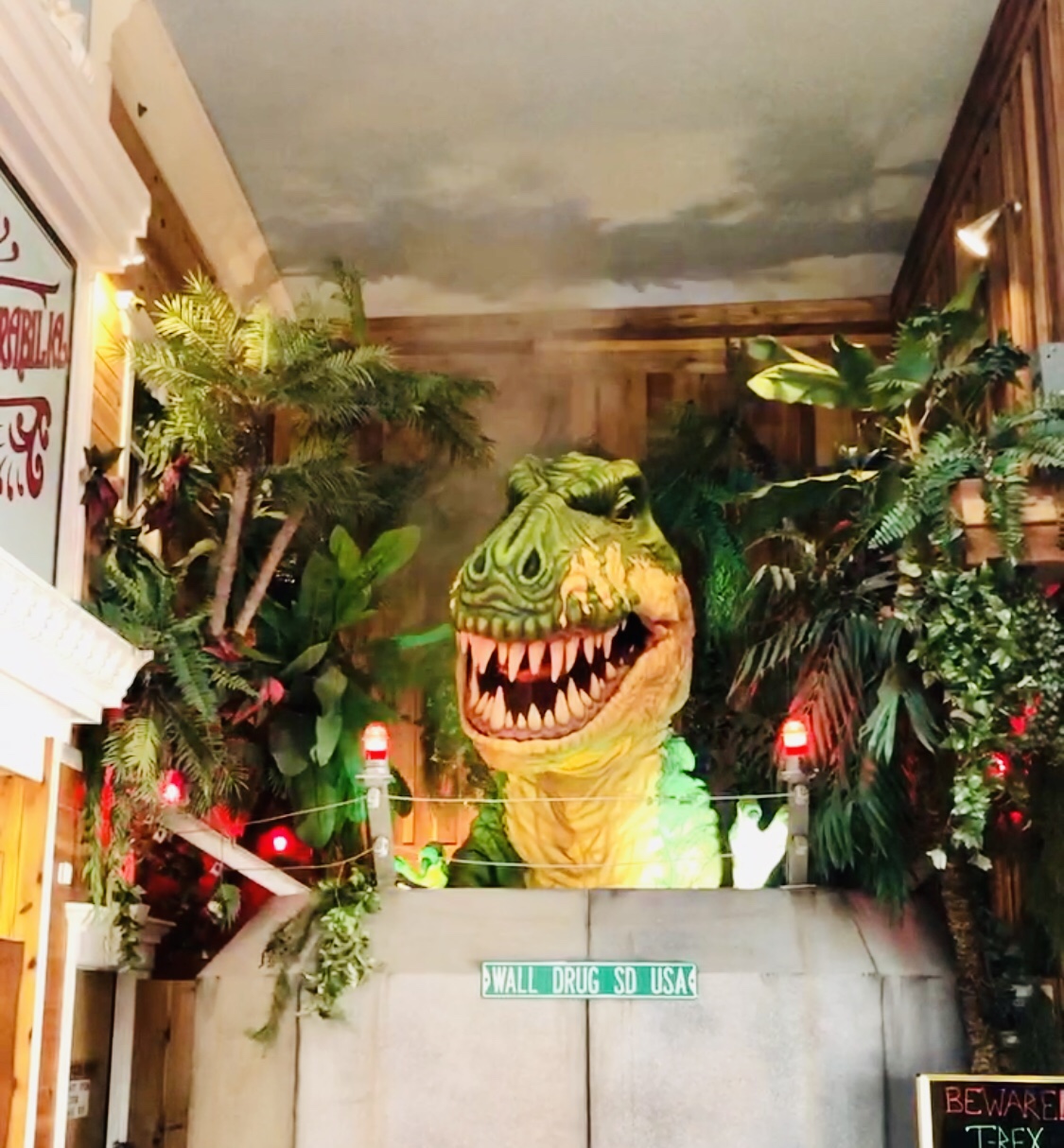
Our first night we stopped at Sleepy Hollow RV Park in Wall. You couldn’t get any closer to Wall Drug from here. I liked the retro style, and how it was right beside some silos. It was affordable and had everything we needed to prepare us for the next day’s journey into the Badlands.
The Badlands
I have never seen such a diverse mixture of landscape. There are green prairies, colorful mounds, and sharp spires with a desert backdrop. It’s simply gorgeous, and a must-see when being anywhere near the Dakotas!
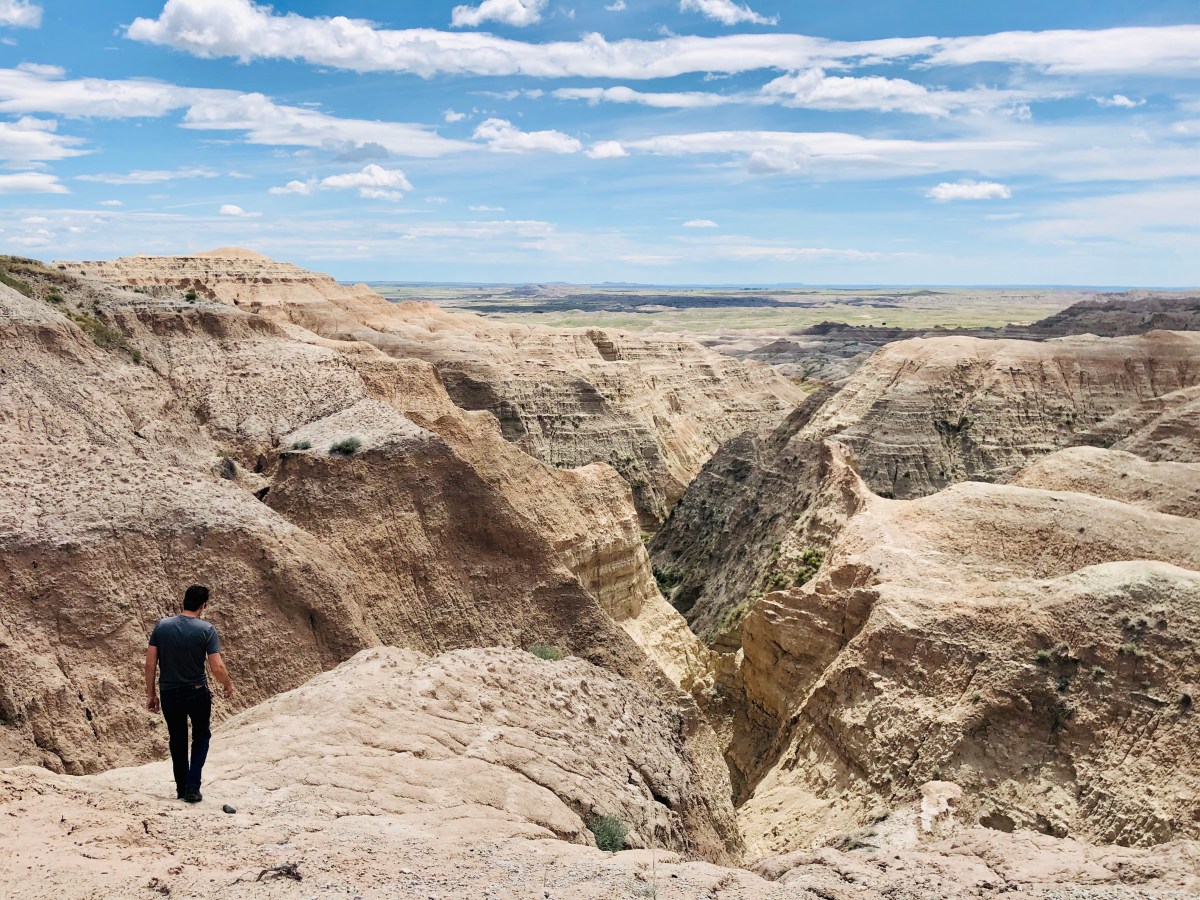
Badlands National Park is open year-round for 24 hours/day. There’s both a North Unit and a South unit. Due to COVID-19, the South Unit was closed, but still left us the North Unit to explore. There are a total of 16 different overlooks, which are a short driving distance away from each other. You can drive to each of them, park, and walk on the boardwalk (or if you’re like Scott and want to risk your life.. go onto some of the rock formations). Each is beautiful in its own right, and surprisingly enough you’ll find one greatly varies from the last. Your eyes will always have new sights to feast on. Make sure you eat it all up.
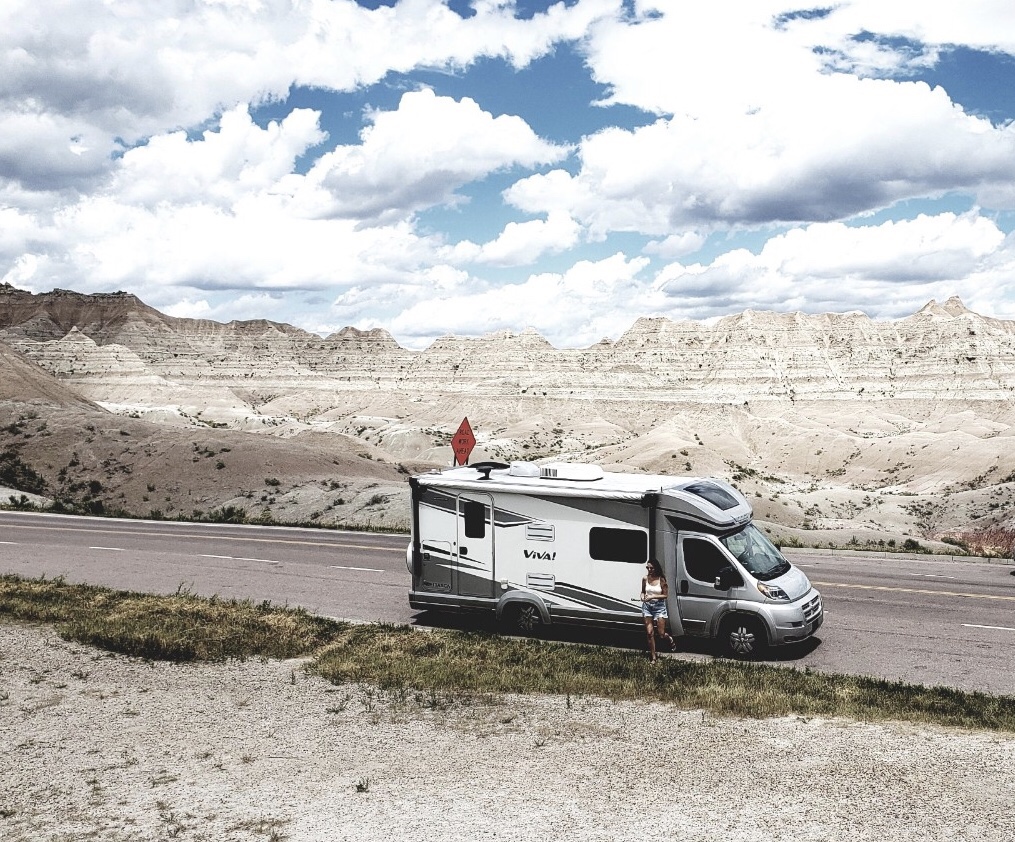
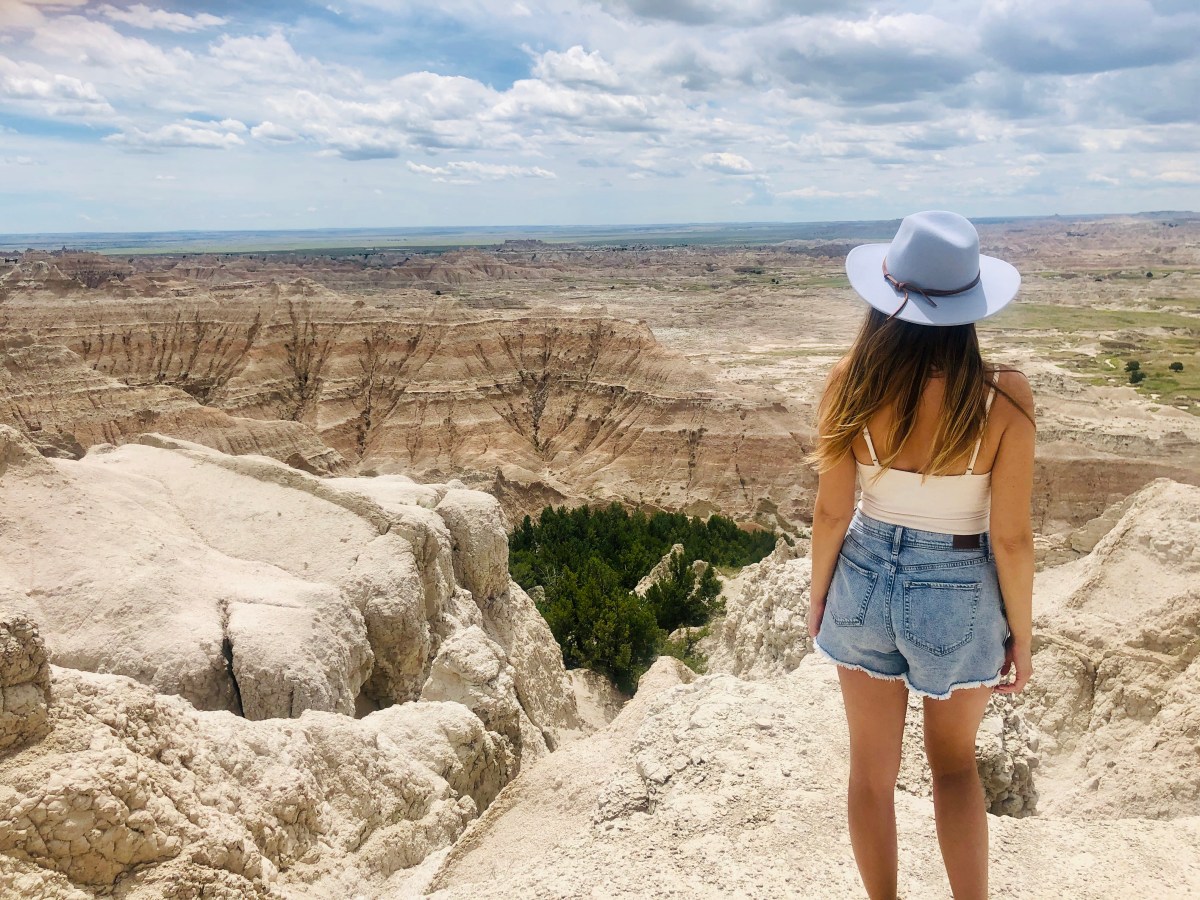
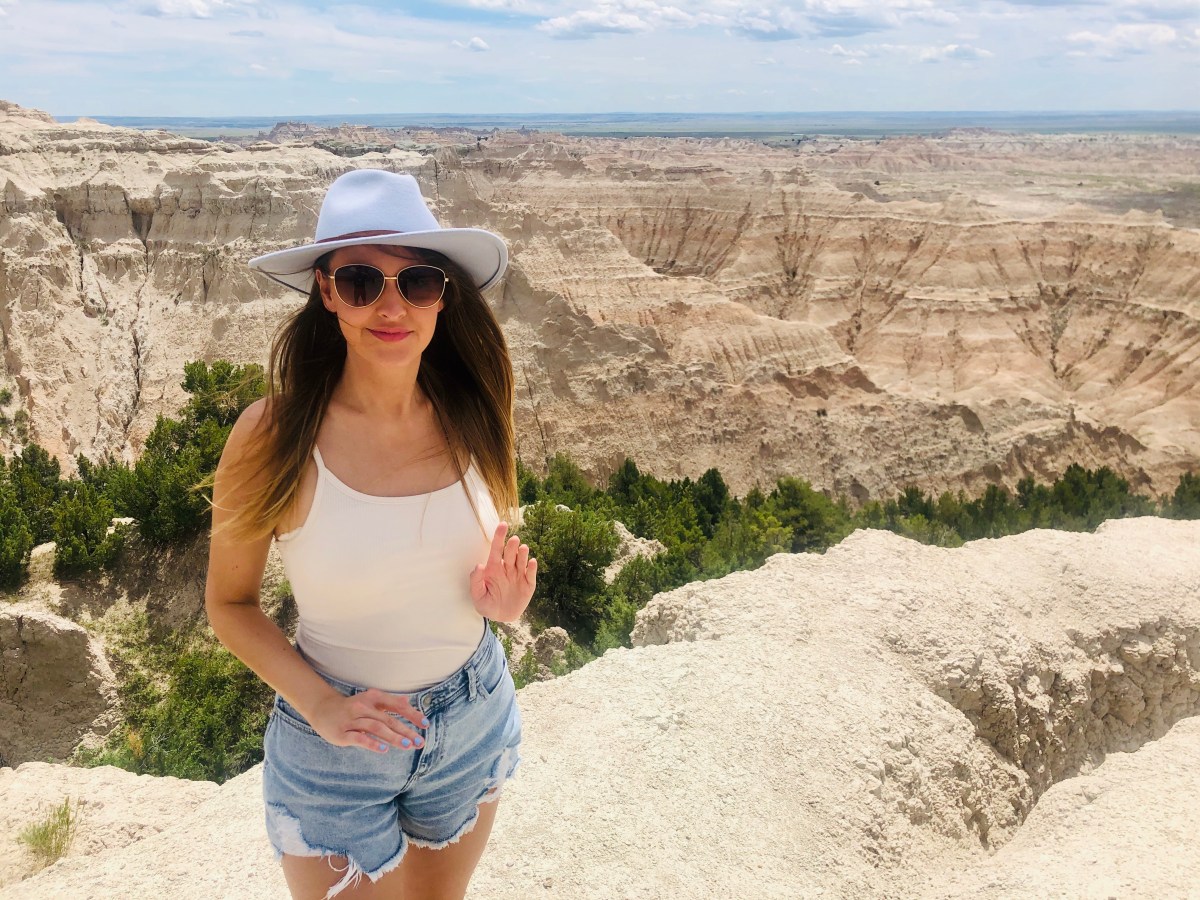
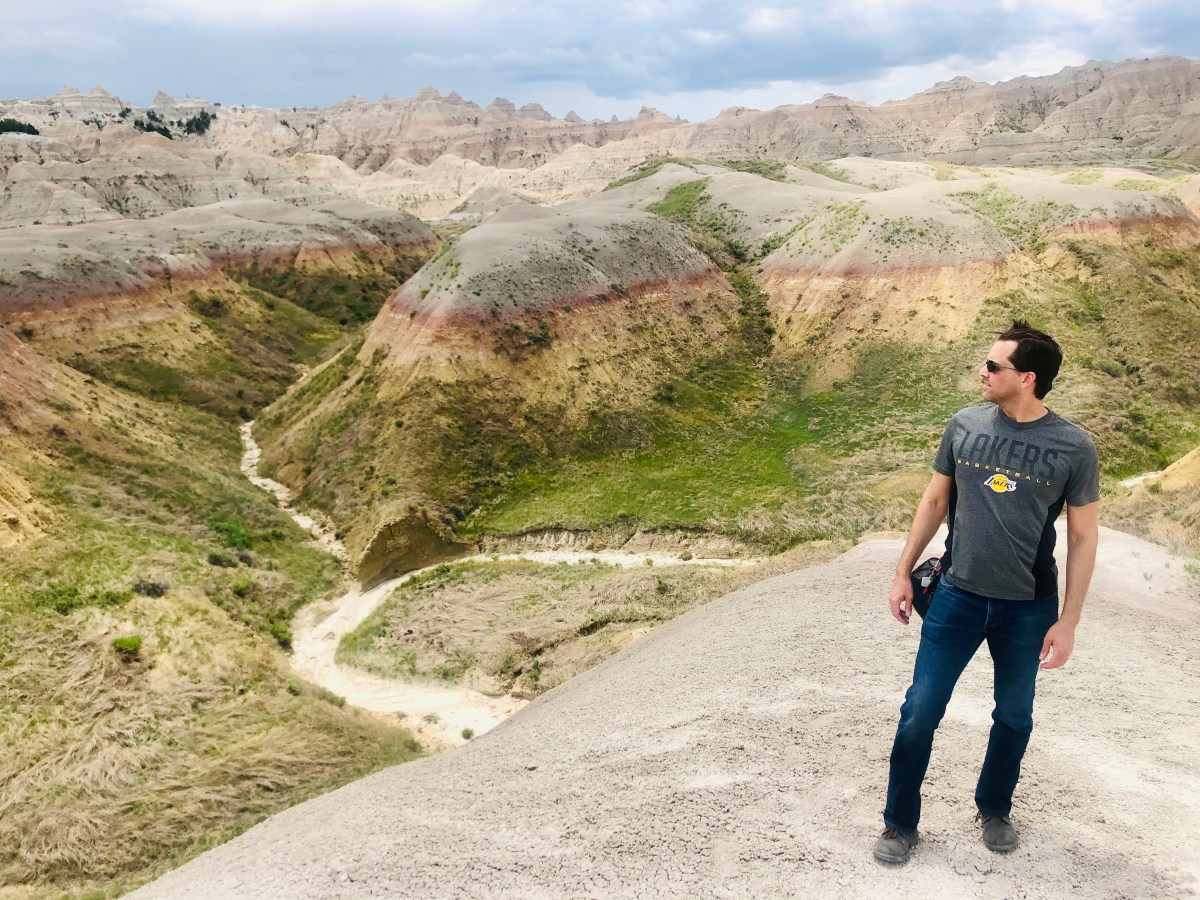
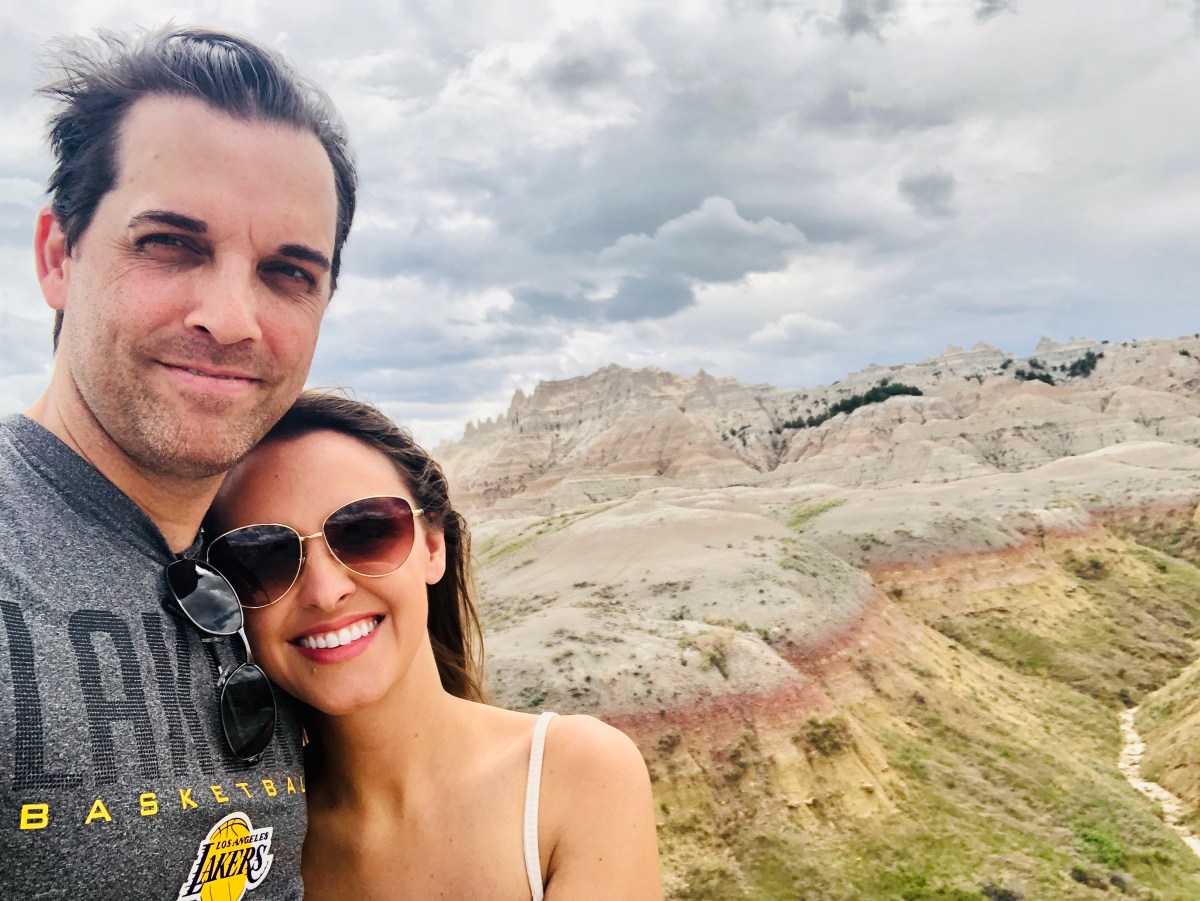
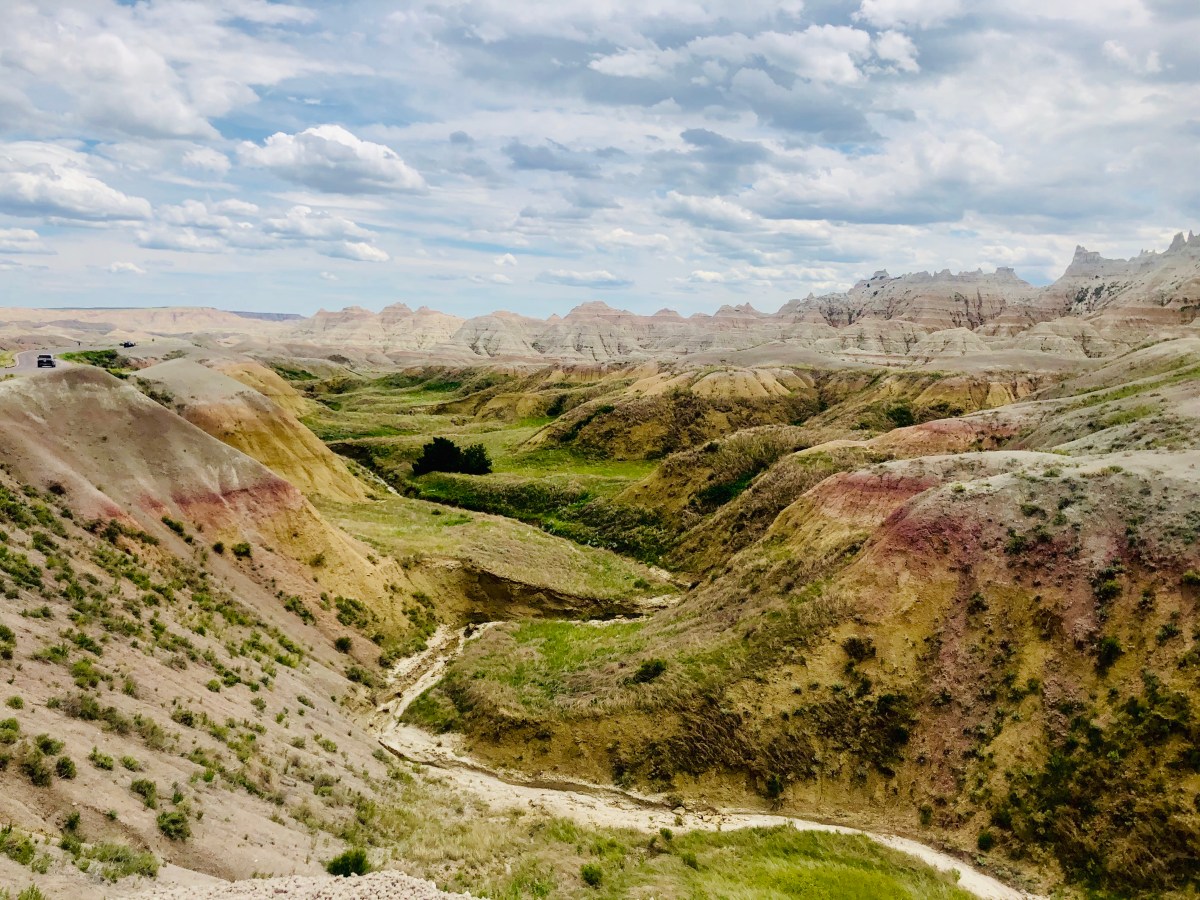

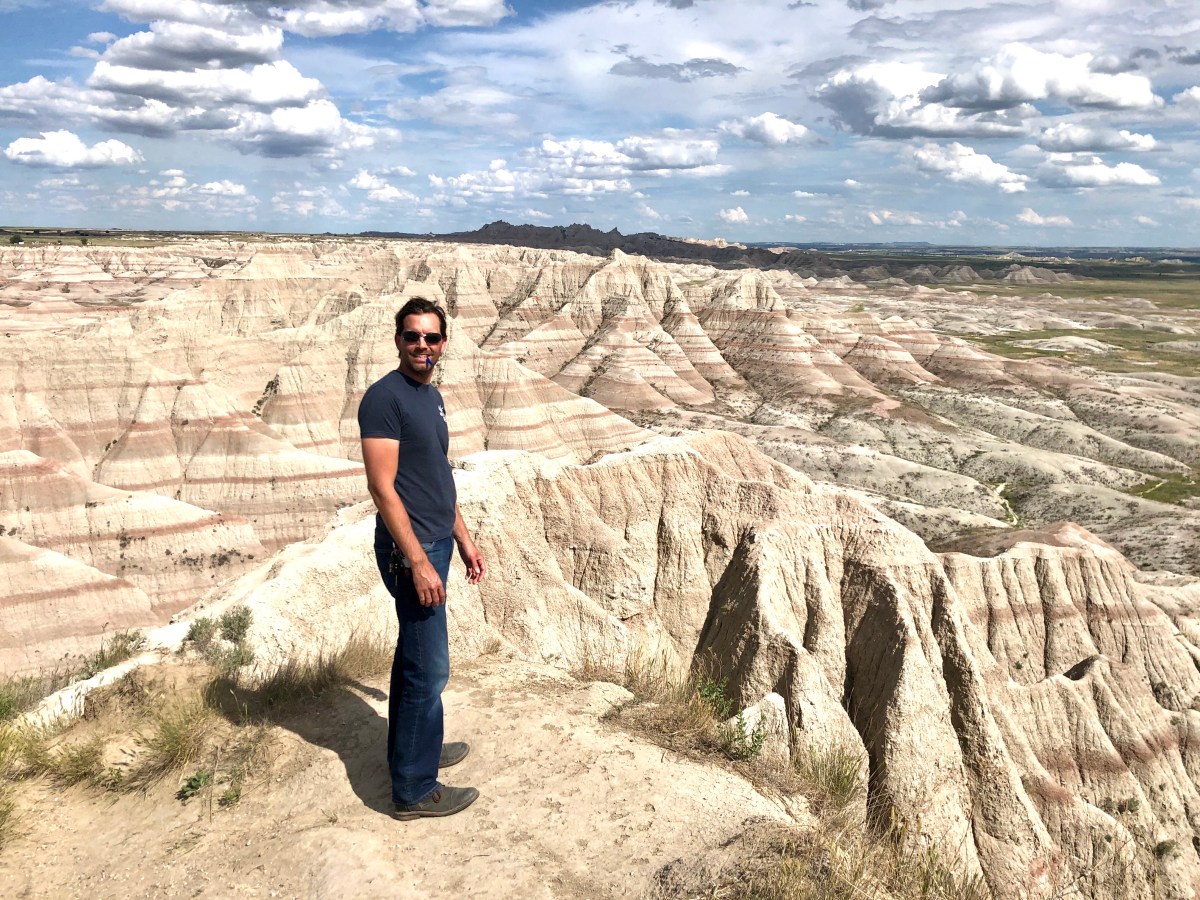
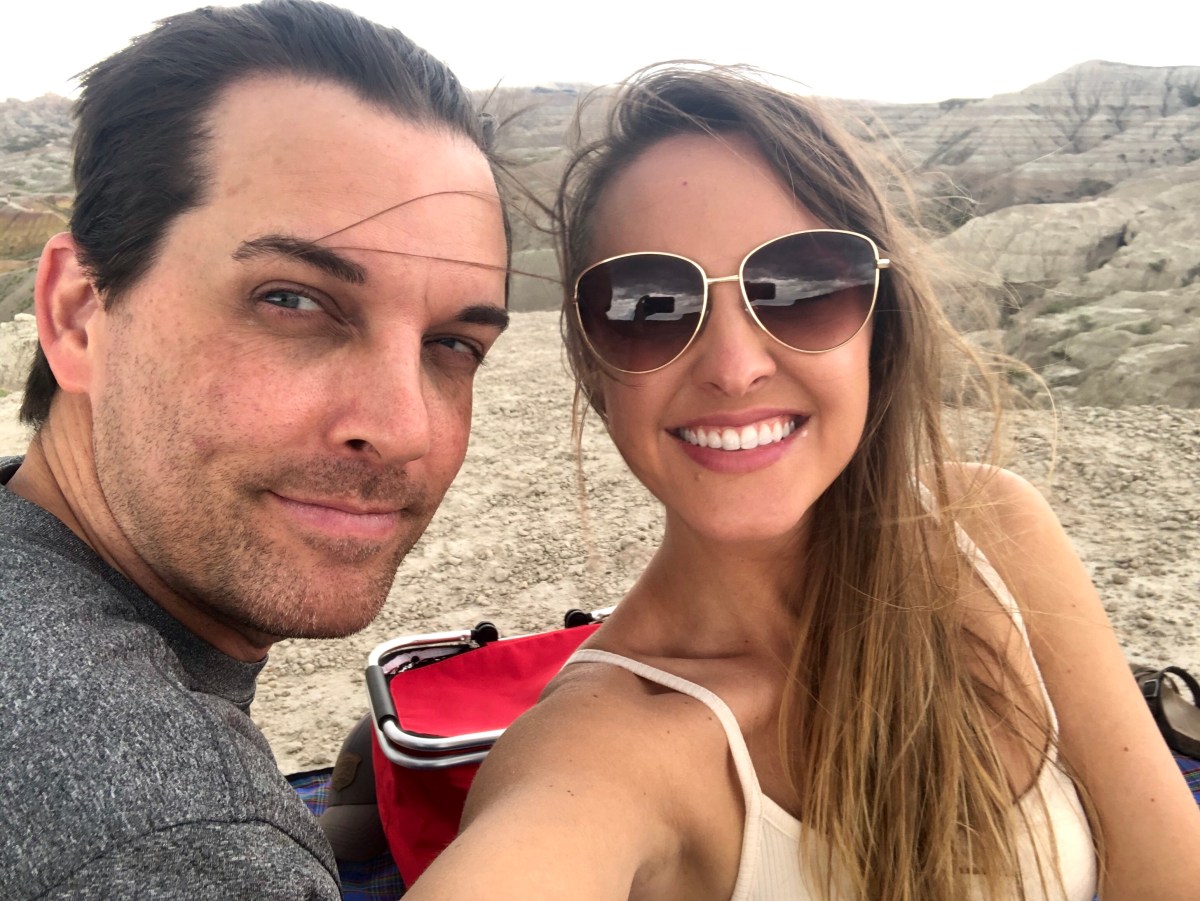
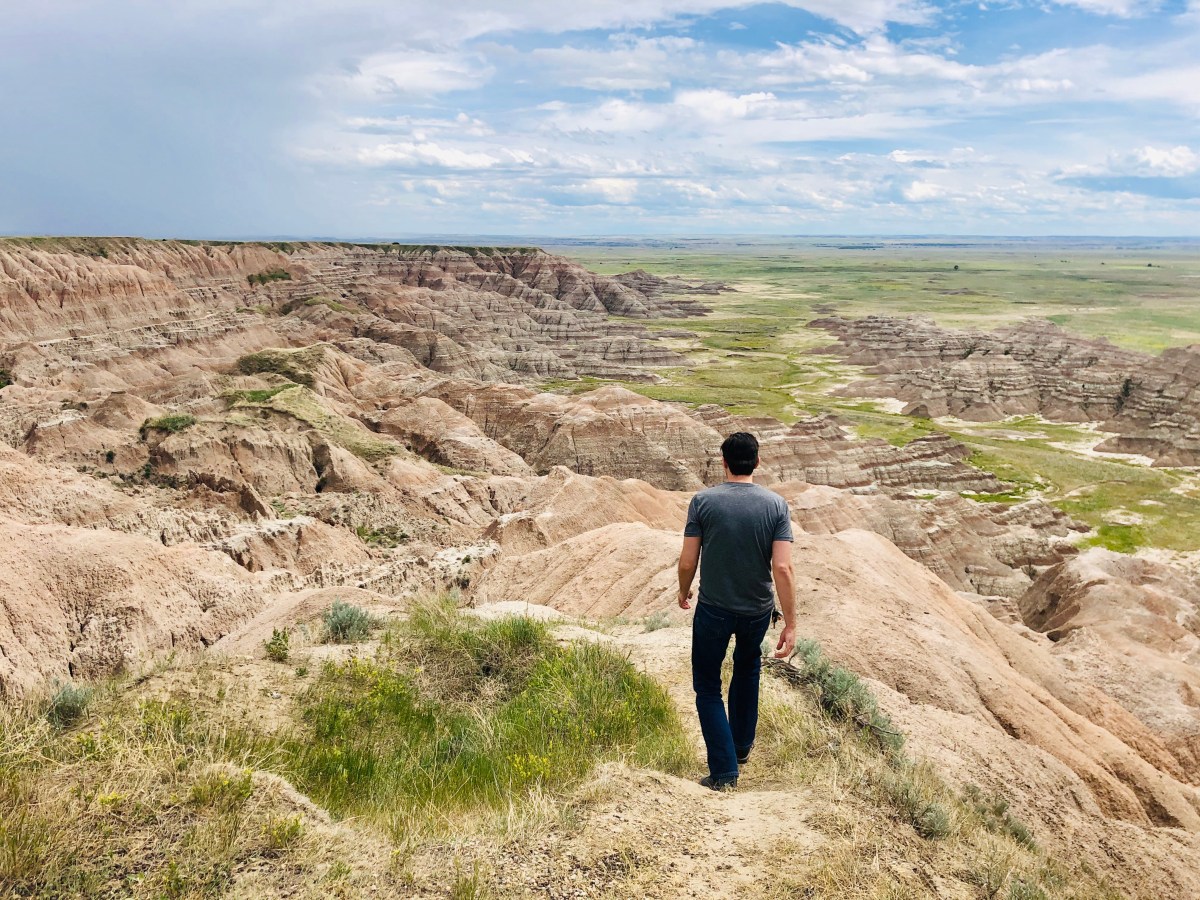
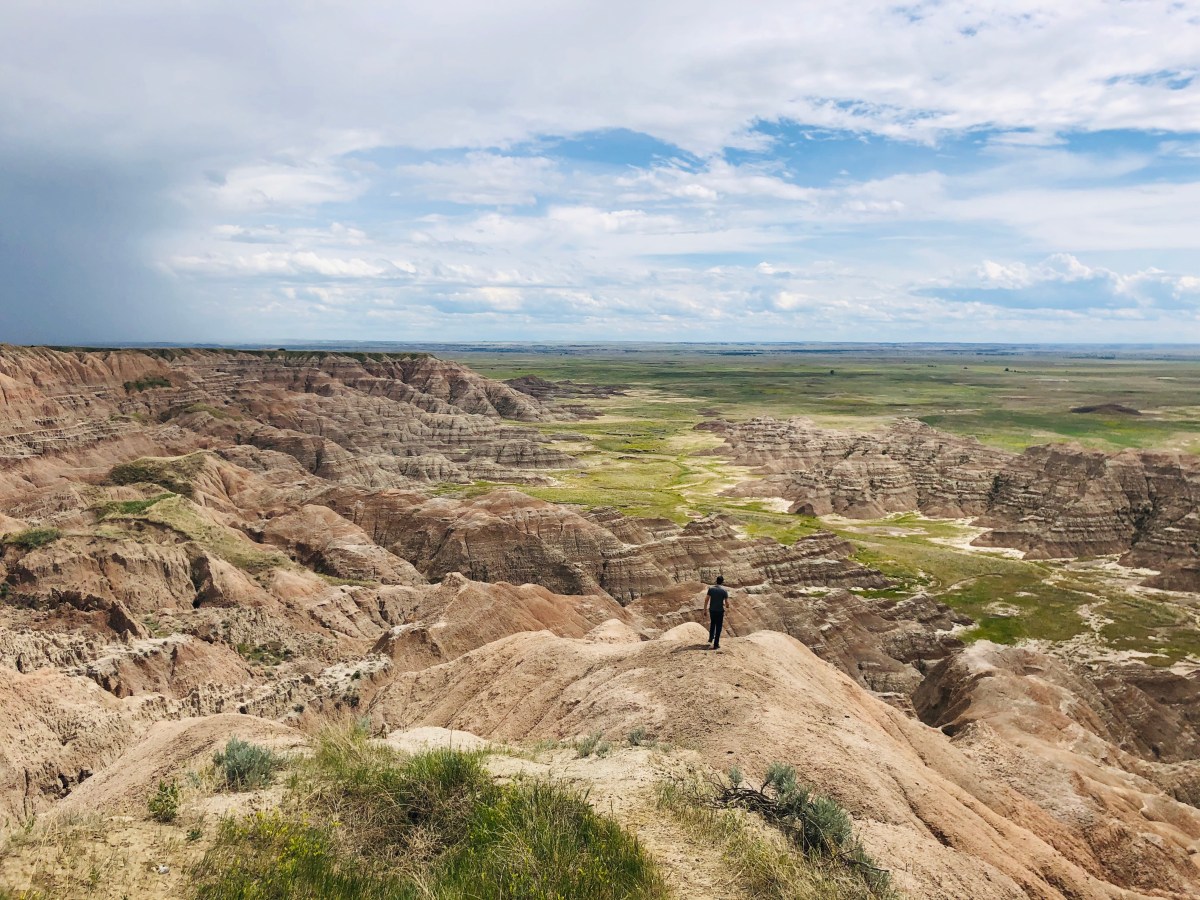
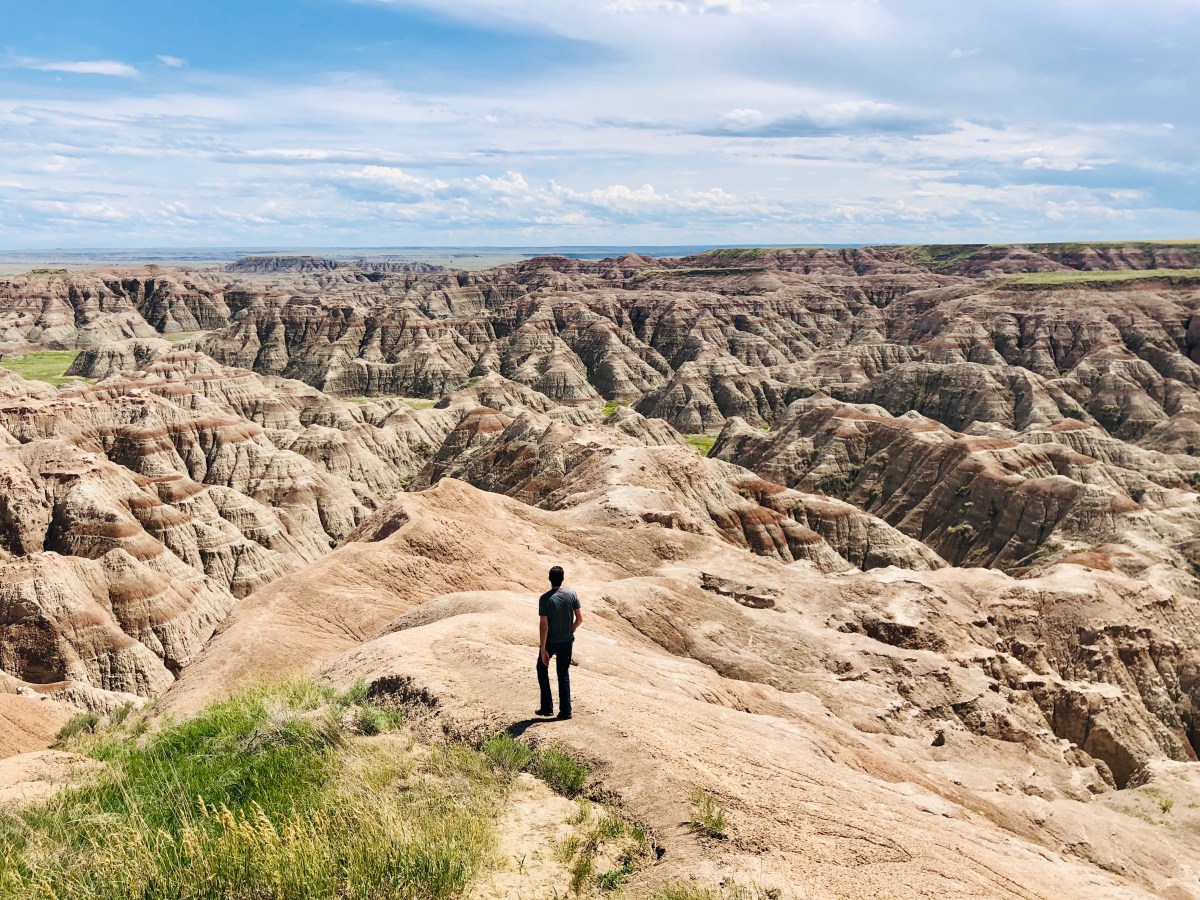
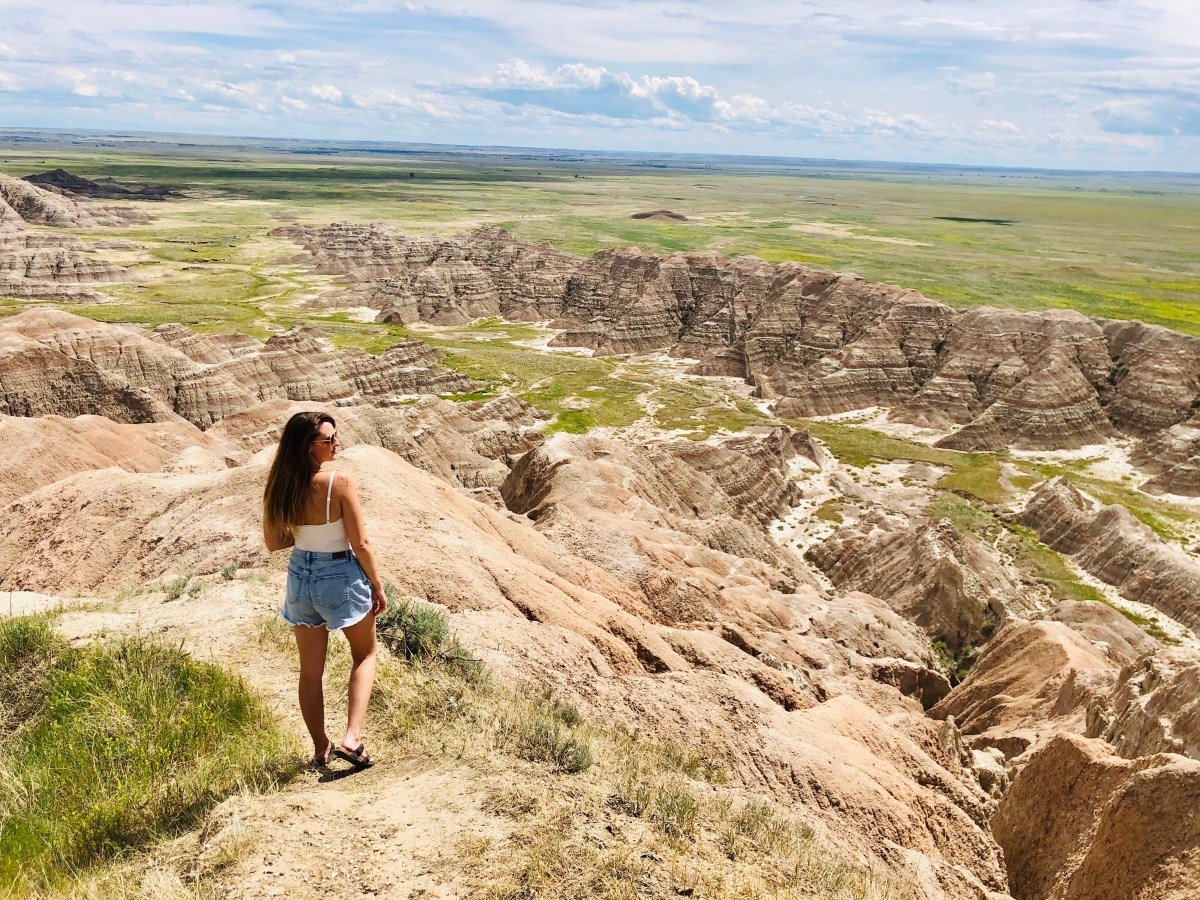
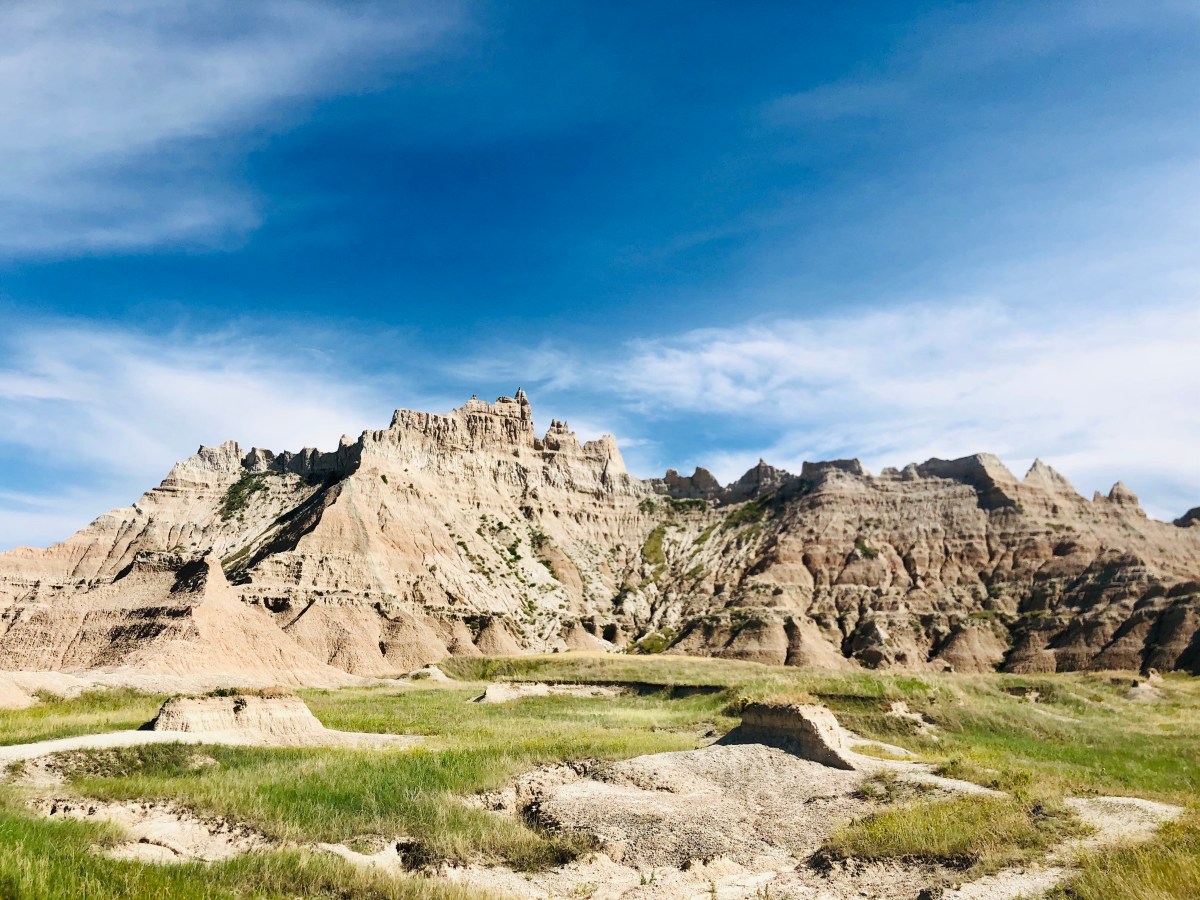
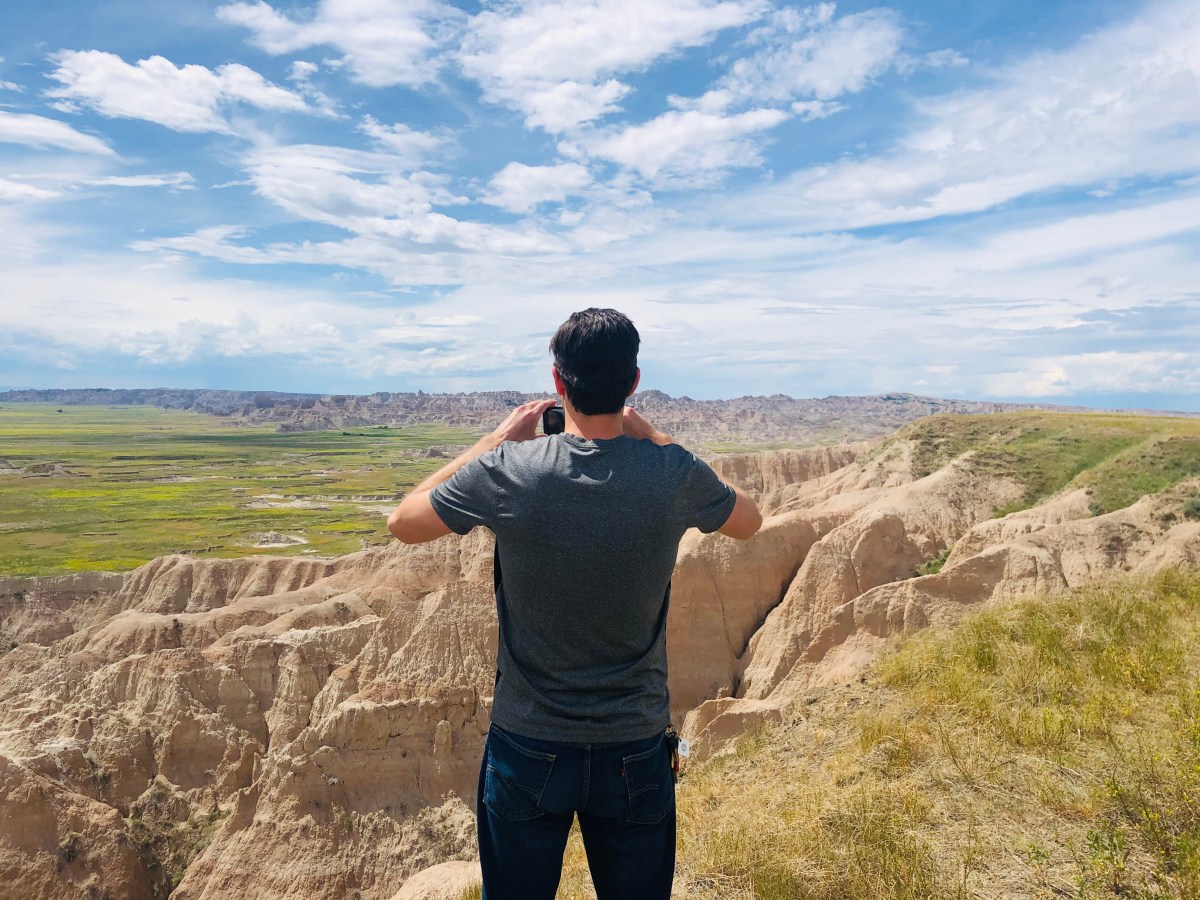

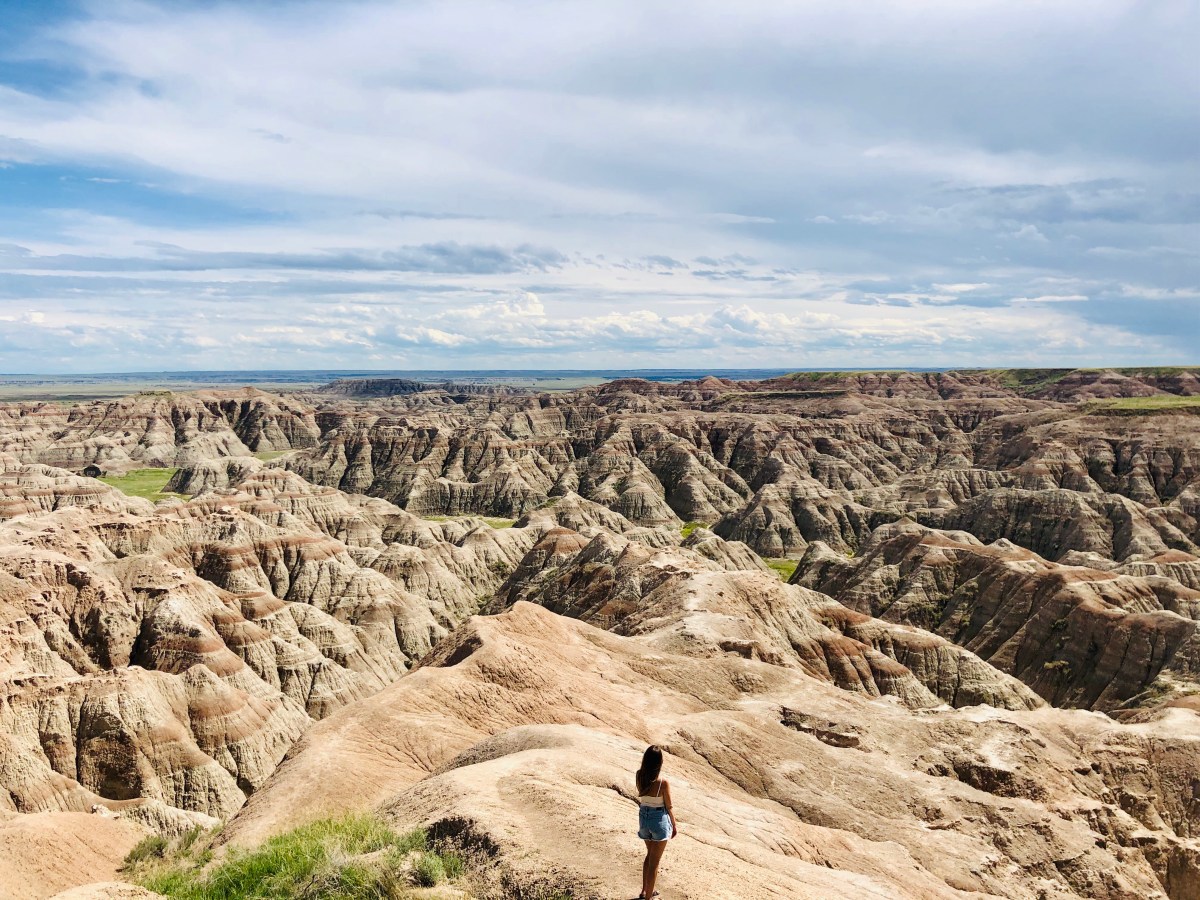
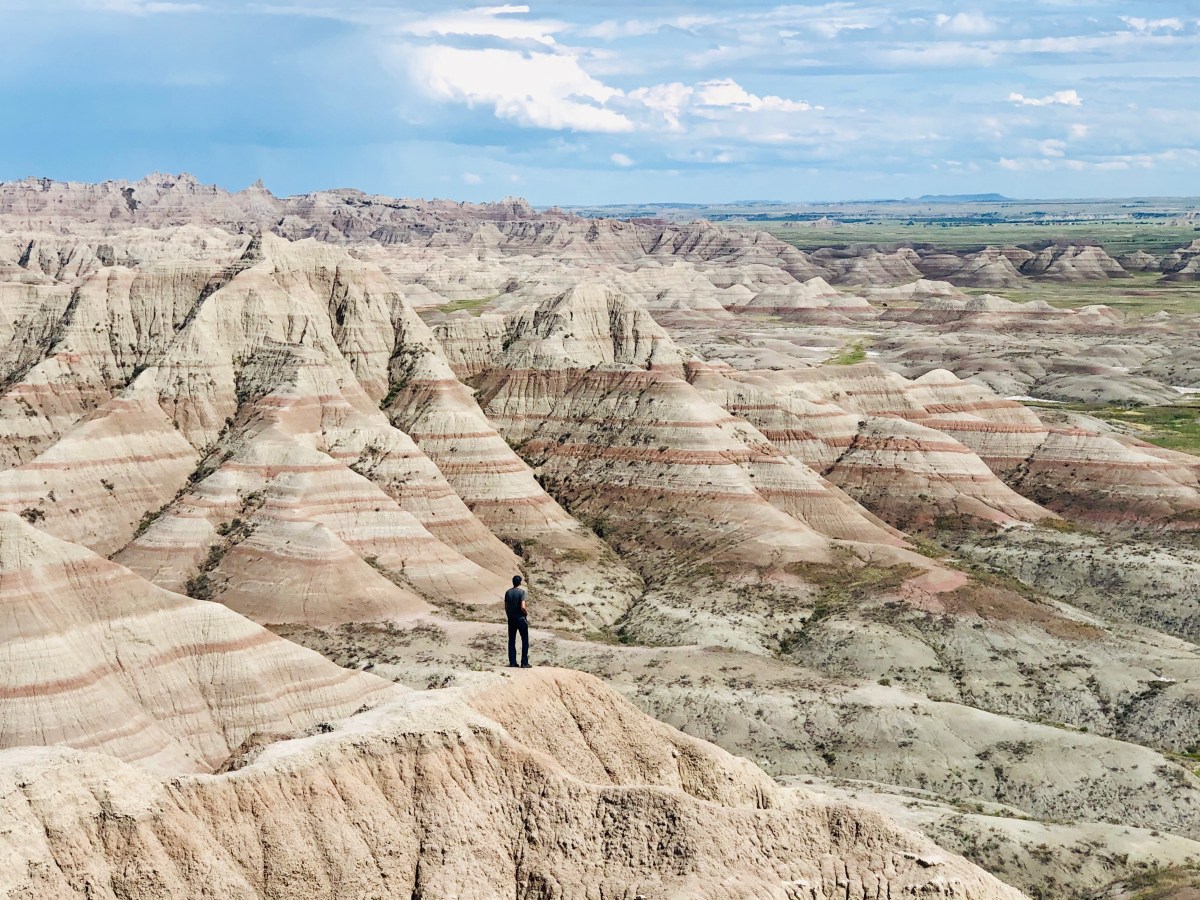

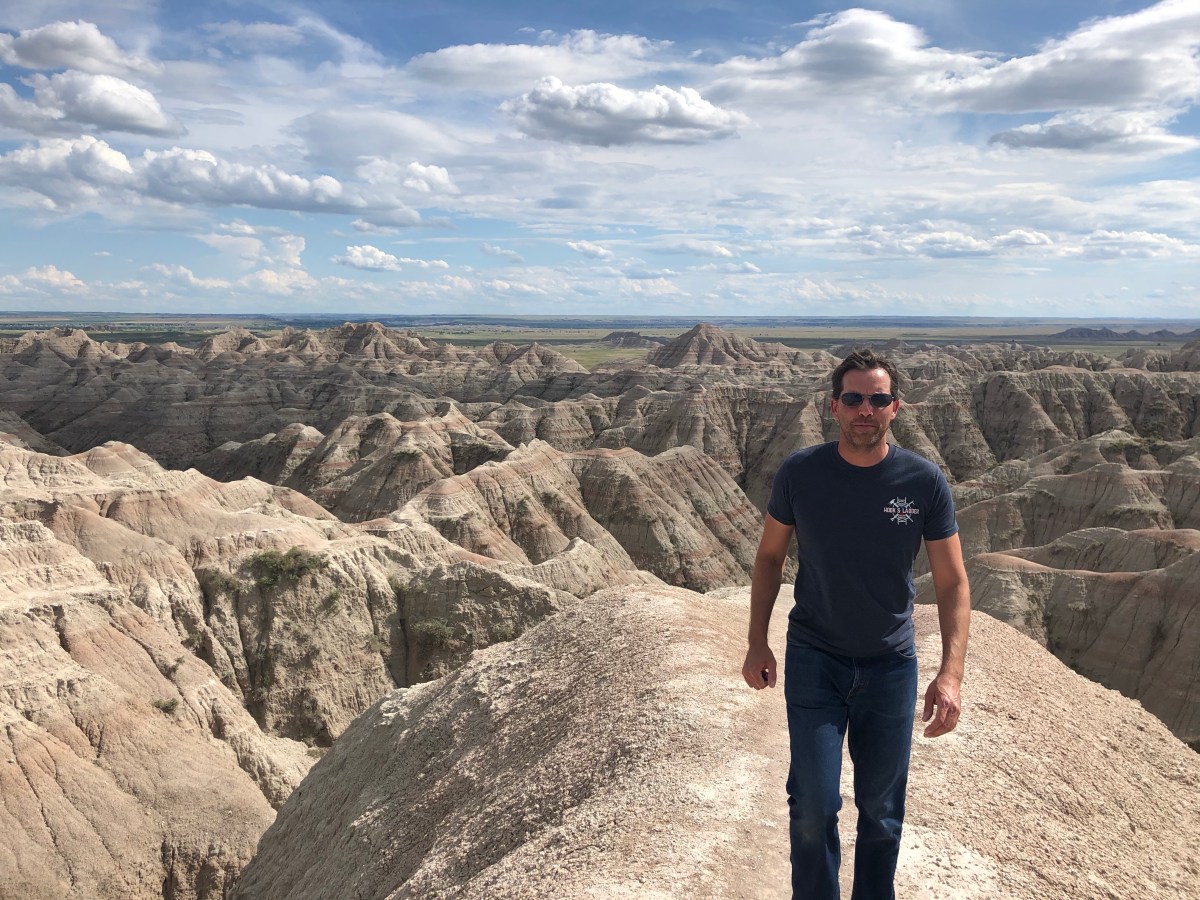

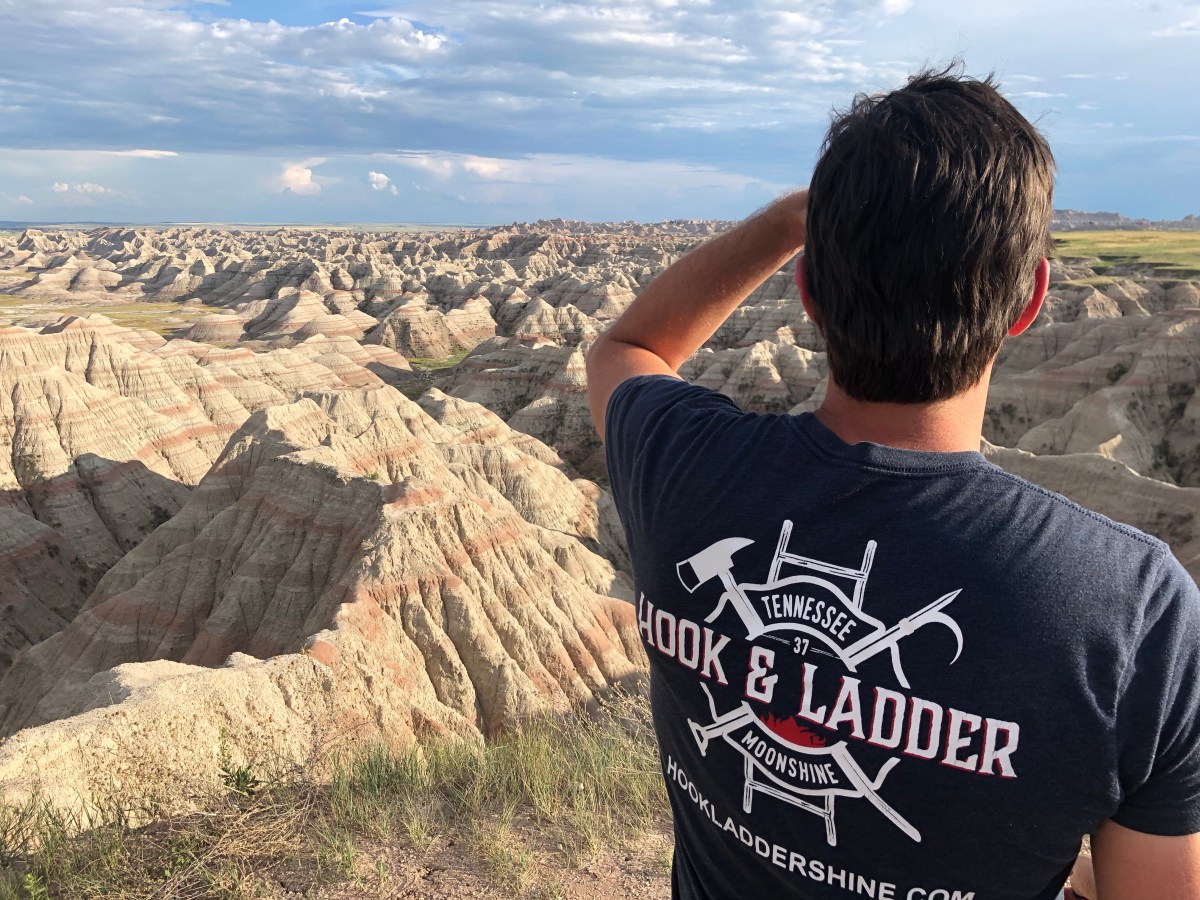
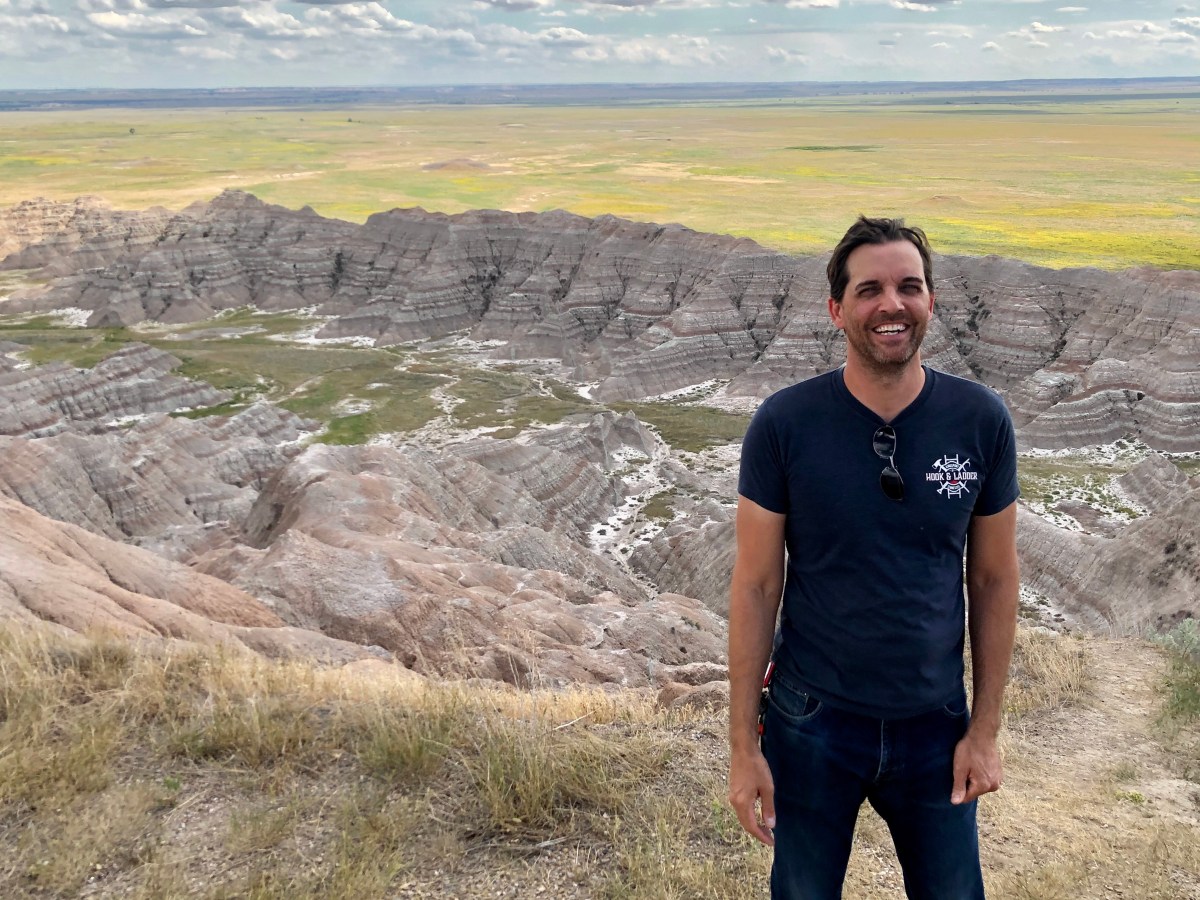
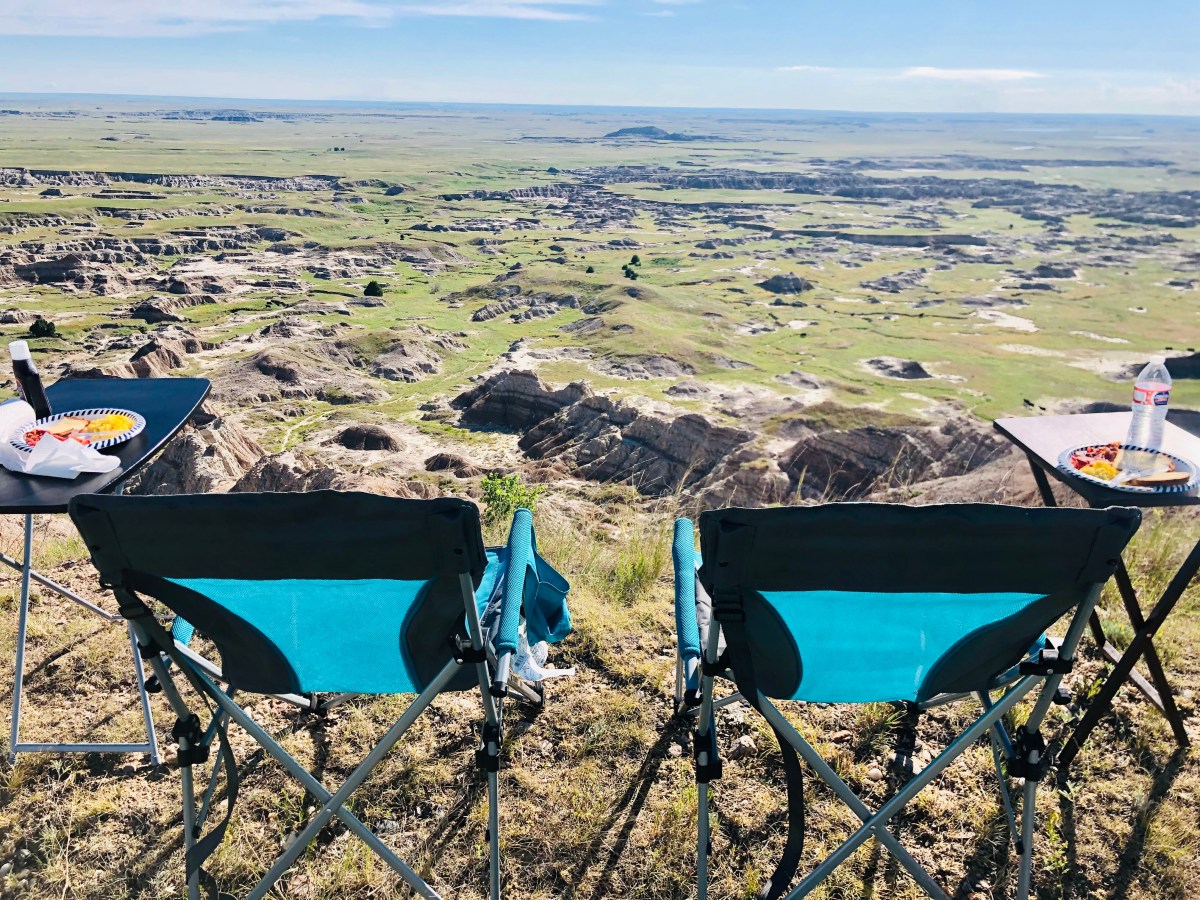
We took the afternoon, starting from the Pinnacles entrance in the North unit, and took the Badlands Loop Road all the way down to the Ben Reifel Visitor Center. Drive time for this is about 45 minutes, but with all the stops you will want to plan for at least a few hours. We took plenty of pictures, and spent a bit of time at each stop. We even took a nice little break for a picnic on a hill directly beside an overlook, until a small shower hit.
On our route back home during our second stop to the park, we decided to take the opposite trail, starting from Pinnacles entrance, up Sage Creek, then back onto 44 the 509, leading back into the park. There aren’t as many overlooks this direction, but it offered additional beautiful and diverse views. I’m so glad we decided to do some additional exploring and took this route!
In addition to the overlooks, there are around 8 hiking trails to explore. We didn’t have much time for hiking, so we chose the most popular of all the trails, the Notch Trail. It was blistering hot, and I am glad we brought water and handheld fans. This trail features a huge ladder, which is a little scary for someone who is scared of heights, like I am. I made it up with relative ease (not as bad as it looks, but still not a walk in the park), but when I got to the top I realized my regular tennis shoes weren’t going to cut being able to walk on the gravely cliffs with steep drop-offs for the rest of the trail. Better safe than sorry, I stopped, and let Scott go explore and take some pretty panoramic shots. As you’ll see from the map below, all of the trails are located on the Southeast portion of the park near each other.
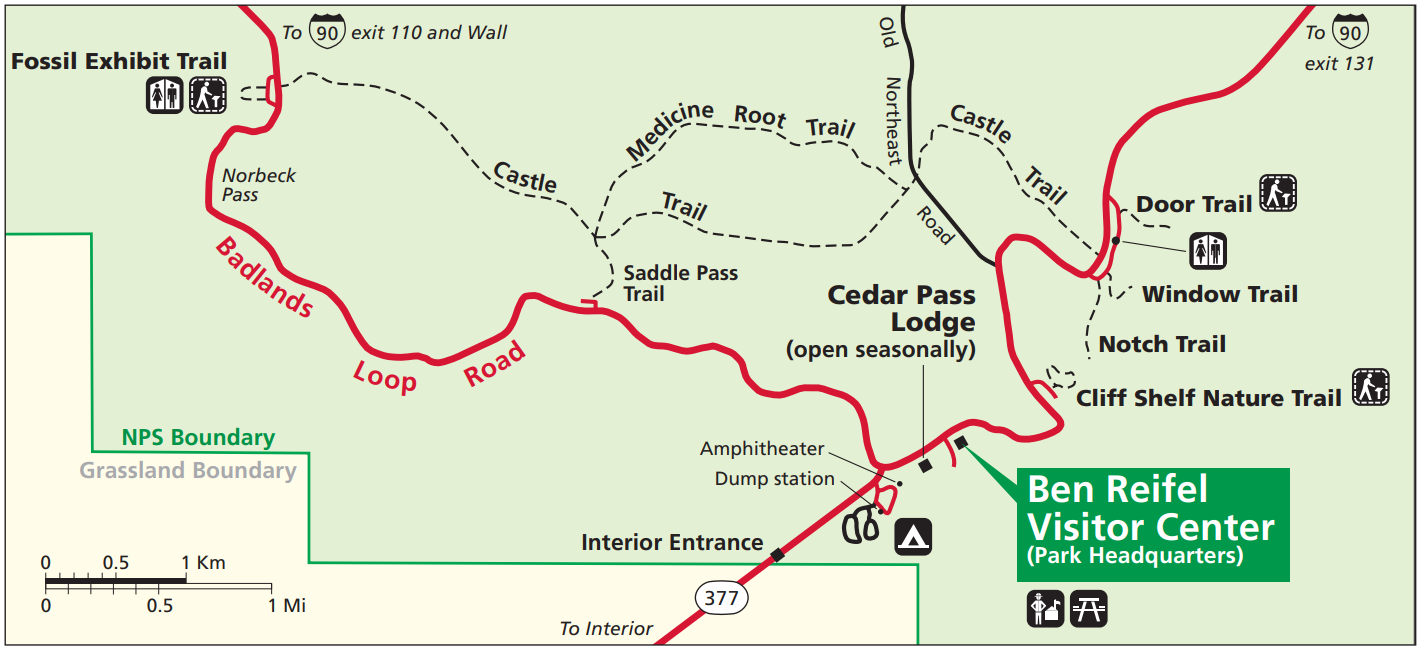


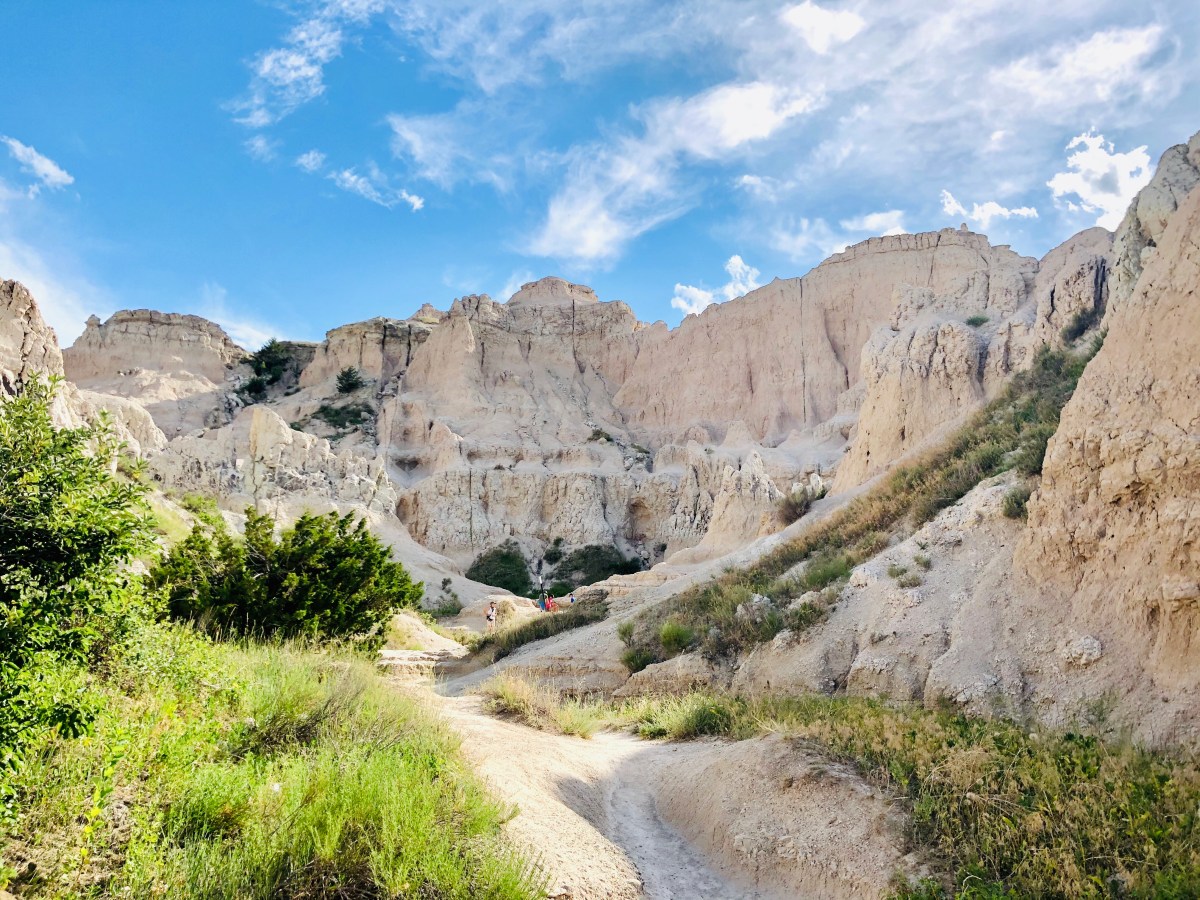
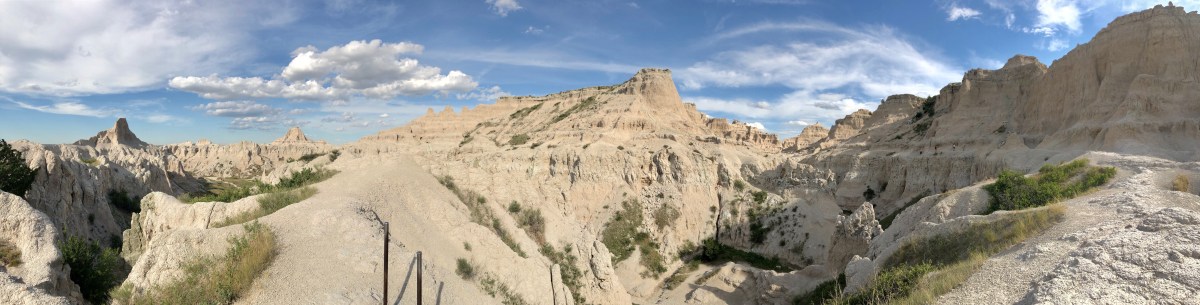
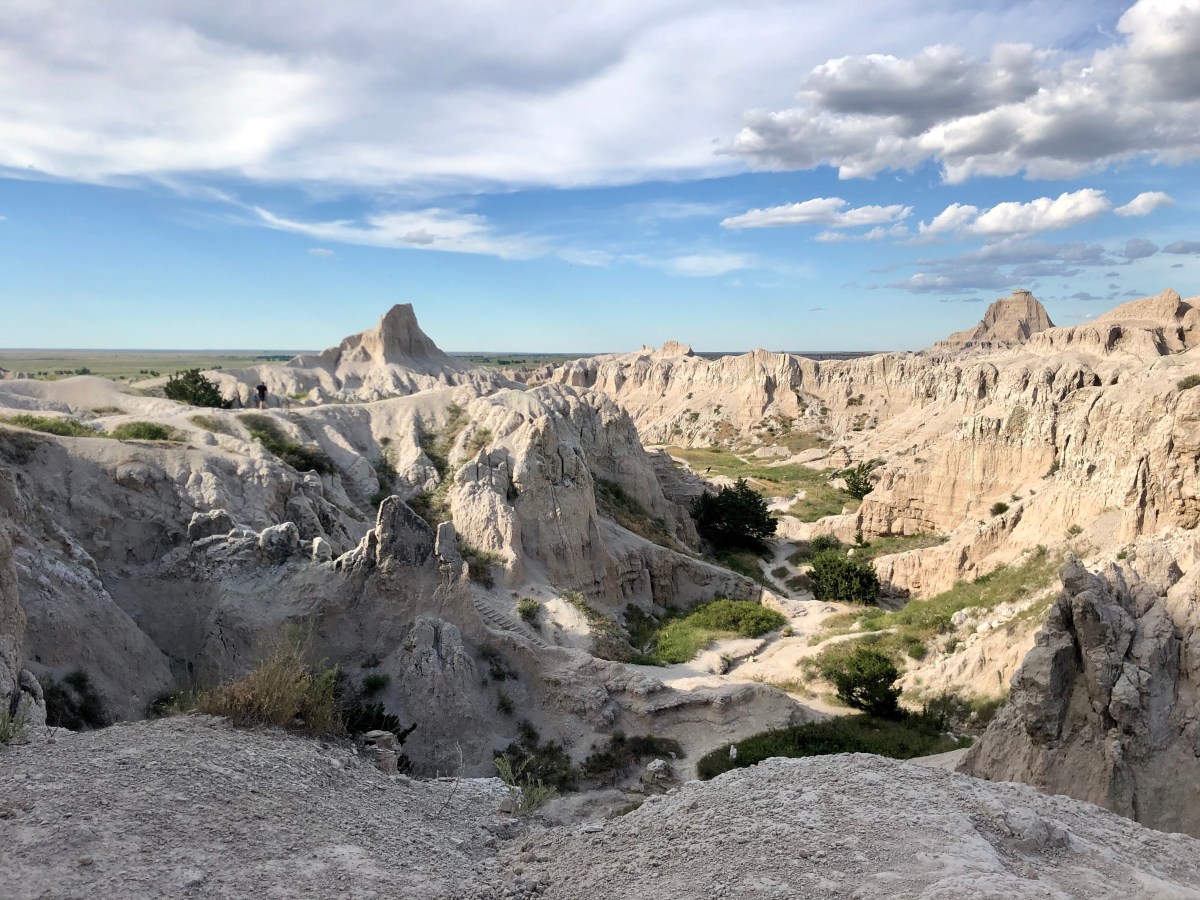
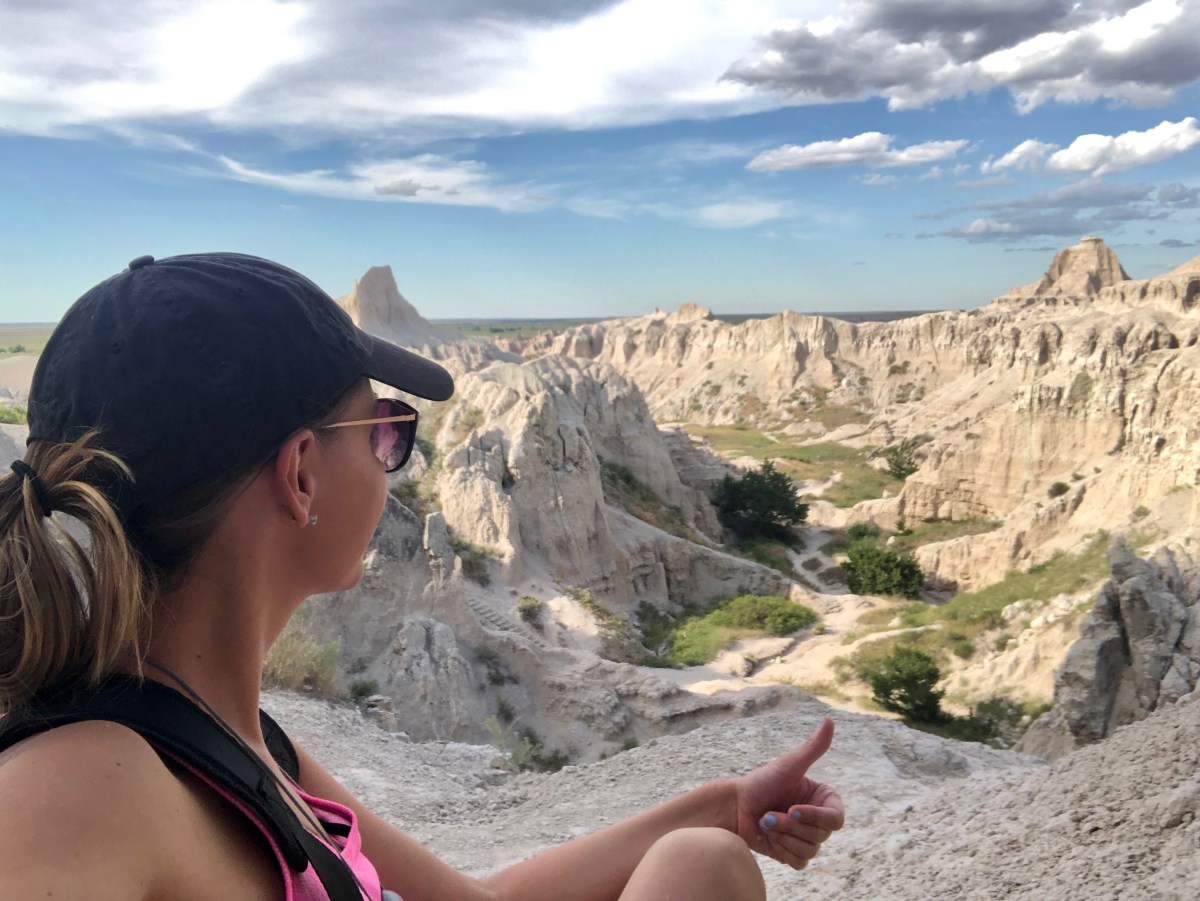


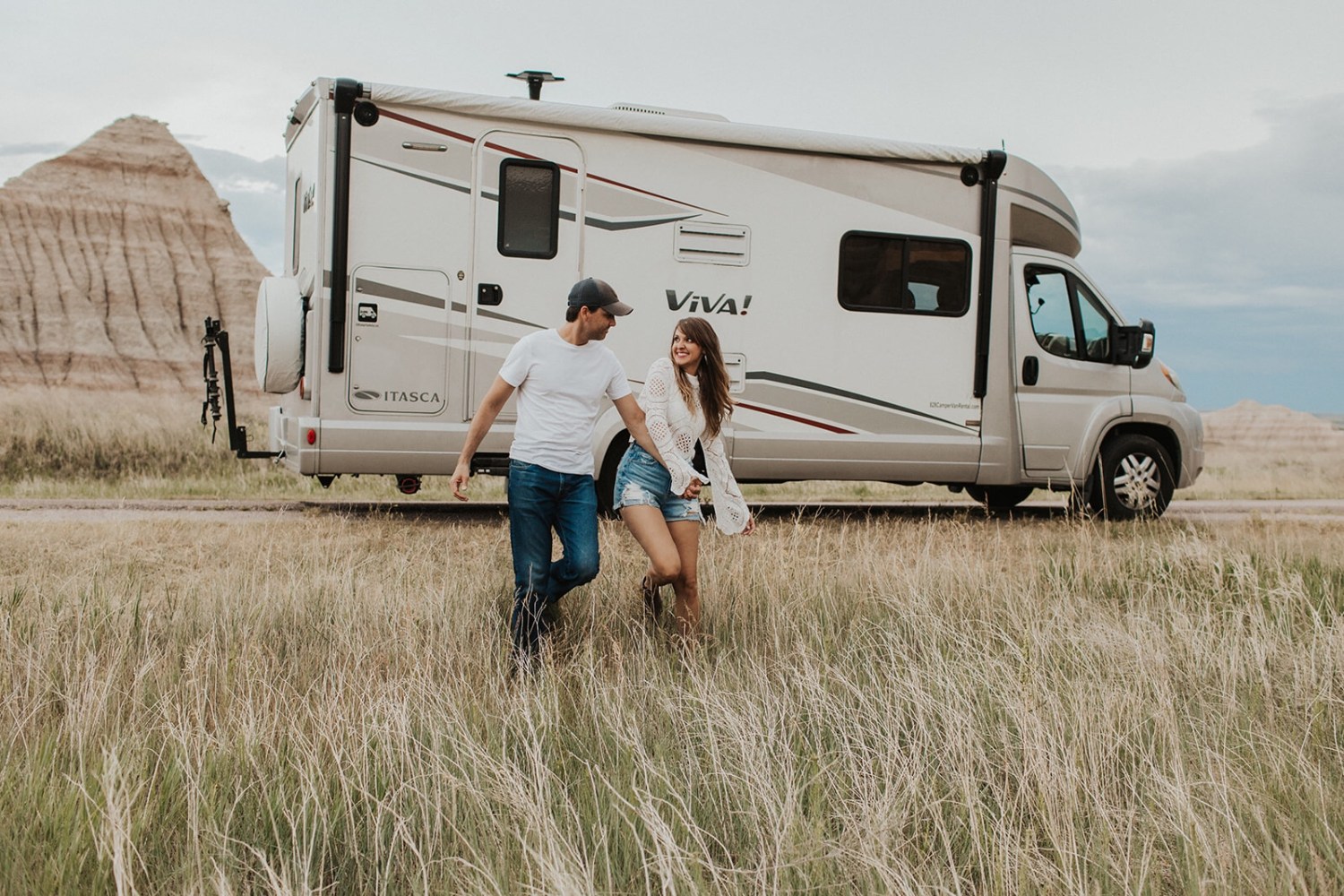
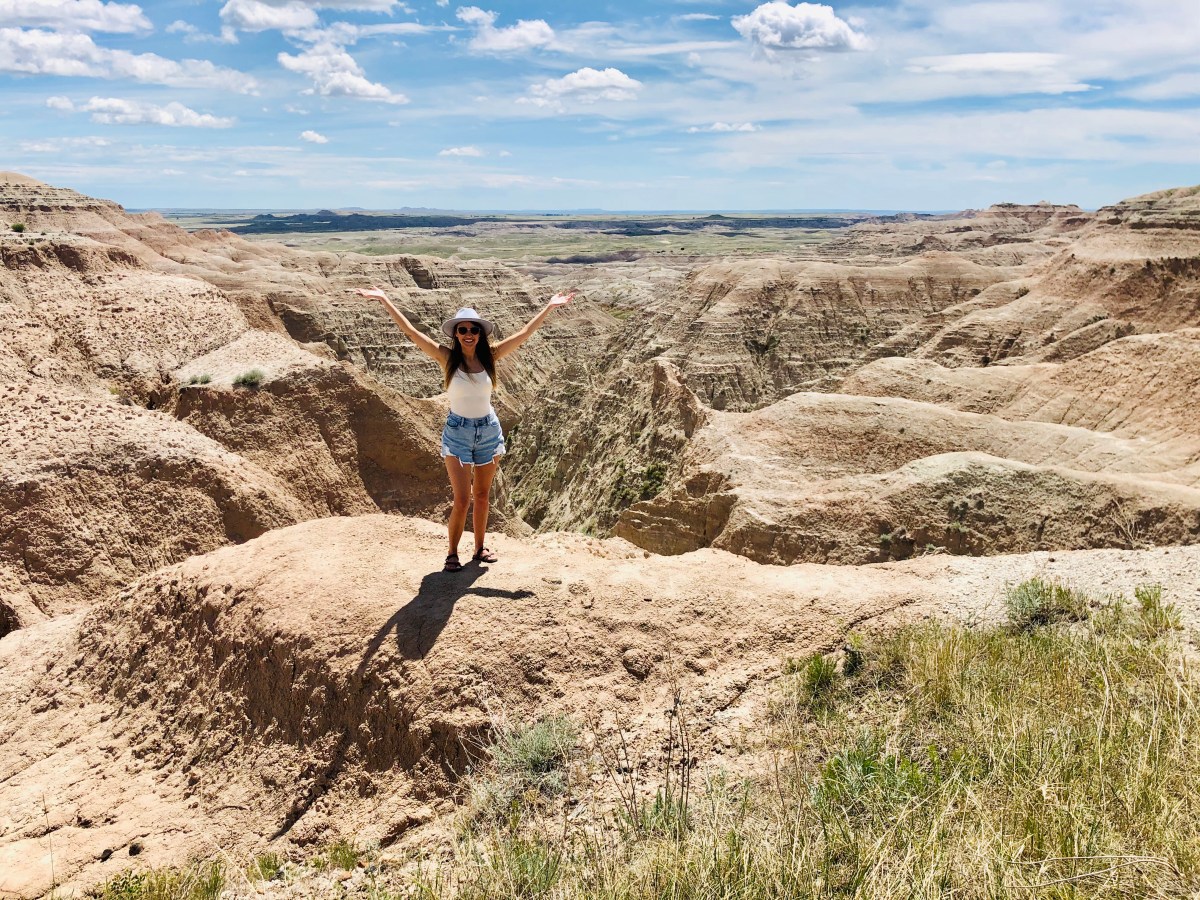
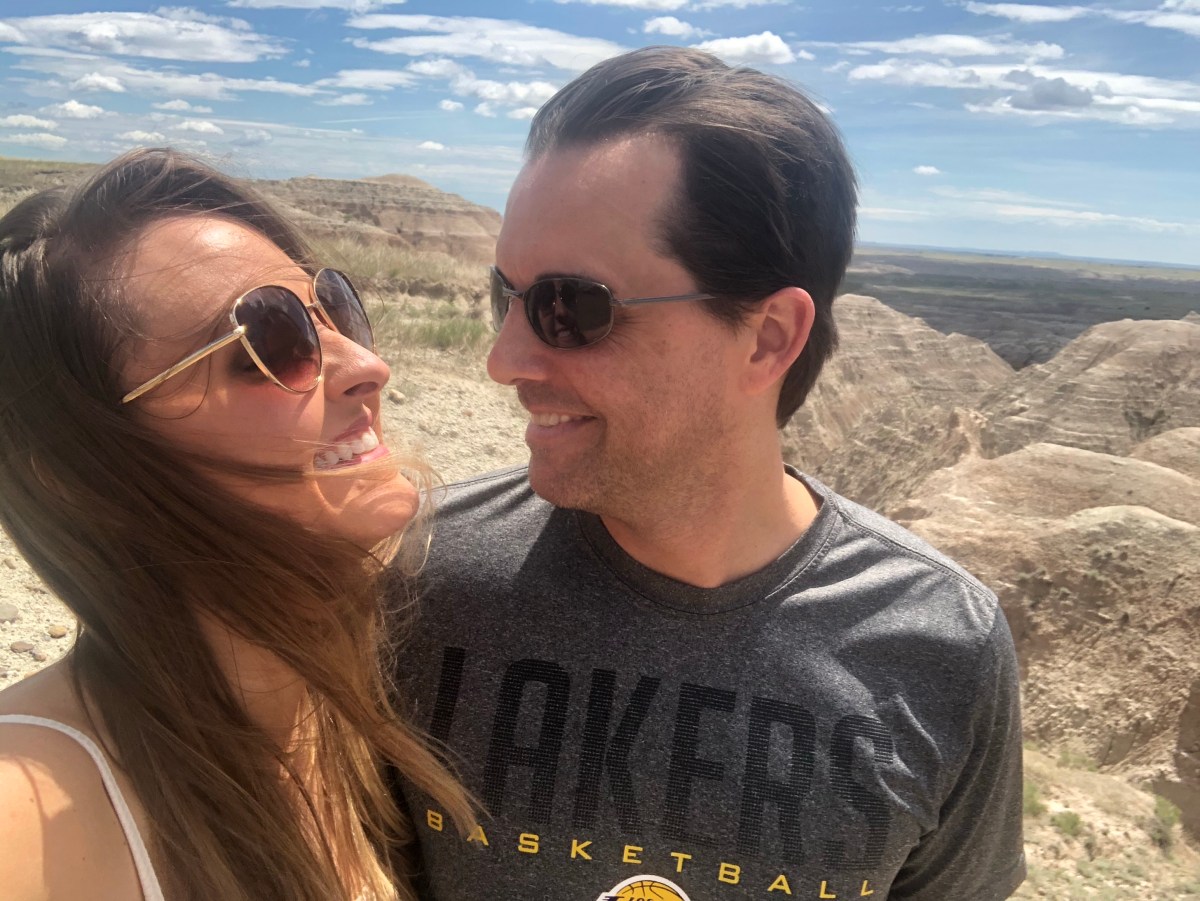
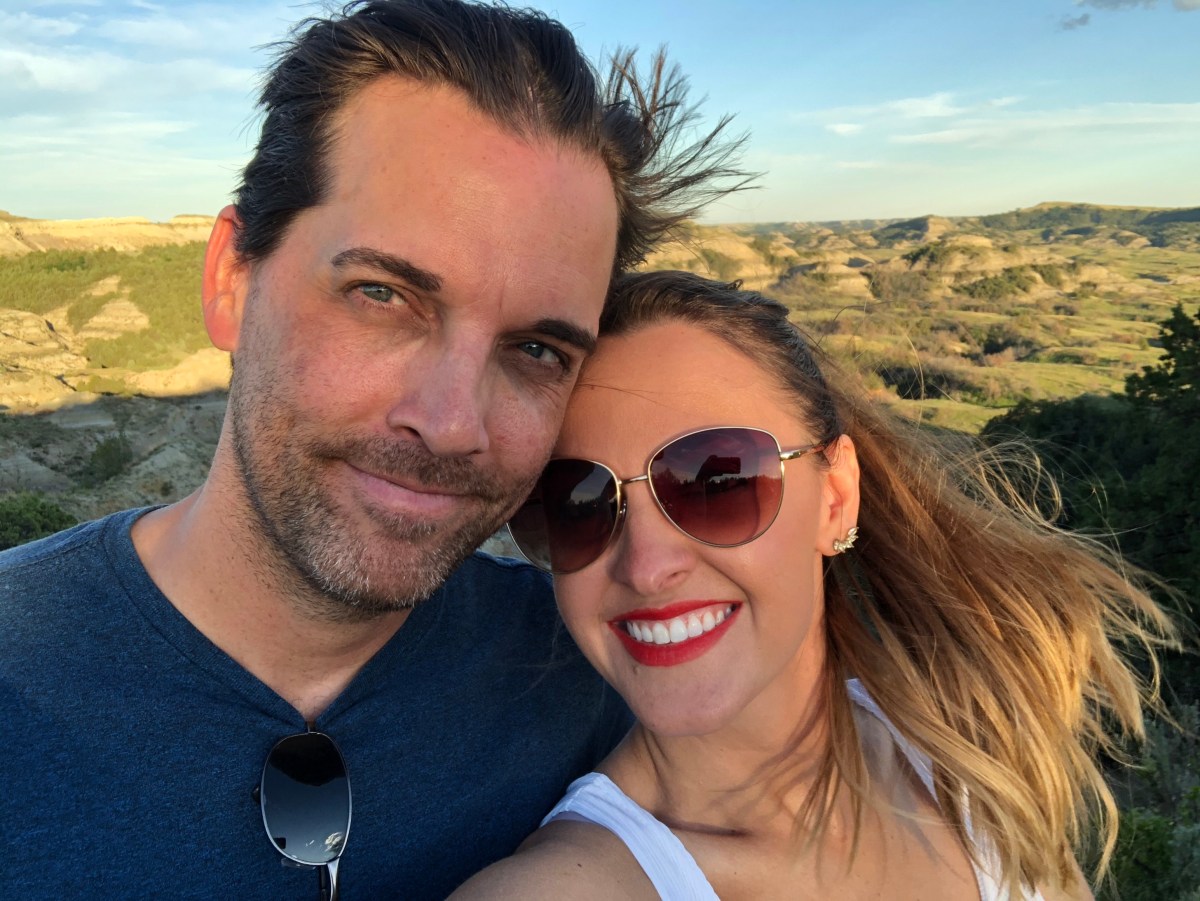
I thought it would be awesome to have our pictures made in the Badlands, to commemorate our first big adventure together. In the 10 months we’d been talking, we had been on a few little trips together, but nothing like this, and I couldn’t pass up a chance to take pictures with that landscape! I happened across Isaacson’s Photo Co. on Instagram, and she just so happened to be the perfect photographer (@theisaacsonsphotoco or you can check out her website: https://www.theisaacsonsco.com/photo). Becca picked out the perfect location to capture some moments of us with the RV and the beautiful Badlands as our backdrop. For these photos, we stopped off for the first little bit on the Castle Trail, which was directly across the road from the Door/Window/Notch Trails. I’m so glad we had these pictures made. Becca was so much fun and had us play little games to capture our excitement in the moment. I’ll always treasure these photos, as they capture perfectly how we felt about the trip. I think you can easily see our love for each other and the beautiful scenery around us. High on life.
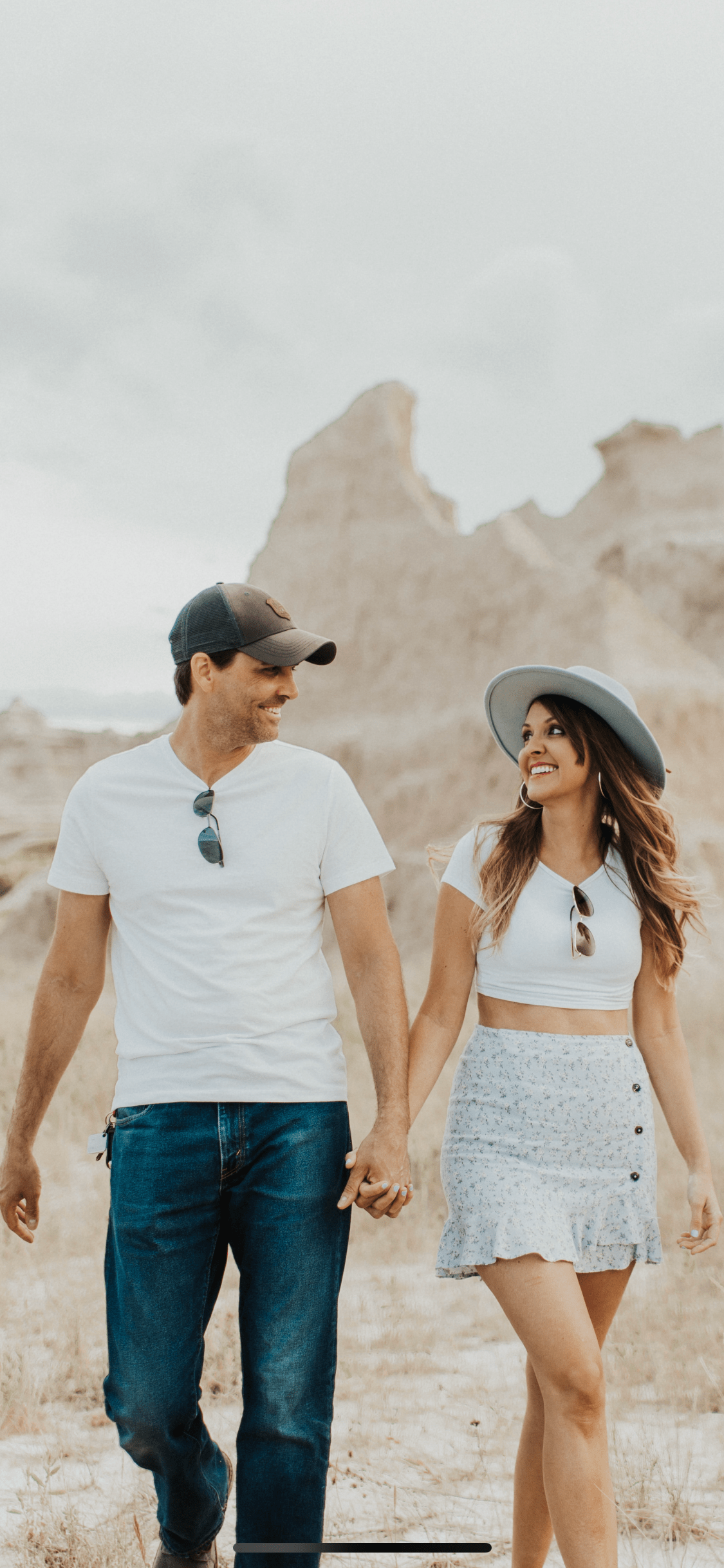

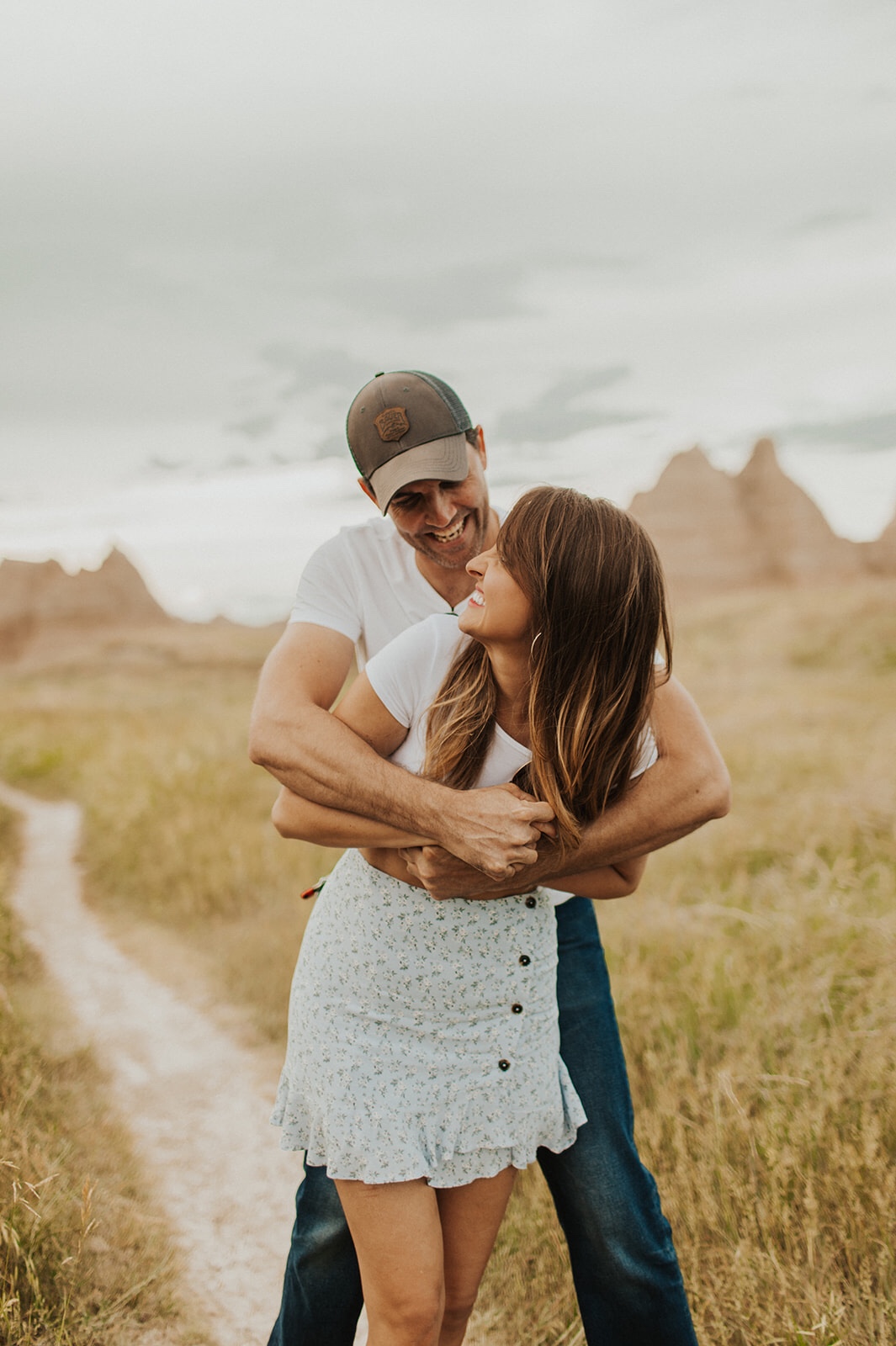

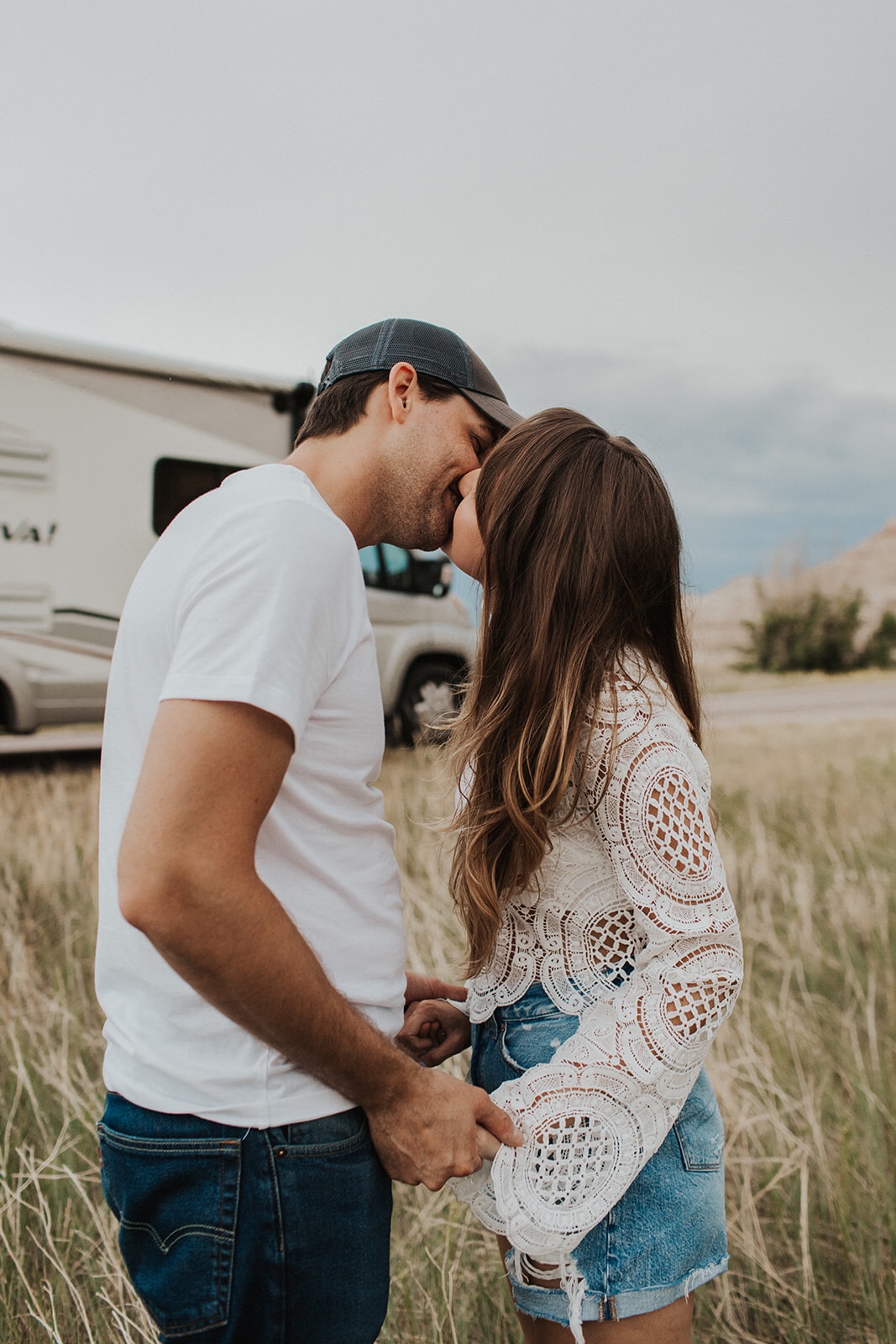
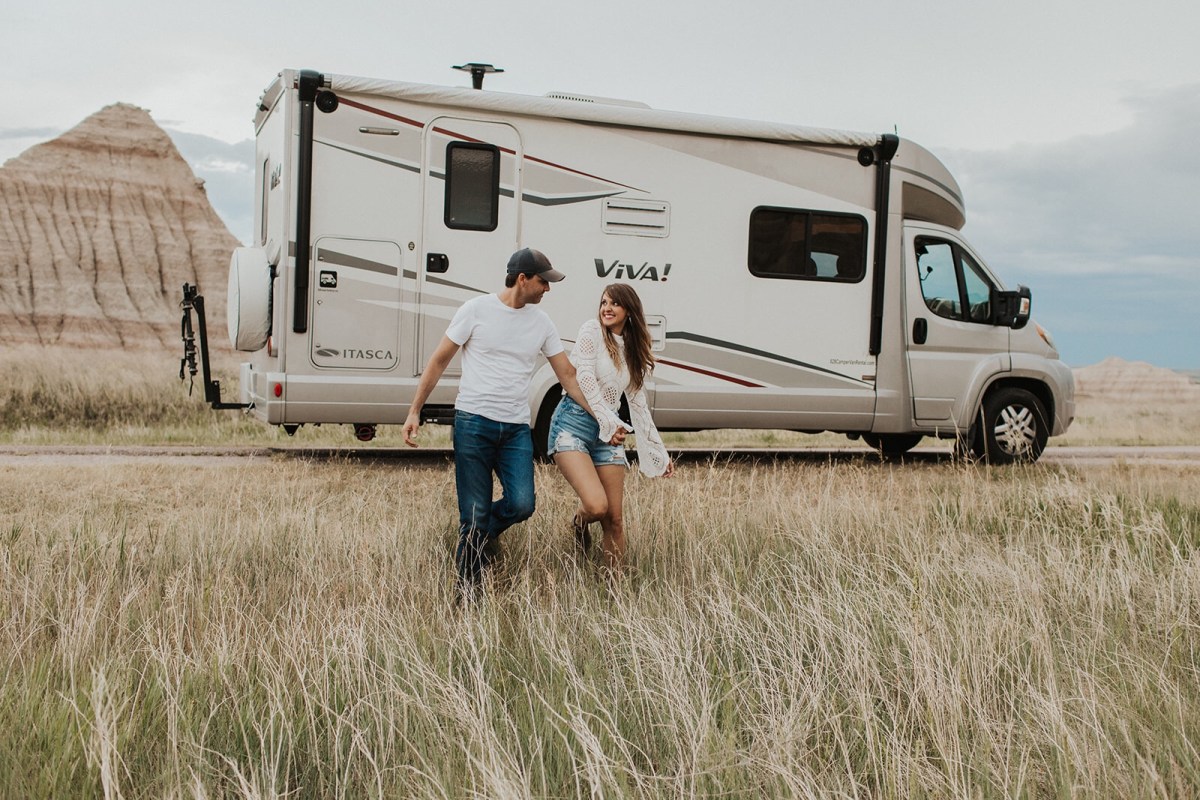

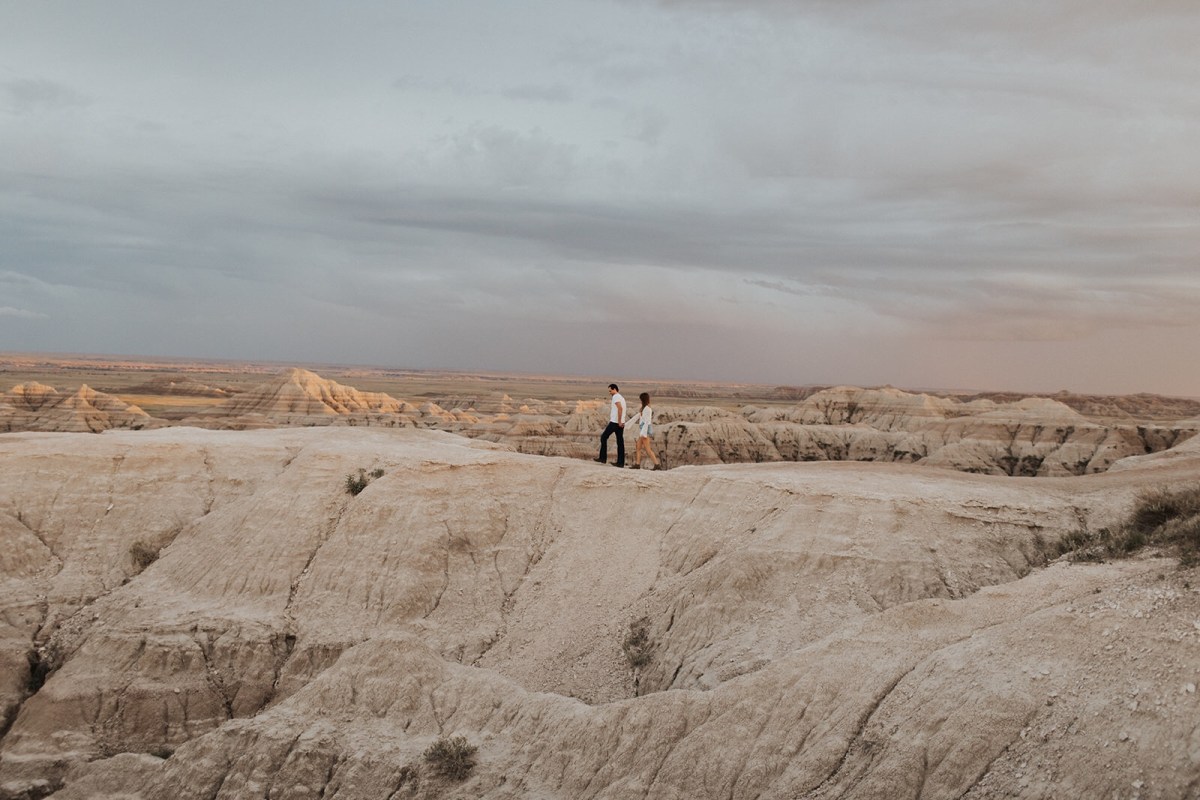
All professional photos were taken by The Isaacsons Photo Co.
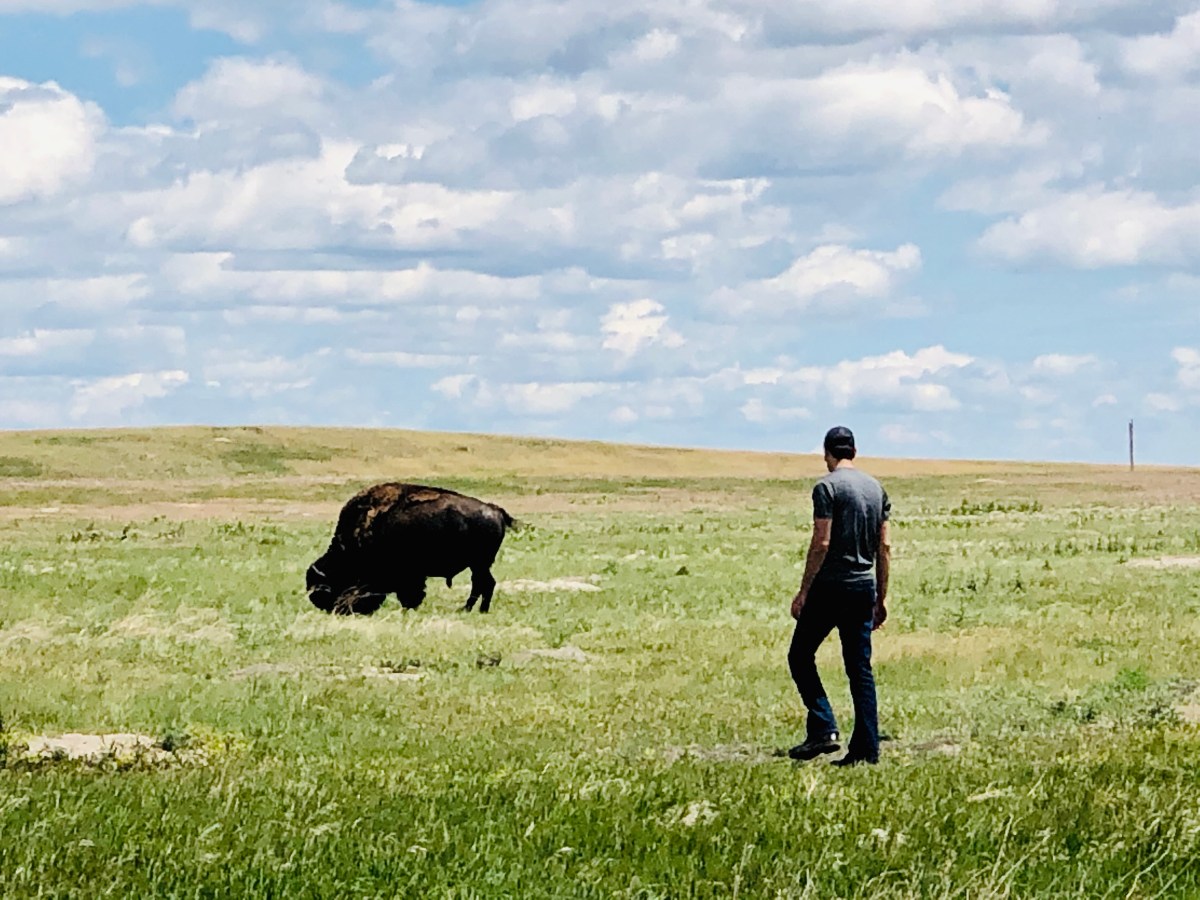
While in the Badlands, you’ll have the opportunity to view a lot of wildlife– Upon entering the park, we immediately saw bison, and a prairie dog town. Later we were able to spot some big horn sheep and pronghorn antelope. The Badlands is also home to the black-footed ferret, which at one point was thought to be extinct. We didn’t see any ferrets, but did come incredibly close to a rattlesnake encounter. There were two right beside one of the outlook boardwalks. From that point on, I was incredibly careful walking in grass anywhere in the Badlands.
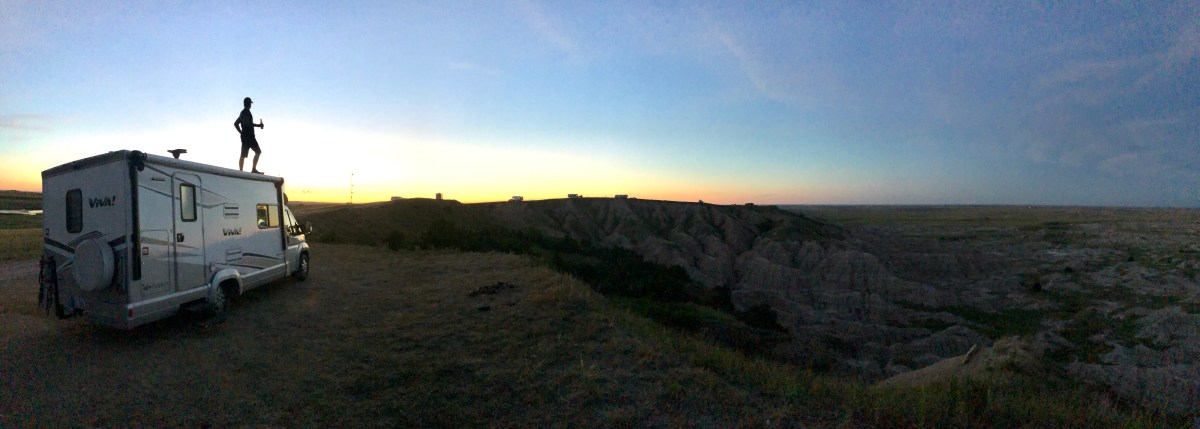
Whatever you do, make sure you don’t pass up an opportunity to view the sunrise or sunset in the park! No words. Just incredible.
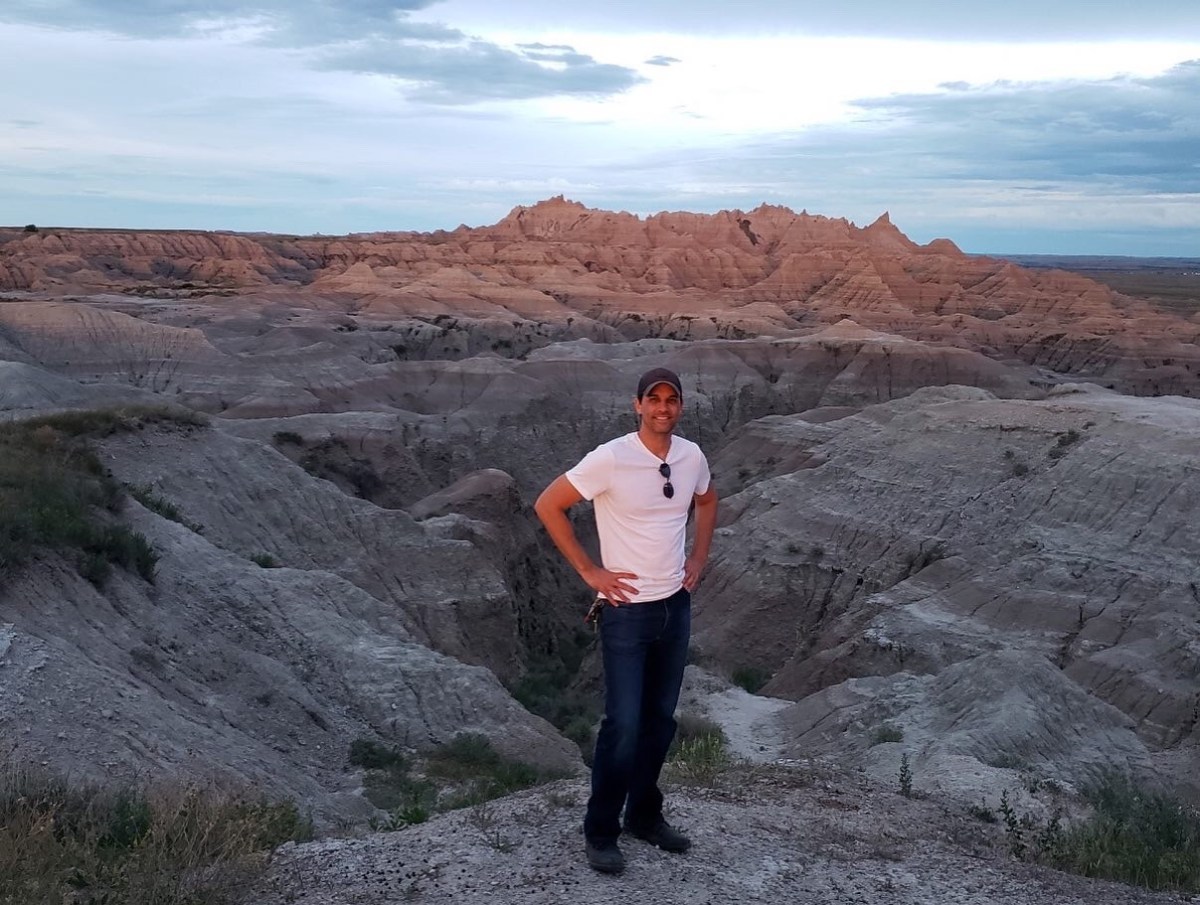
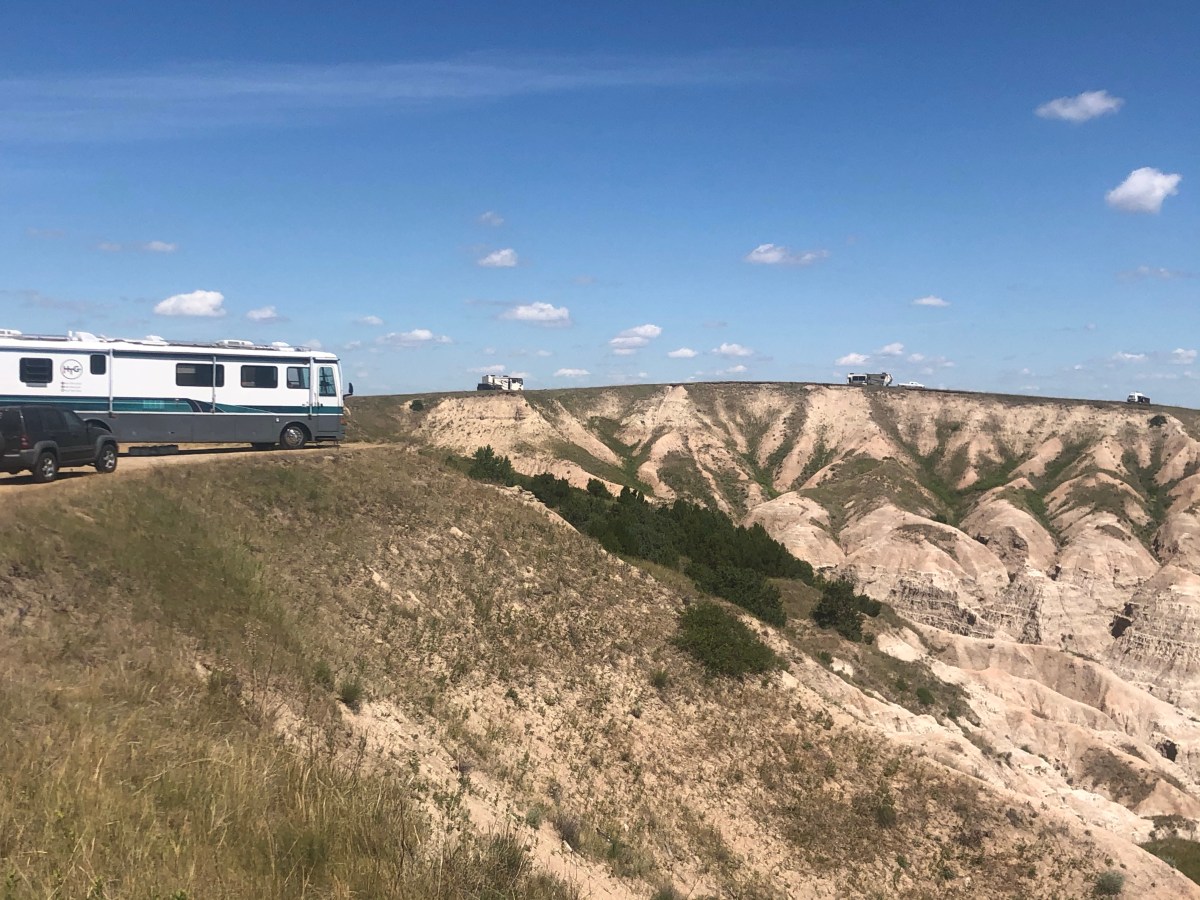
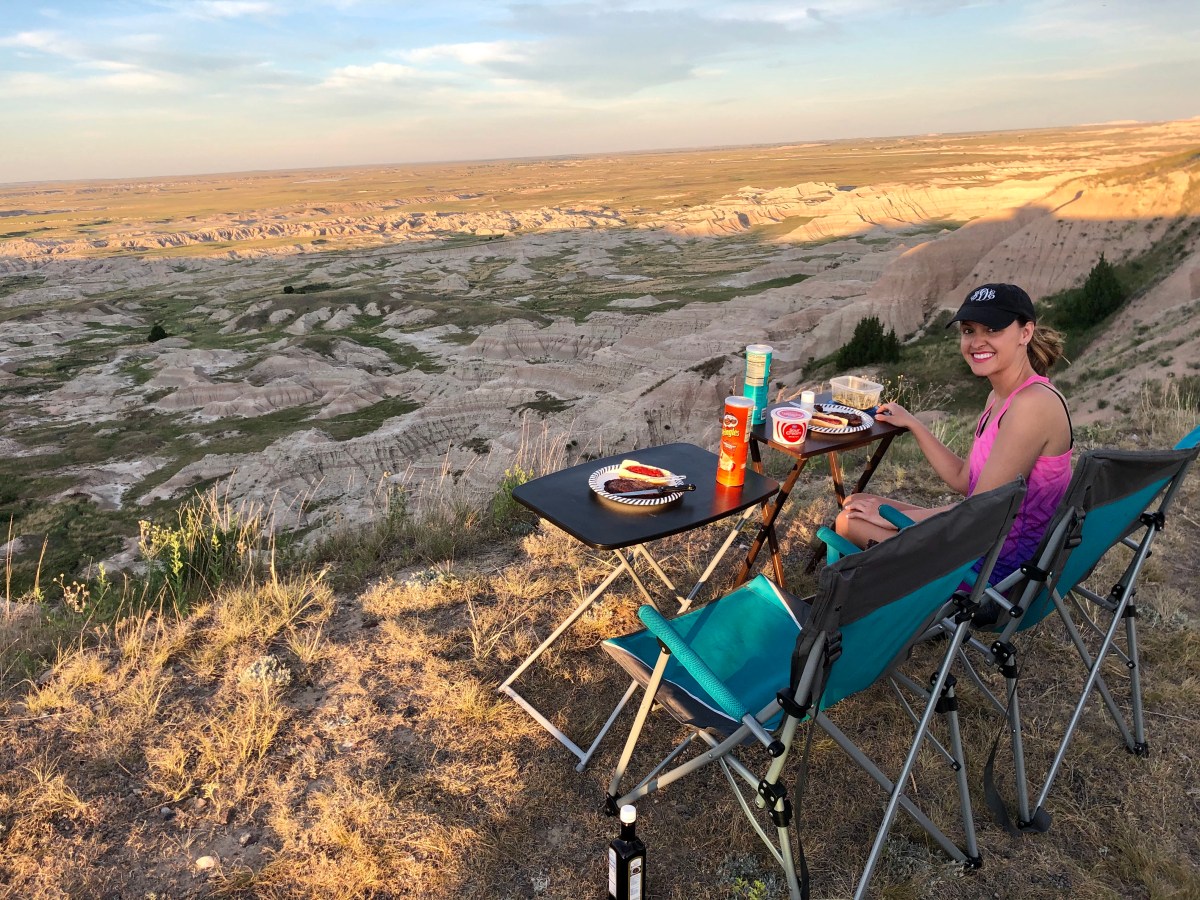
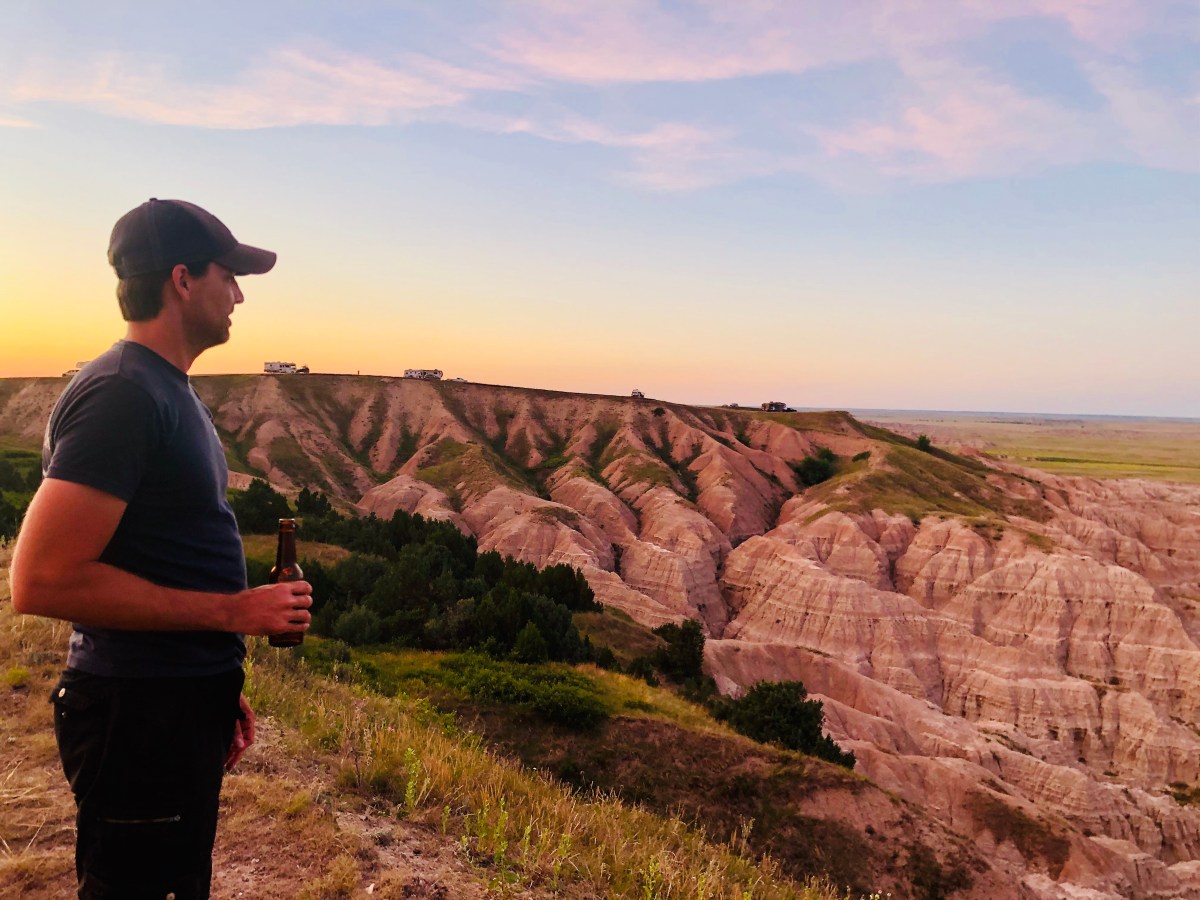
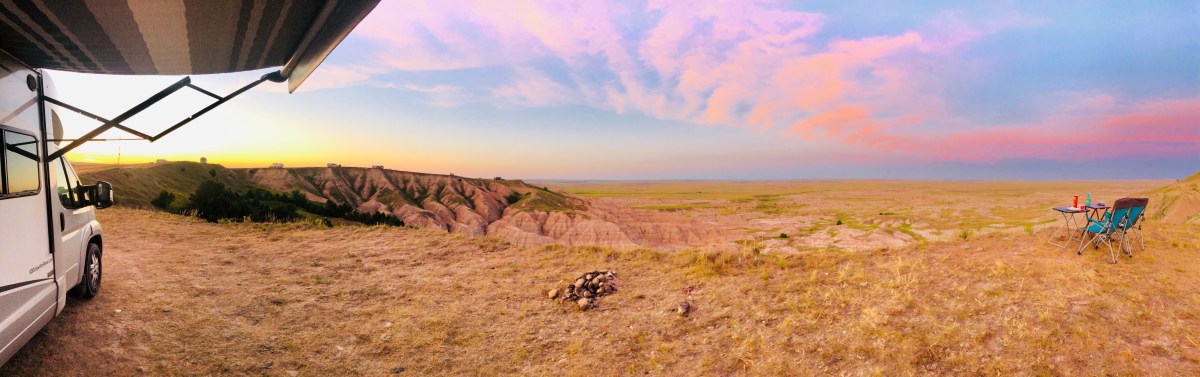
One of our favorite places to take in the sunrise and sunset was on “The Wall”. Listed as the second best boondocking site in the US, this camping site is 6 miles outside of Wall, and right before the Pinnacles Entrance to the park (around a mile), on the left side of 240 down an unmarked gravel/dirt road. In the distance, you’ll probably see a few RVS/campers already parked alongside the cliff that offers incredible views of the Badlands. There may be a few RVs, but “the wall” offered plenty enough spots to where we felt basically alone in the wilderness, like we had all of the Badlands to ourselves. It is highly recommended. Some of our best memories were made perched on “The Wall”.
Mt. Rushmore & the Black Hills
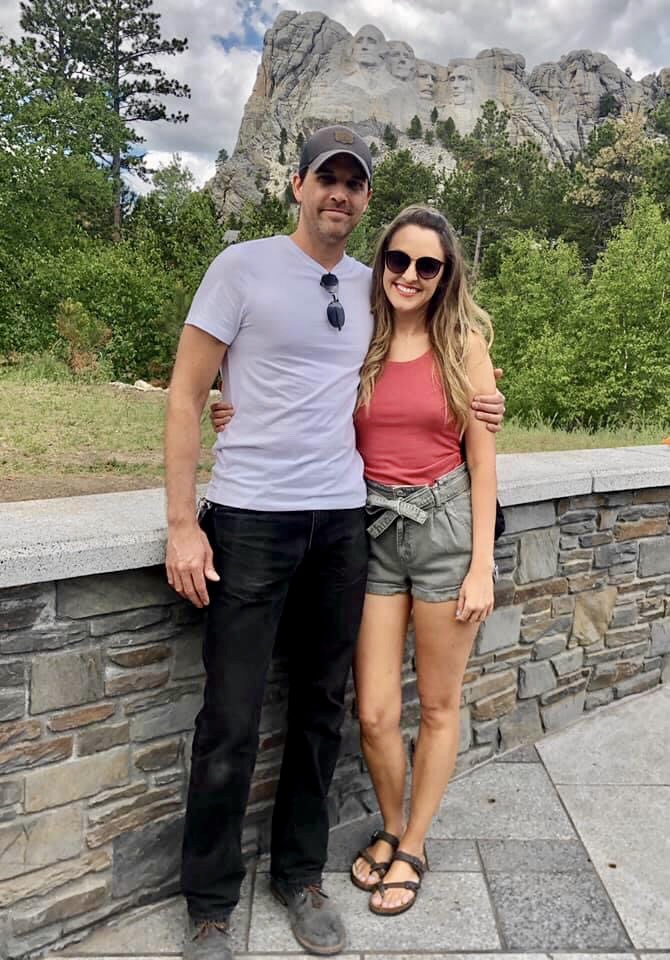
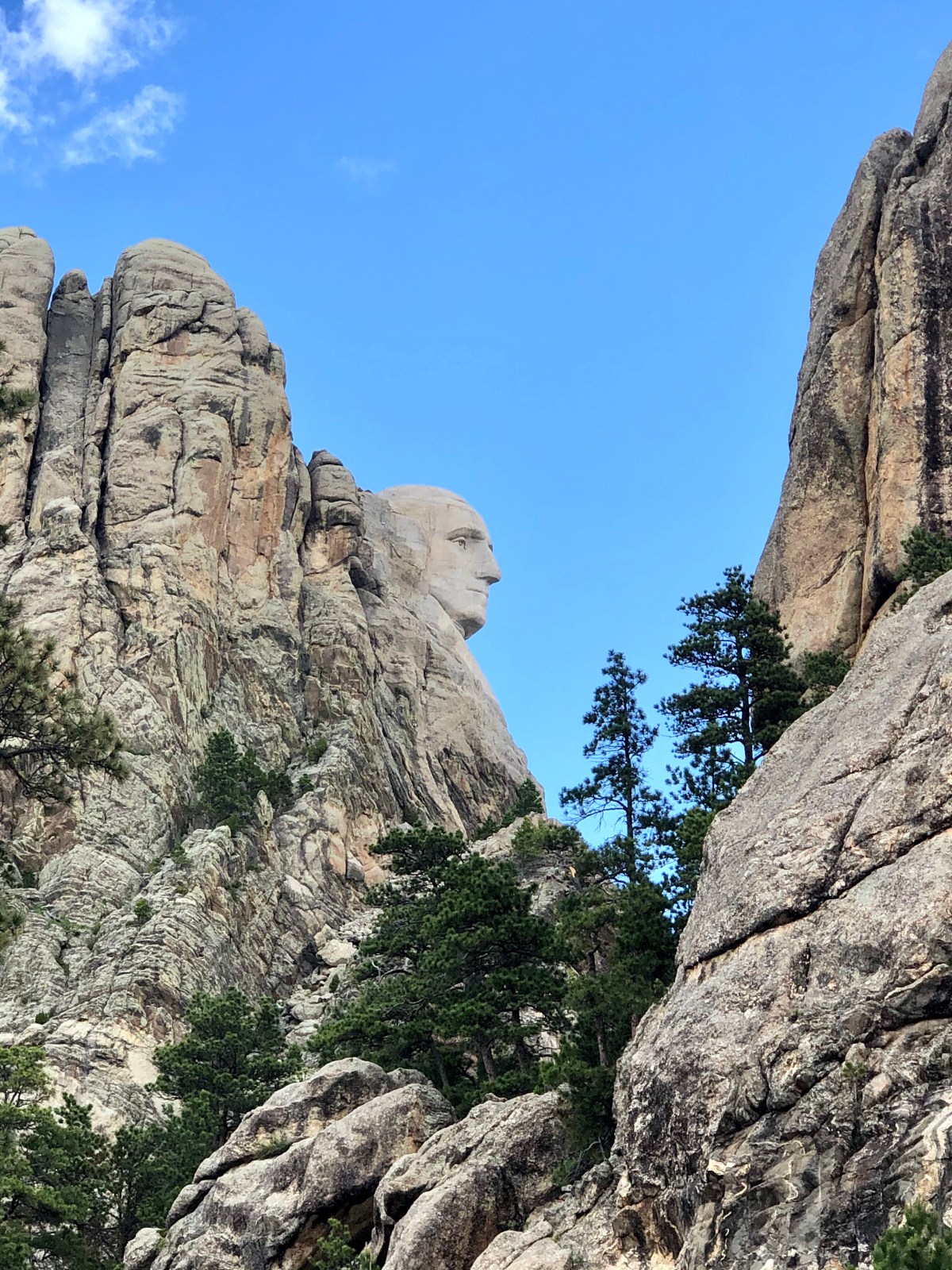
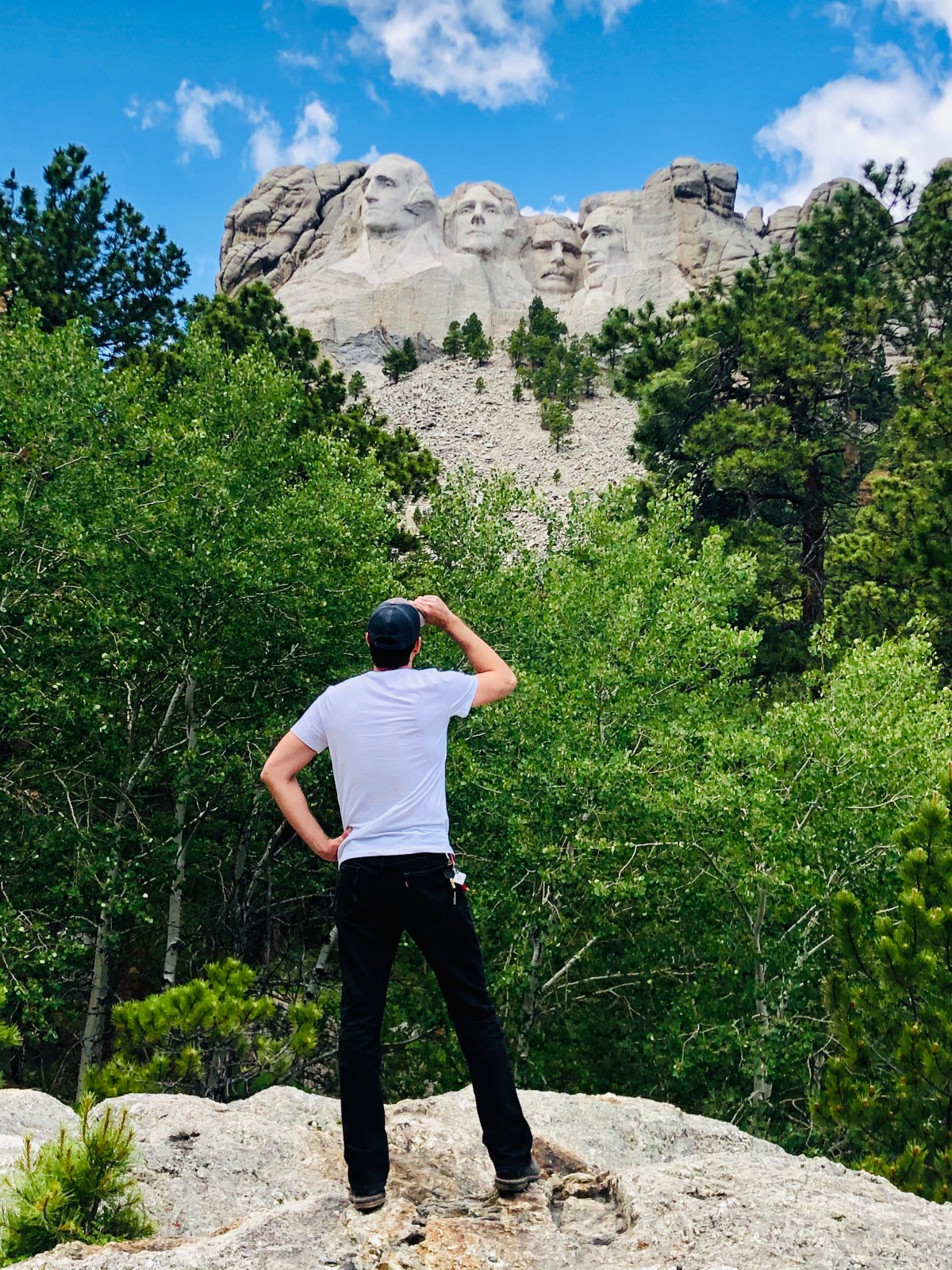
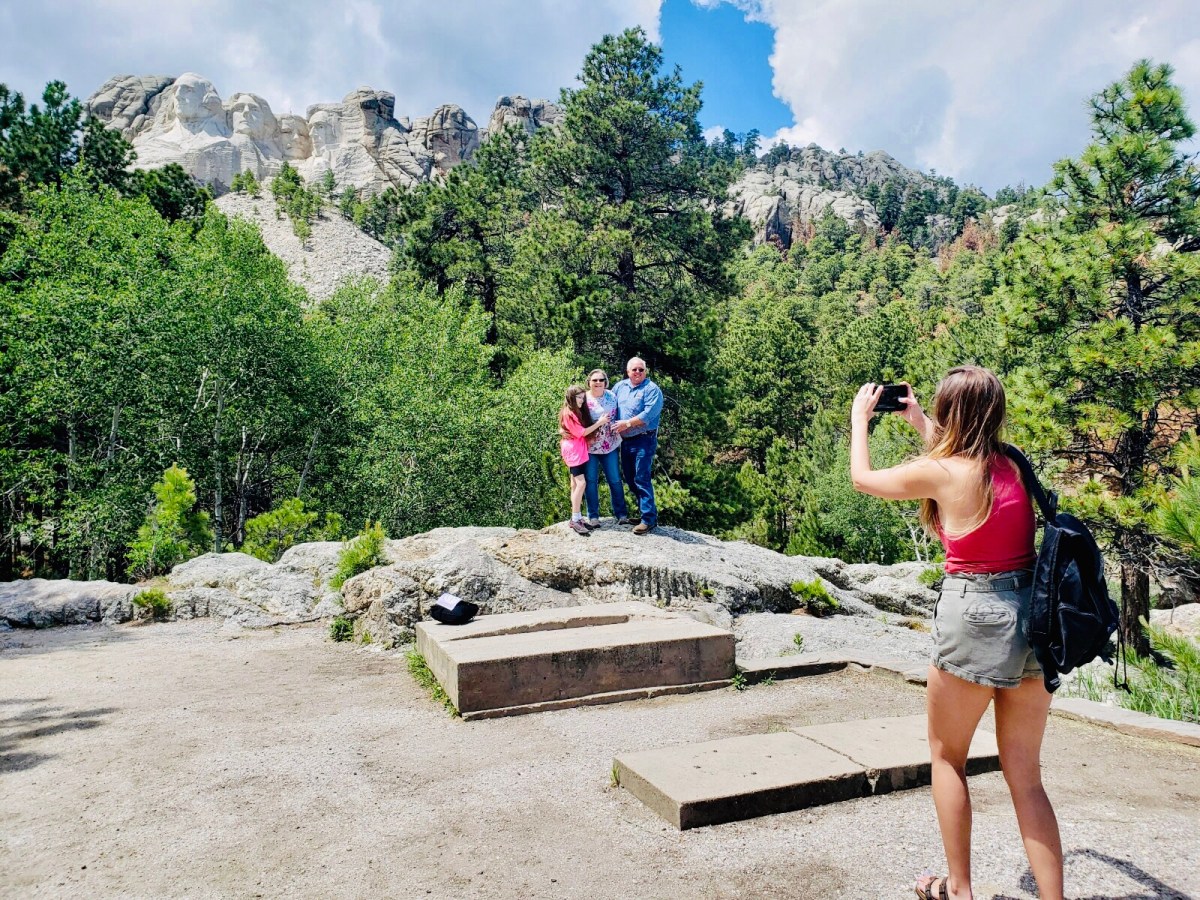
It only seemed fitting that as Cary Grant lovers, we had to go see where “North by Northwest” had its most dramatic scene. Unfortunately (or rather fortunately?) we weren’t able to get anywhere near as close as Cary or Eva to the National Monument. The massive rock carving, featuring Presidents Washington, Jefferson, Roosevelt, and Lincoln was carved from 1927-1941. Reviews online said that it would be underwhelming, but I felt the opposite. It is massive, impressive, and gives one a sense of patriotism. Unfortunately, due to corona and construction, the great majority of the trails to it were closed. We would’ve liked to get closer, but still had a decent view from the bottom. When open, the best view is supposedly from the amphitheater below it. I think that as children, most of us grow up with Mt. Rushmore in the back of our heads as something to check off the bucket-list. I’m glad we earned that check mark.

If planning a trip here, know that the National park pass cannot be applied. Entrance to Mt. Rushmore is technically free, though each vehicle has to pay for parking ($10/vehicle). It’s open from 5 am to 9-11 pm mountain time, and 7 days/week year-round. Though we didn’t come back for the evening lighting ceremony, it sounds like it would be neat to see.
I read wonderful things about Crazy Horse Memorial online, but it ended up being the biggest disappointment of the trip. It’s the largest mountain carving in the world, and on a nice day you can see it up close and personal. Tickets were around $25 for 2 people, and when we entered there was a huge line to take a bus to see the memorial. With COVID going on, we did not feel comfortable loading on the bus, and unfortunately, there was no other way to see it. This was not disclosed at the point of entry. At this time it also started pouring the rain, so we tried to leave, and they would not issue a refund.
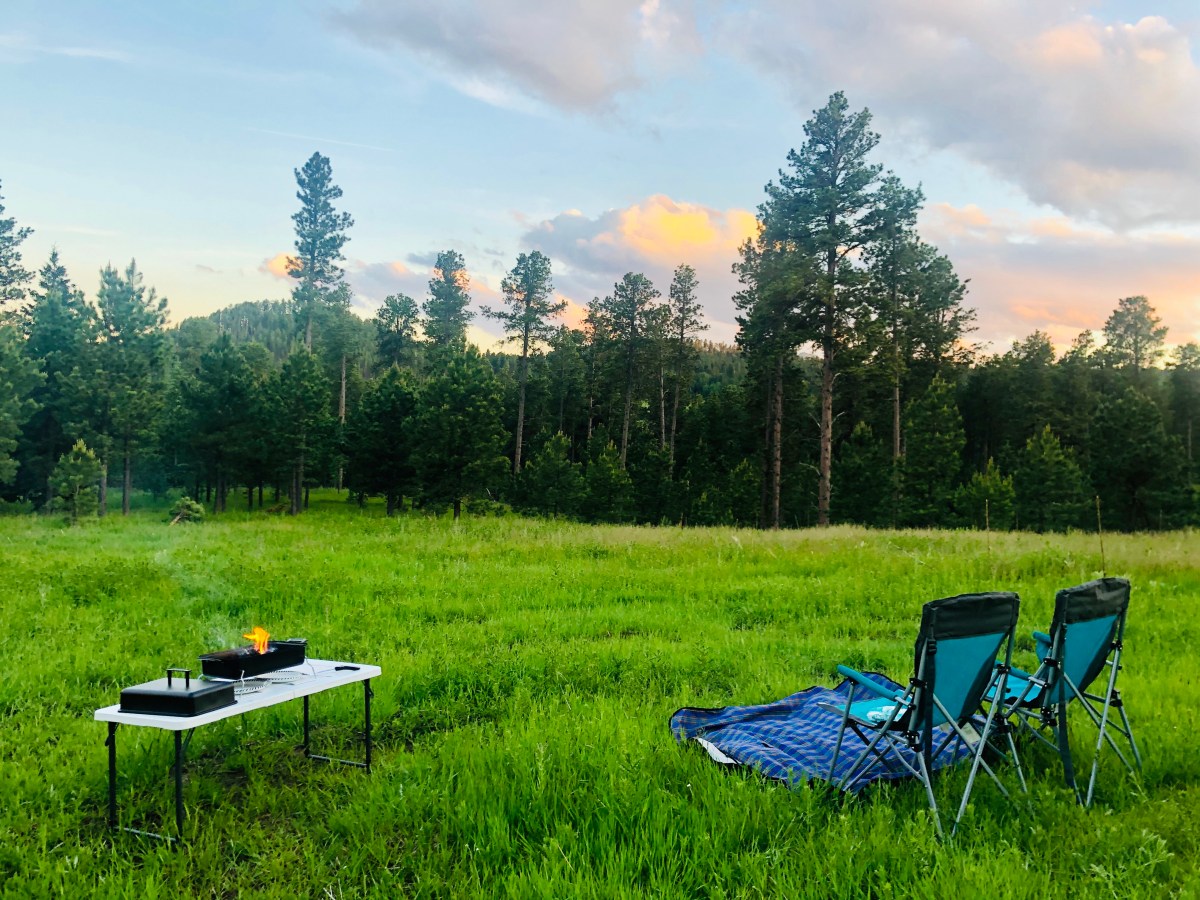
Boondocking in the Black Hills
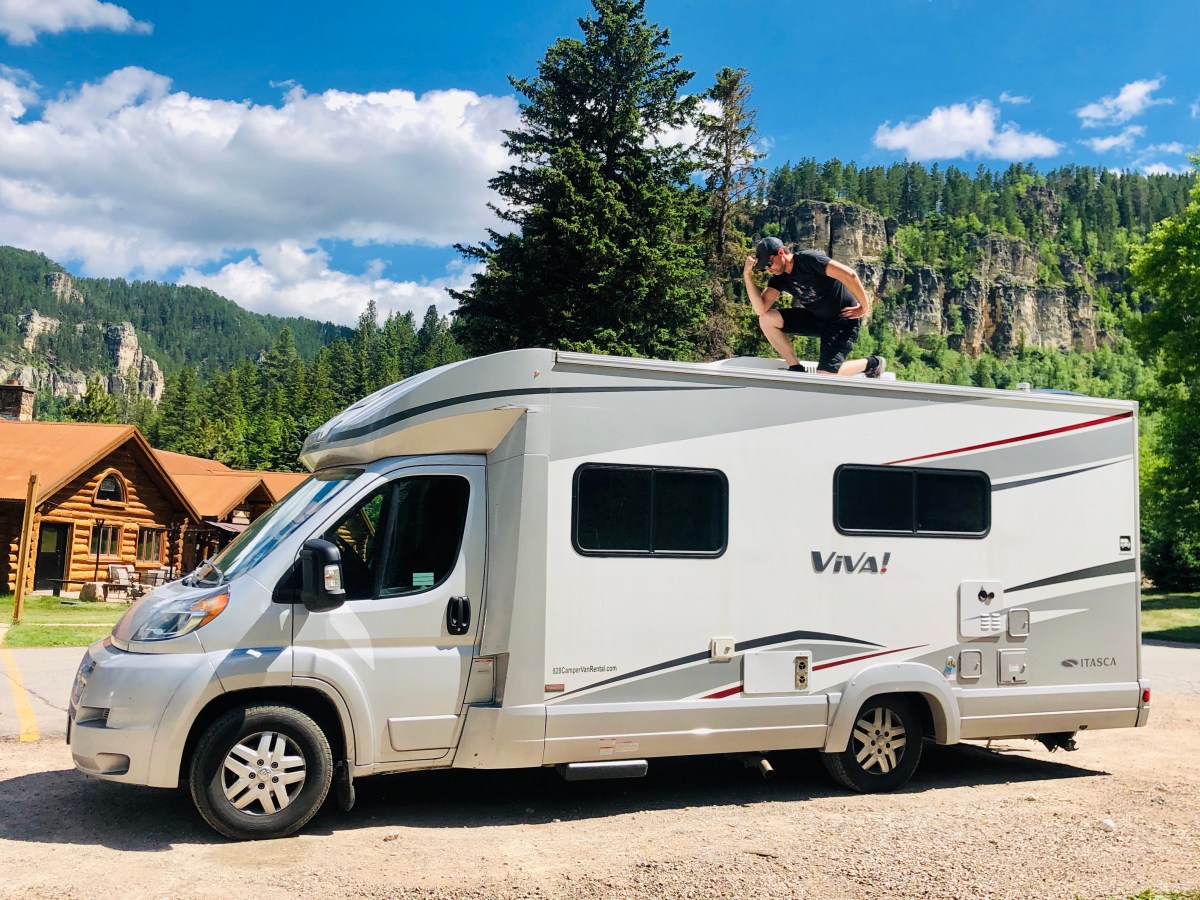
Spearfish Canyon
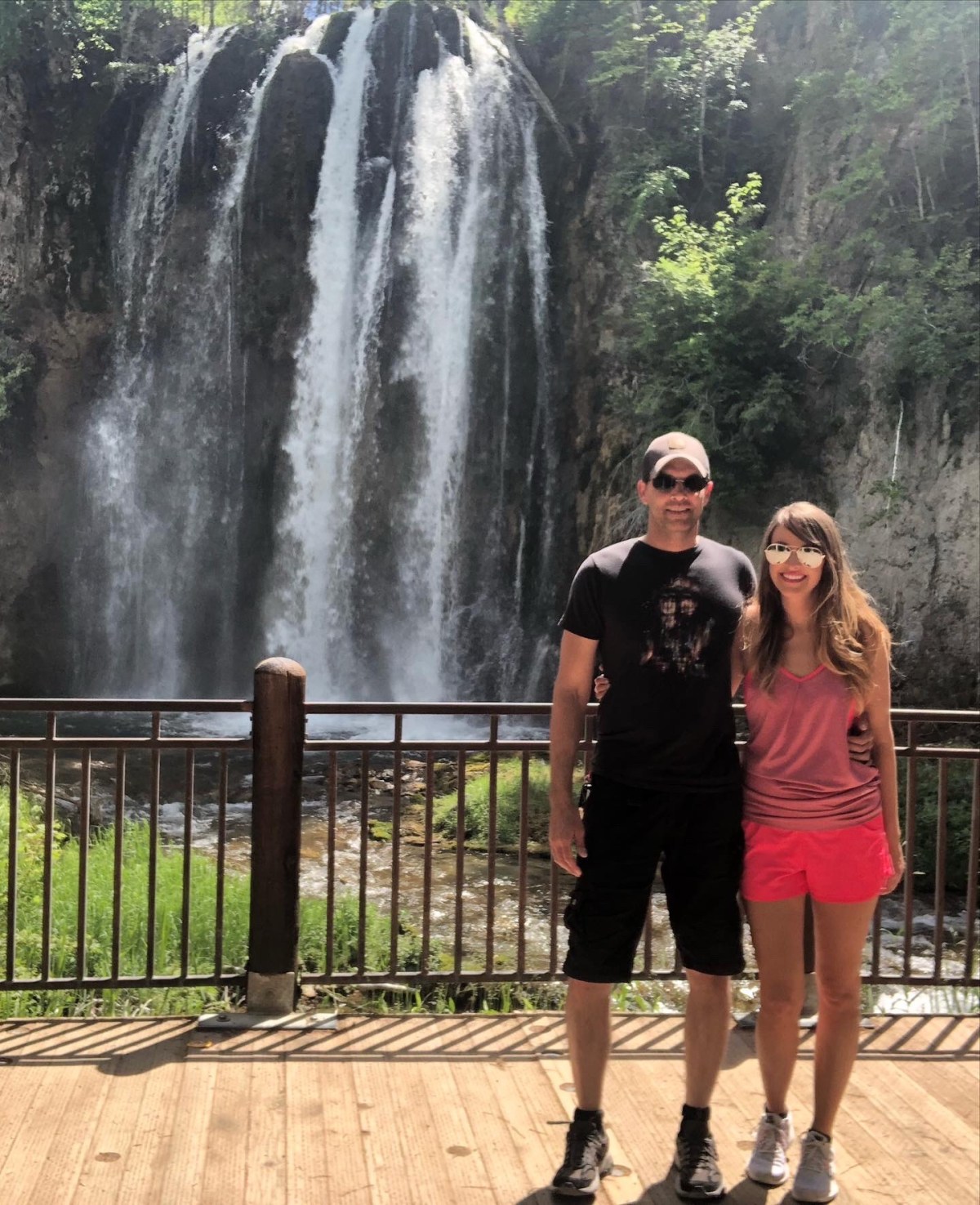
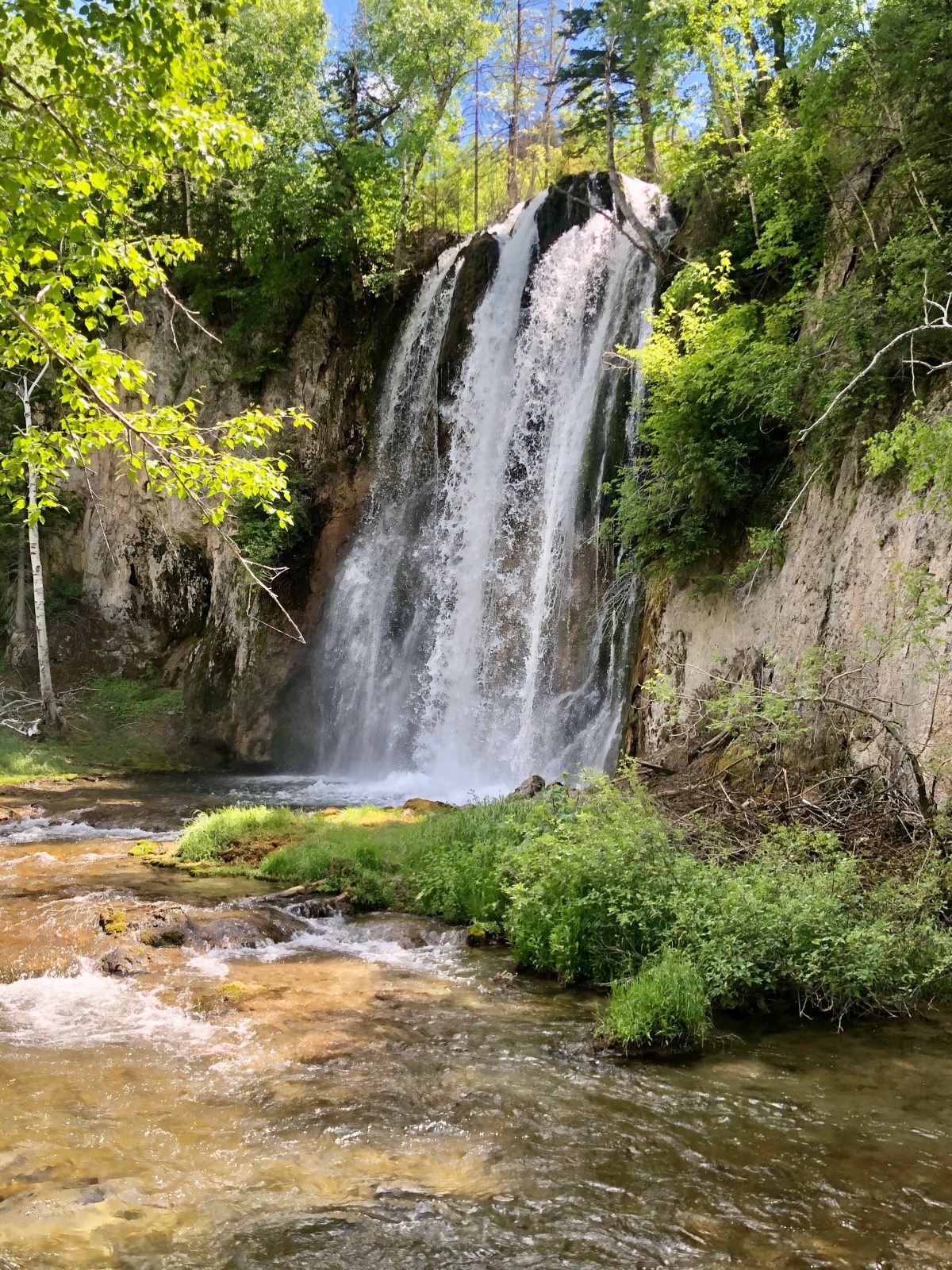
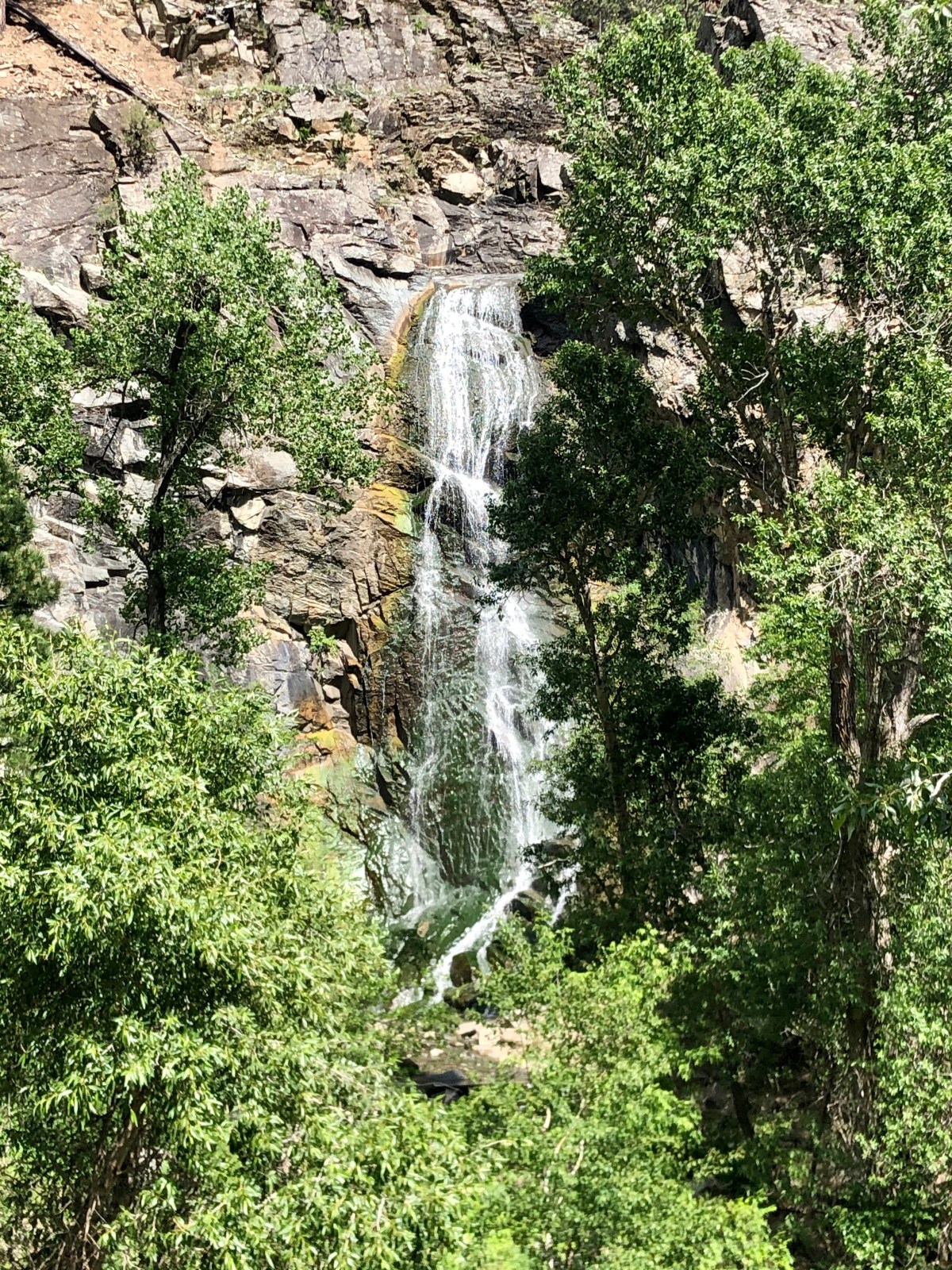
The Black Hills were honestly a bit underwhelming. Other than the historic old west town of Deadwood, and visiting Spearfish Canyon’s waterfalls, there was nothing that I was personally excited about. It’s a small mountain range filled with evergreens. I wouldn’t go out of my way to visit here again, though it was an ok stop. In Spearfish Canyon, there are 3 waterfalls you can see: Bridal Veil Falls (easily viewable from platform on the side of the road, 60 ft tall), Roughlock Falls (multi-layered waterfall, 4 miles round trip), and Spearfish Falls (easy hike, mostly paved, 1.5 miles round trip). We were able to see both Bridal Veil Falls and Spearfish Falls.
Devil’s Tower
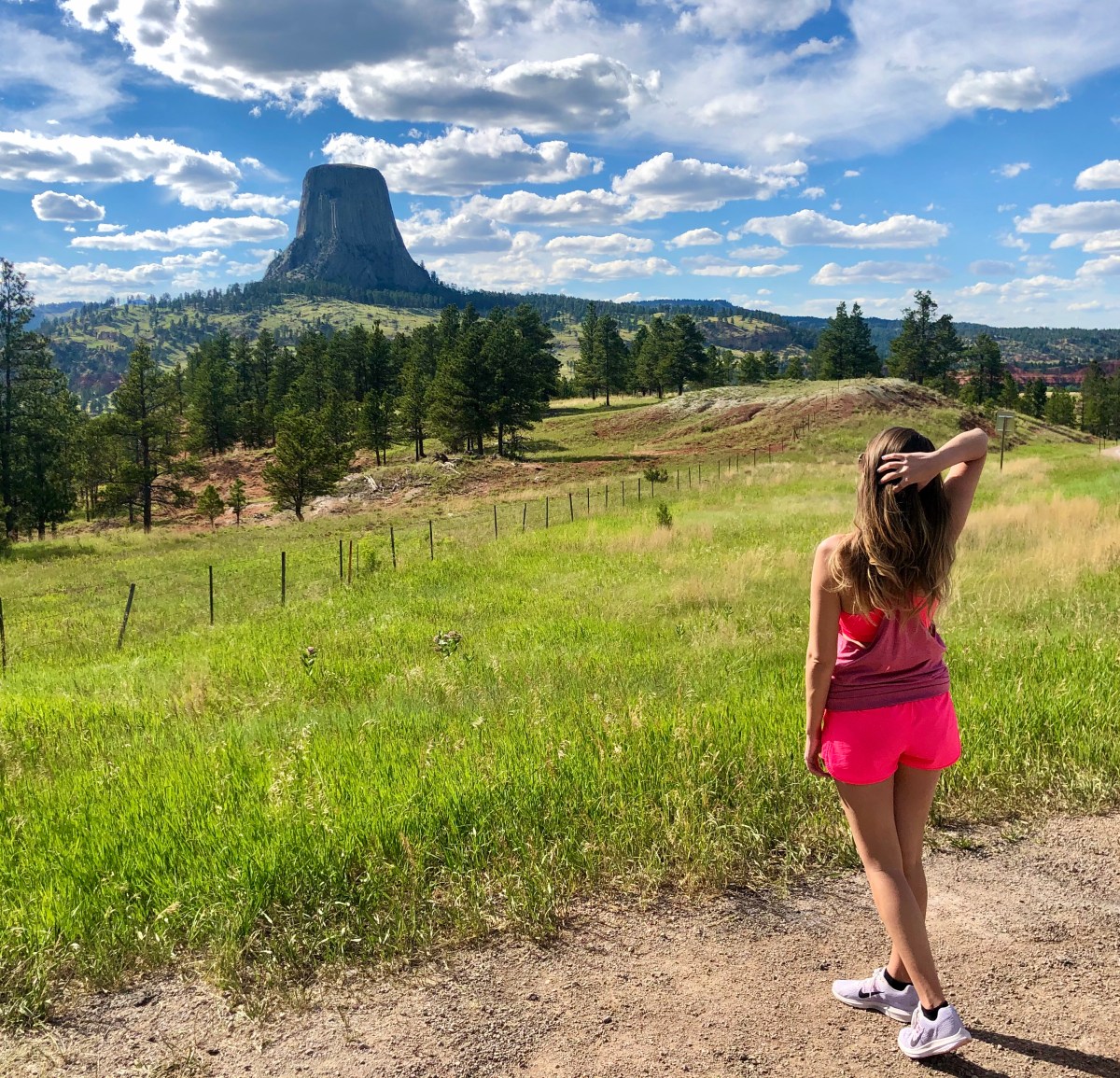
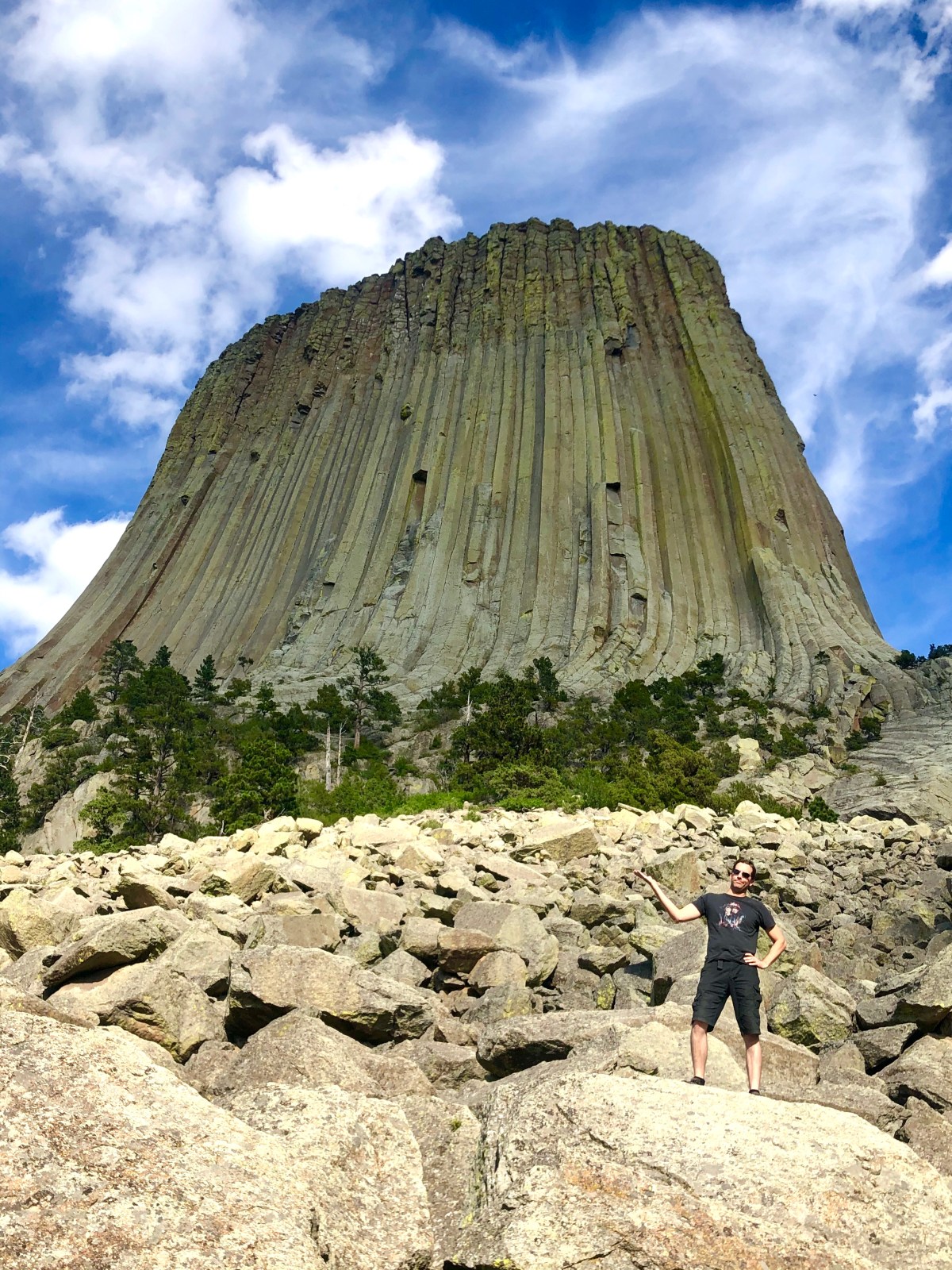
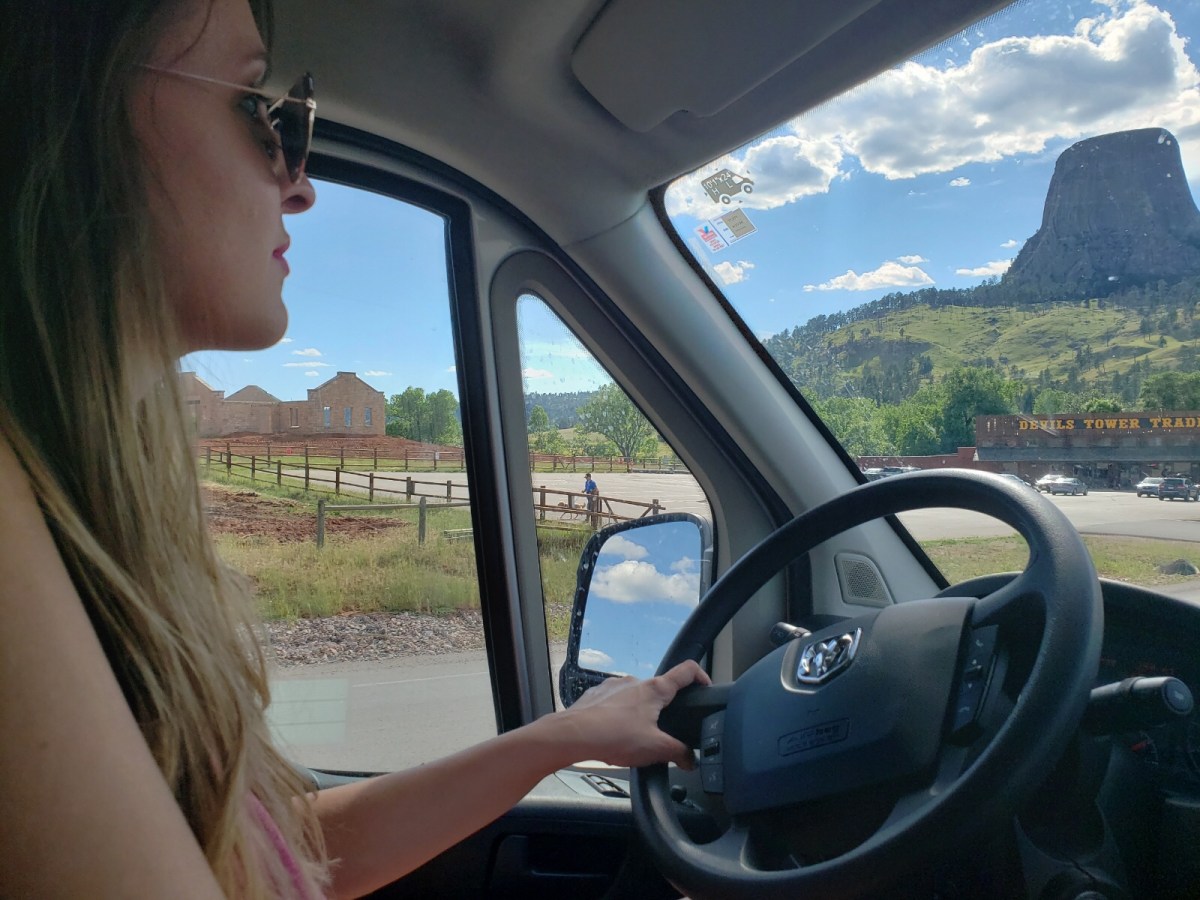
Another one of the more impressive sites from our trip was the Devil’s Tower in Wyoming. For only a little over an hour, you can travel from Spearfish Canyon here. A local highly recommended it, and I’m super thankful for the recommendation. It’s the nation’s first national monument, established in 1906 by President Roosevelt. It is a huge tower formed by an igneous intrusion, though scientists aren’t exactly sure how that process took place. Some might recognize it from the 1977 movie, “Close Encounters of the Third Kind.” There is also an episode of “The Unexplained” which speculates the formation of the Devi’s Tower, which I hope to watch. Scott and I enjoyed the walk around the base of the tower, which was a nice little hike.

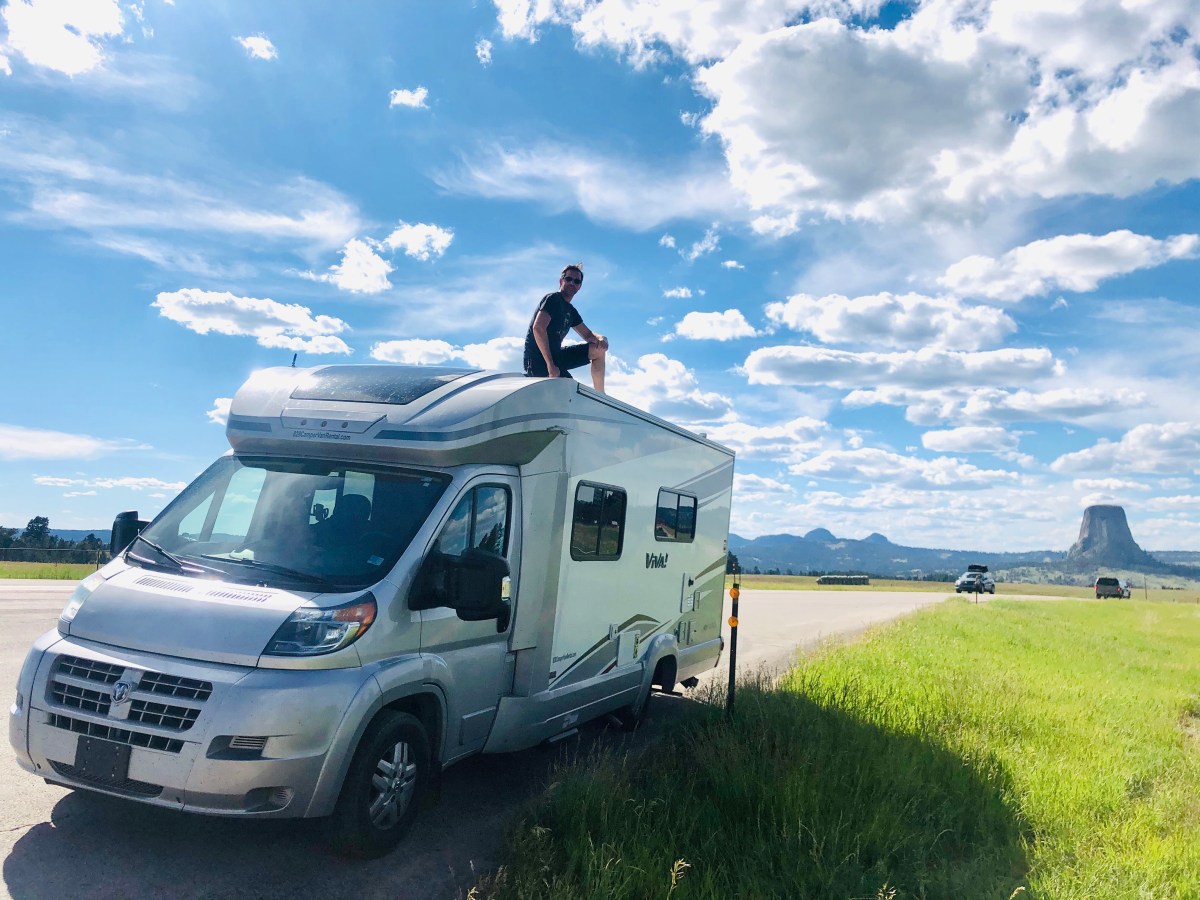


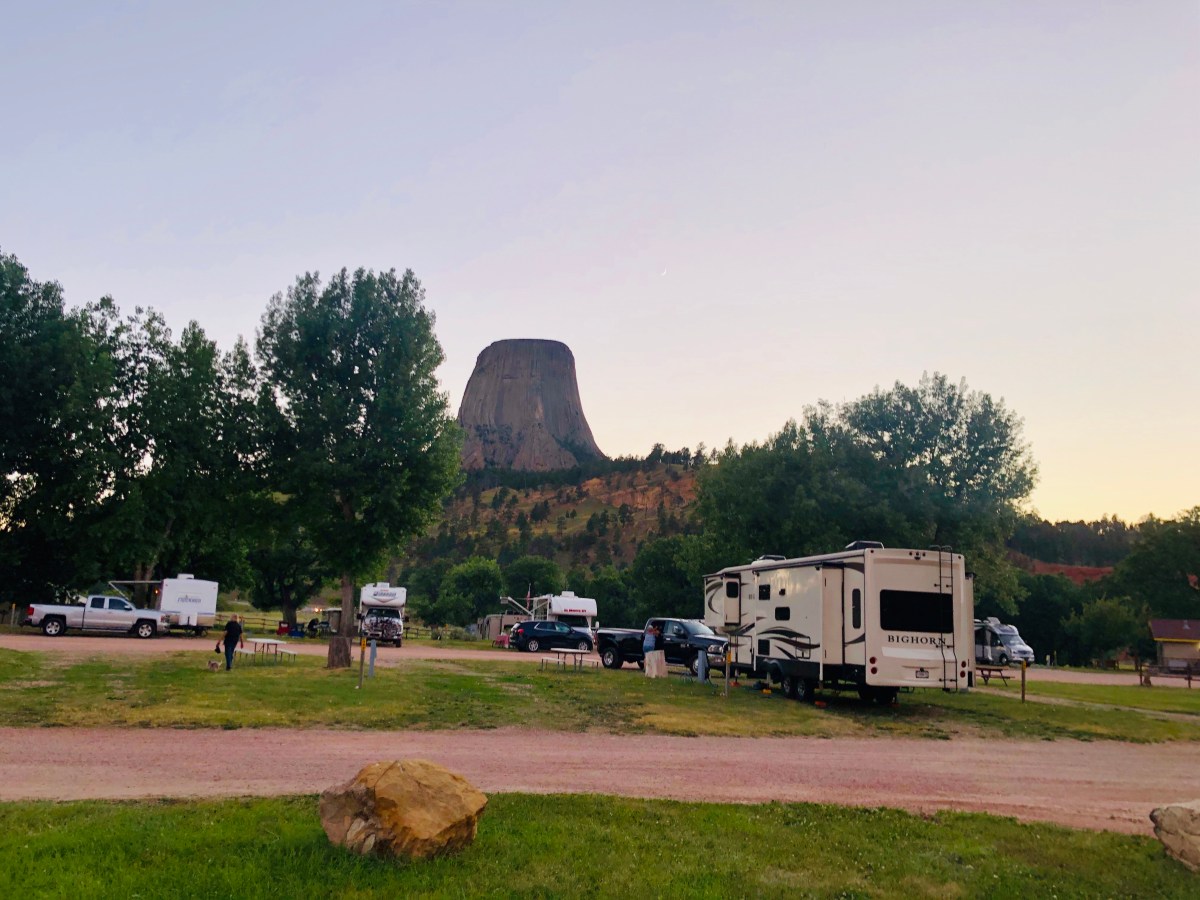
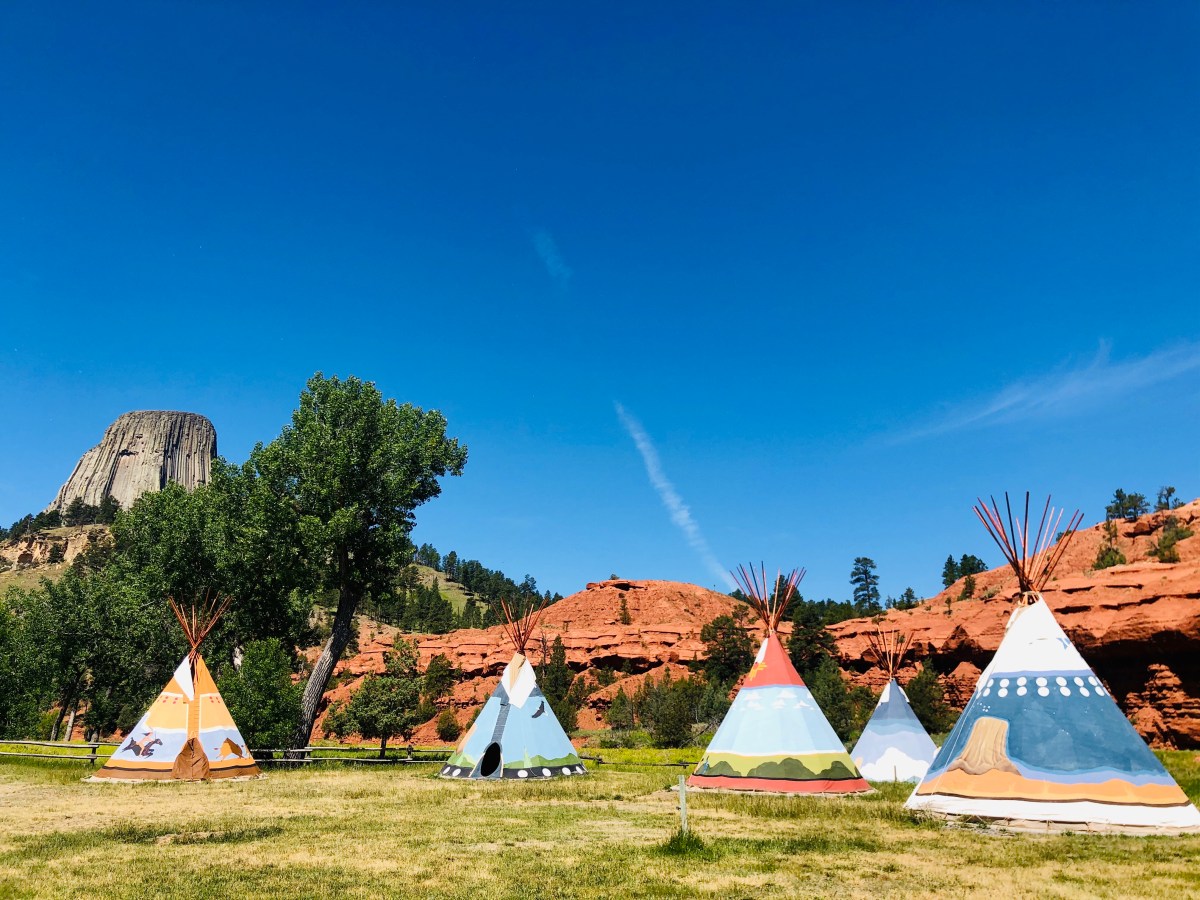
The coolest RV camp we experienced was here. The Devil’s Tower KOA is located right outside of the grounds, and has many sites where you can directly view the tower from your RV/ camper. They also had a nice little teepee village and cute cabins that guests could rent out. There are a couple of gift shops here too that make getting souvenirs convenient. We played badminton (I won), listened to some tunes, ate the amazing steaks Scott made, and played Canasta while we rocked out in our glow necklaces. Fun times.

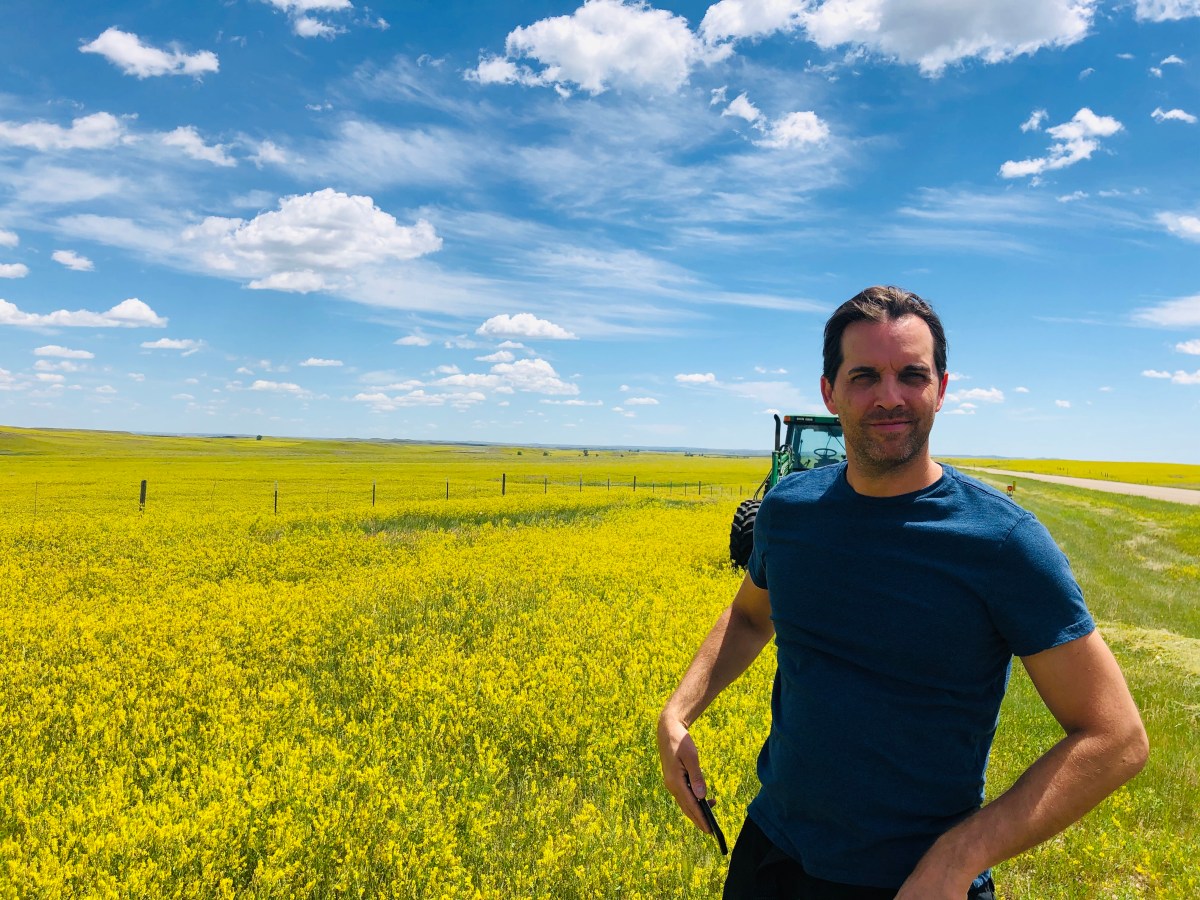
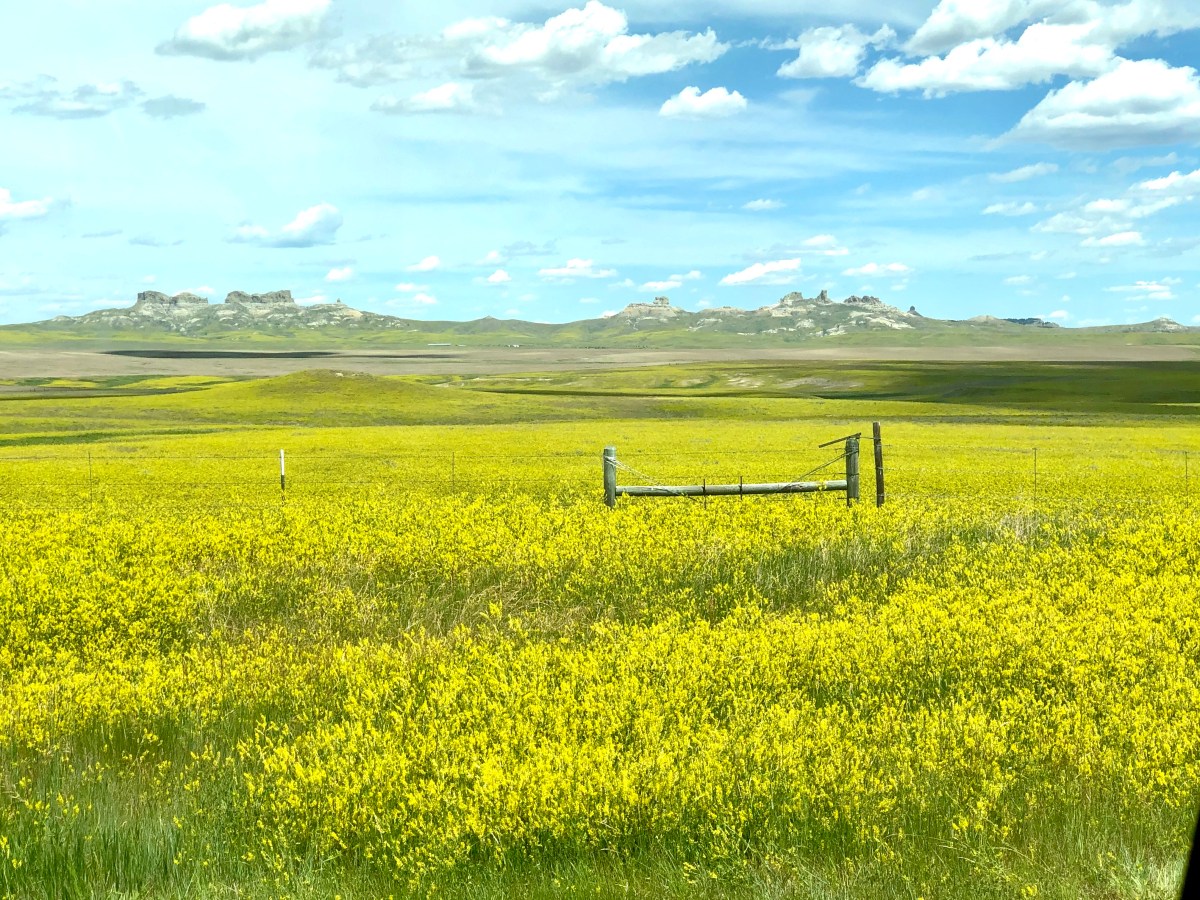
After our overnight stay at the KOA, we made our way upwards through a small but stunning part of Montana. Yellow is my favorite color, so needless to say I really enjoyed this drive.
Teddy Roosevelt National Park
Theodore Roosevelt will be forever remembered for his contribution to conservation. As President, Roosevelt provided federal protection for almost 230 million acres of land. He sat aside 150 national forests, the first 51 federal bird reservations, 5 national parks, and the first 18 national monuments. When he was 24 years old, Teddy visited the North Dakota badlands on a trip to hunt his first buffalo. While there, he sensed a unique time passing away. Land was becoming overgrazed, the wild animals hunted off and he began to fear that a wilderness lifestyle he had grown to prize might vanish. Before he left, he purchased the primary interest in the Chimney Butte Ranch (known locally as the Maltese Cross Ranch). Roosevelt thrived on the vigorous outdoor lifestyle, actively participating in the life of a working cowboy. What became known as the Maltese Cross Cabin was only a temporary home for Roosevelt. He would split his time between Dakota and New York for the next several years. After returning to Dakota in 1884, he established a second ranch he named the Elkhorn. In 1901 Theodore Roosevelt became the 26th President of the United States, and ultimately one of its greatest conservationists. He later said, “I would not have been president had it not been for my experience in North Dakota.”
The land that shaped Teddy Roosevelt and helped secure his love of conservation is now this national park. Teddy Roosevelt National Park covers over 70,000 acres of the North Dakota Badlands, separated into 3 sections: the North Unit, South Unit, and the Elkhorn Ranch Unit. Before you visit, check out a map to see how much these can be spread out (There’s over an hour drive between the North and South Units). Also realize that the North Unit operates in Central Time, where the South Unit and Elkhorn Ranch Unit operate on Mountain Time.
The primary draw to the park is the wildlife. There are a ton of animals that freely roam! We were able to see bison, wild horses, prairie dogs, deer, and unique birds. I’ve never been somewhere that’s so pure. It was nice and refreshing to be amongst nature in such a way.. untouched and unscathed.
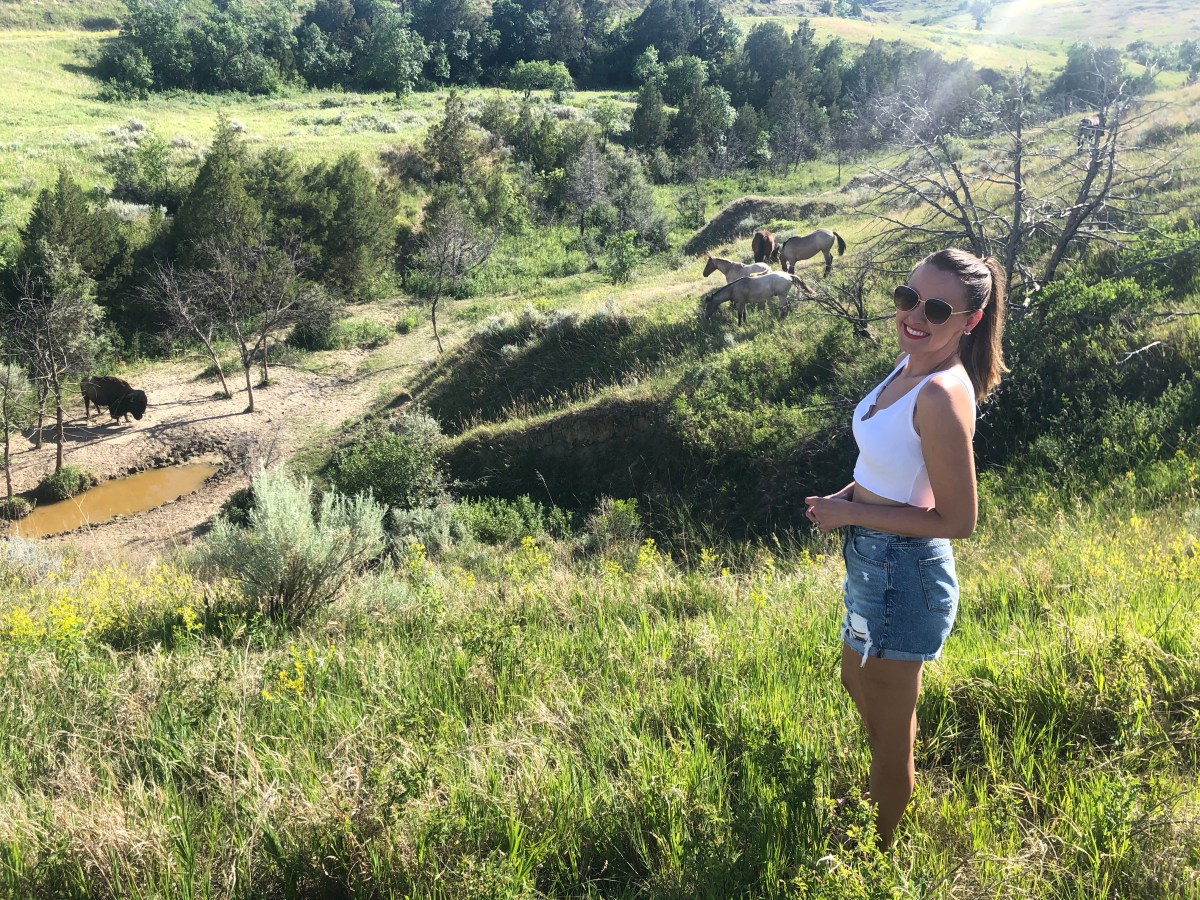

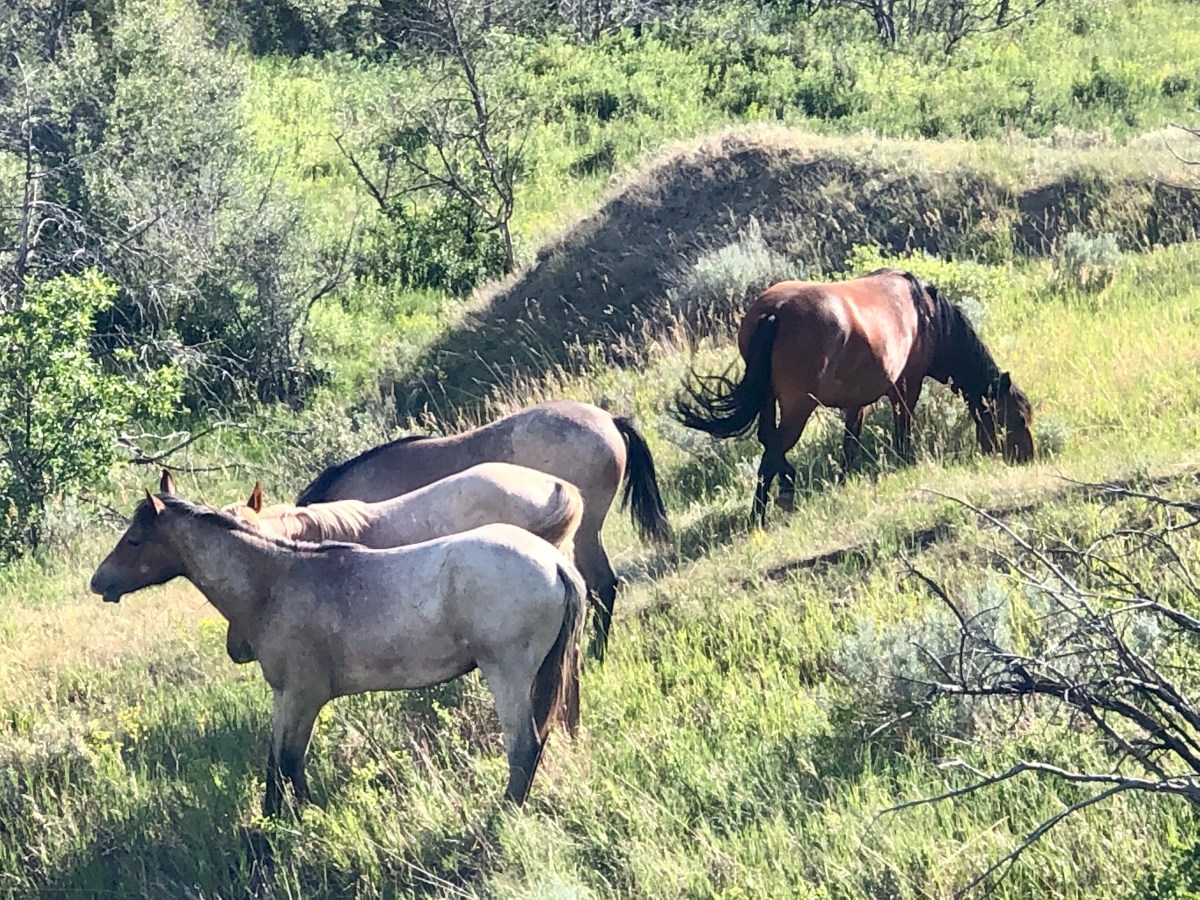

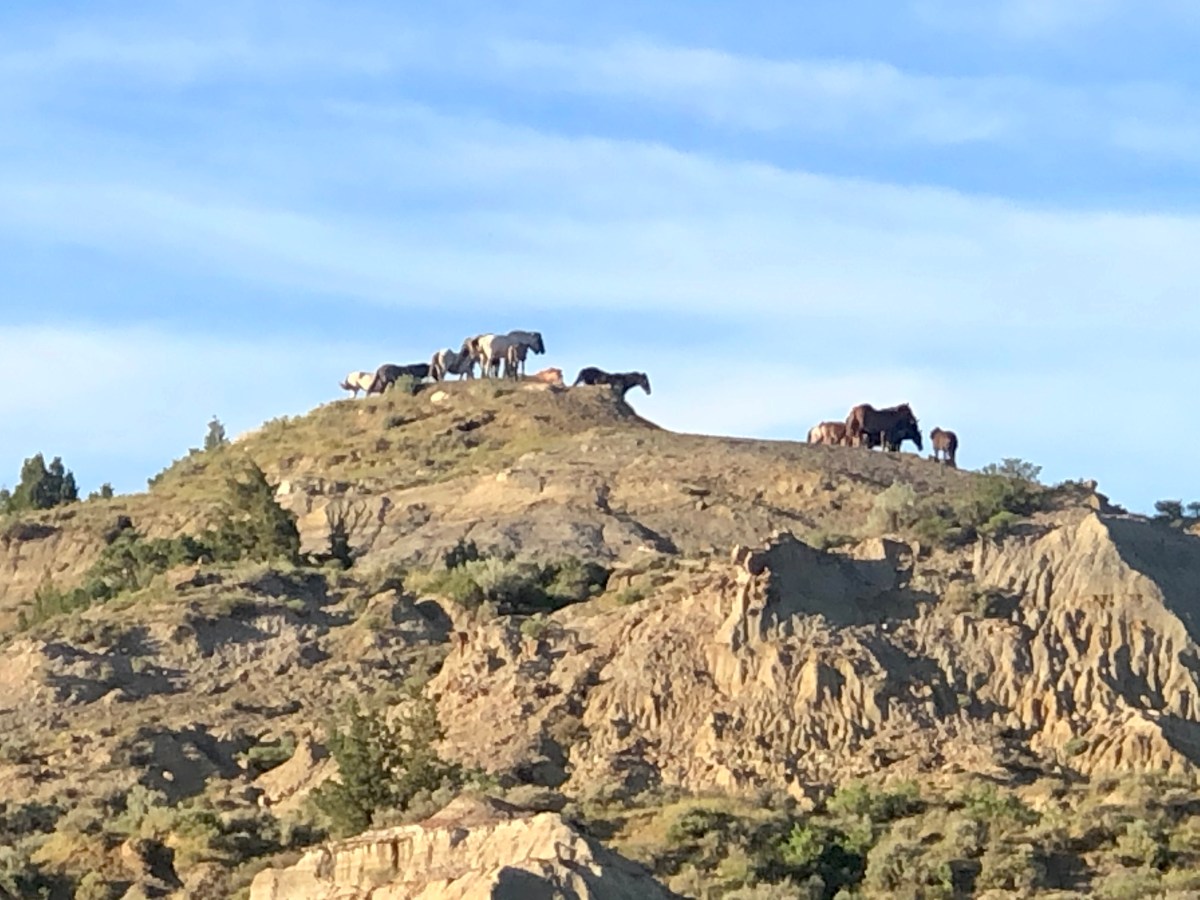
The wildlife makes for a pretty amazing boondocking experience. There are free campgrounds within the park that are serene, but you can also get a free backcountry permit by calling or filling out a form online that asks for your vehicle info, contact info, and planned itinerary. We decided that day to boondock instead of camp, and were unable to reach anyone over the phone, but experienced zero problems. We picked a nice looking place to park inside the park a little before dusk, settled in, and ate dinner with the sunset in the distance, watching the wild horses play with their foals. It was surreal. The next morning, we went on a little venture over the rolling hills of our own, and Scott was able to get relatively close to some of the horses.
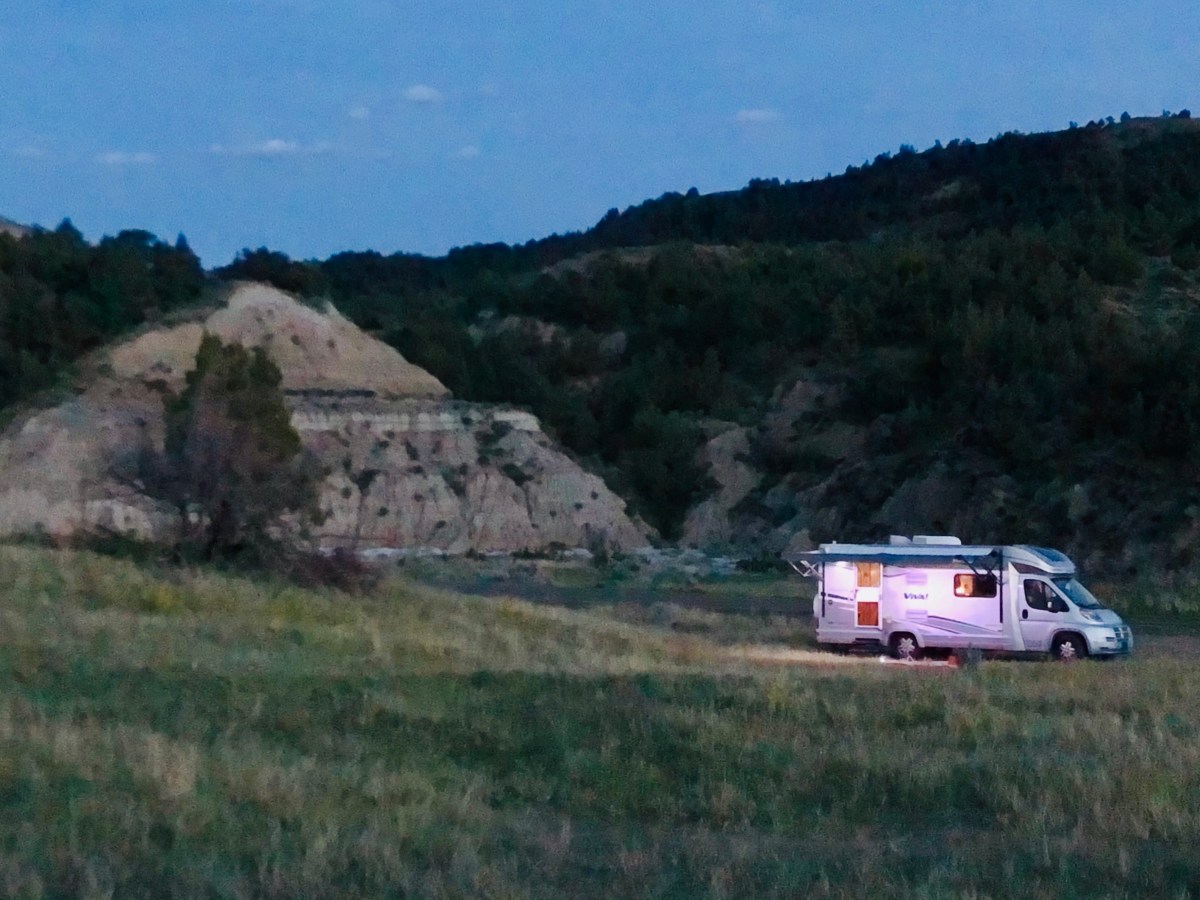
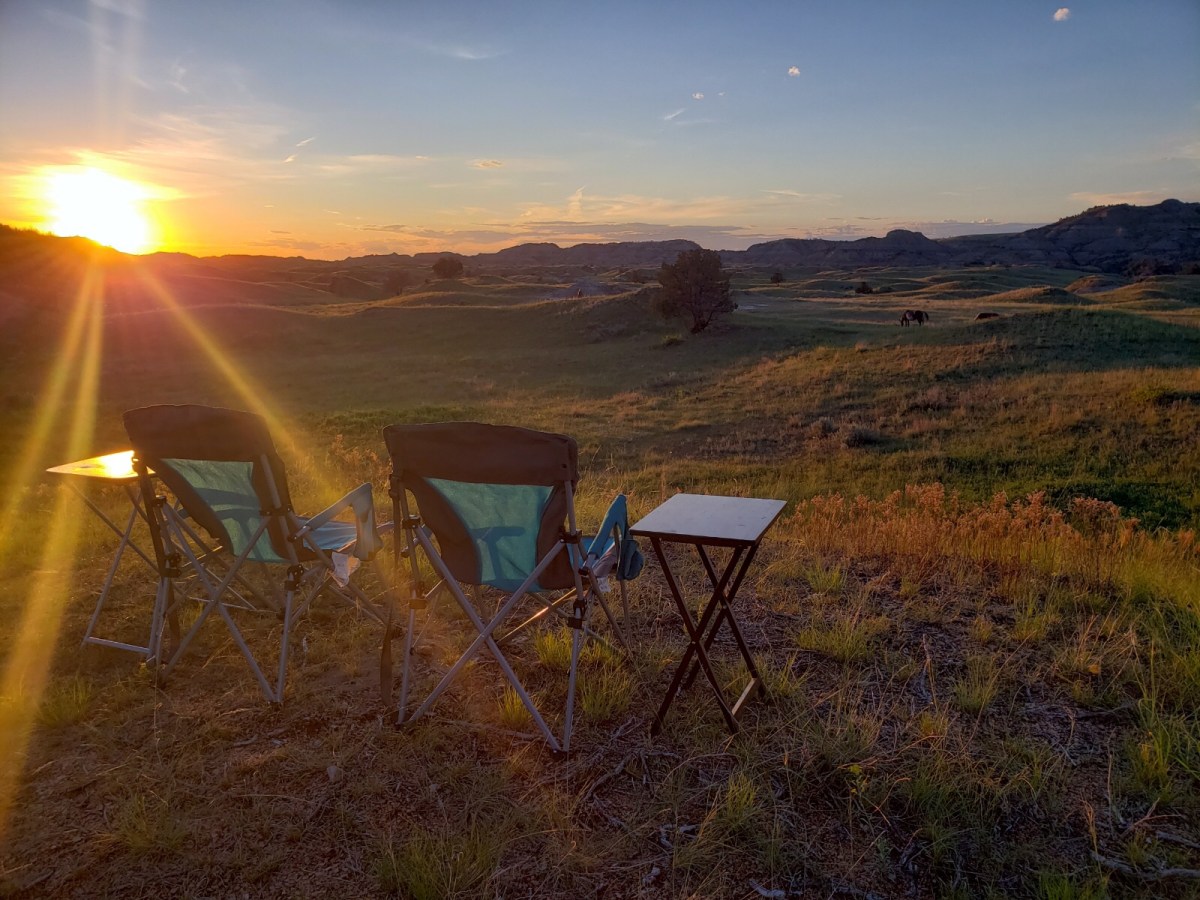
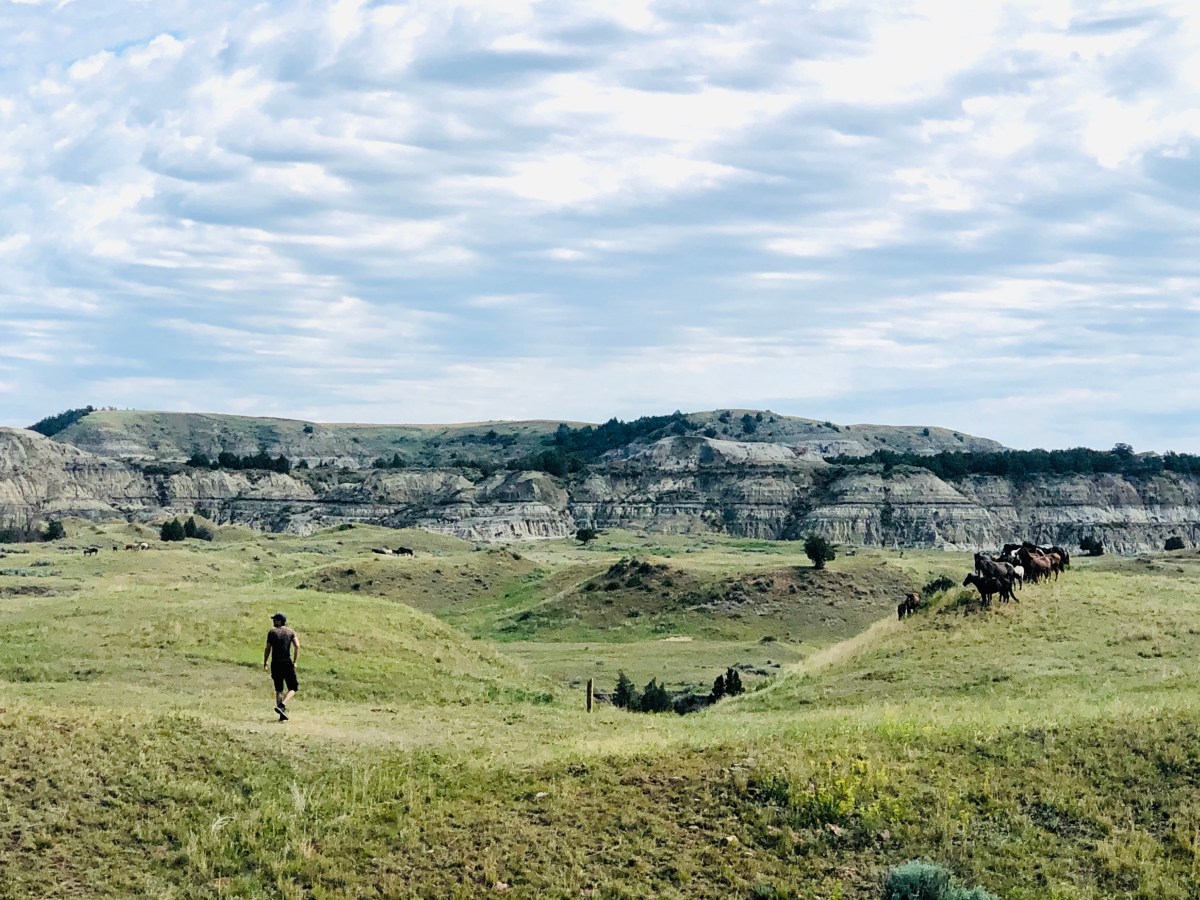
We stayed in the South Unit, due to time. And due to Corona, part of the park was closed. We spent the first day driving the scenic loop. This usually takes around 1.5 hours, but we spent more time viewing the wildlife and taking pictures. The park is easily seen in one day, though our overnight stay provided a perfect break to hike, camp, and explore.
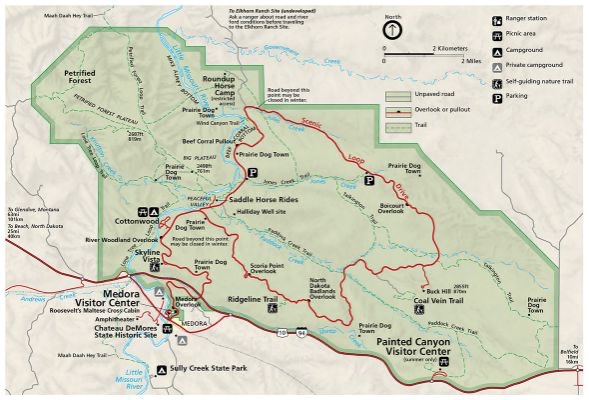
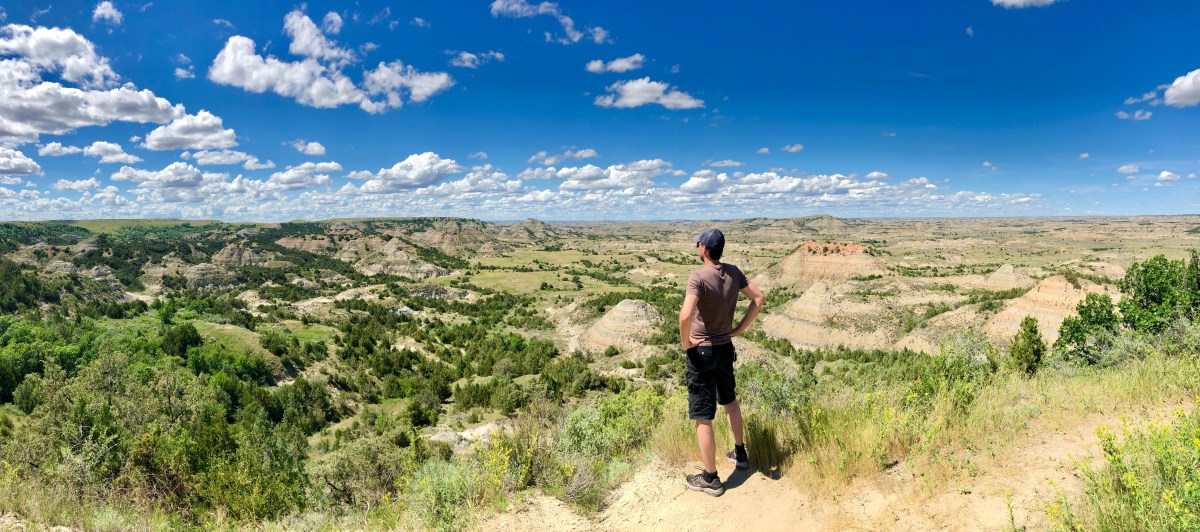
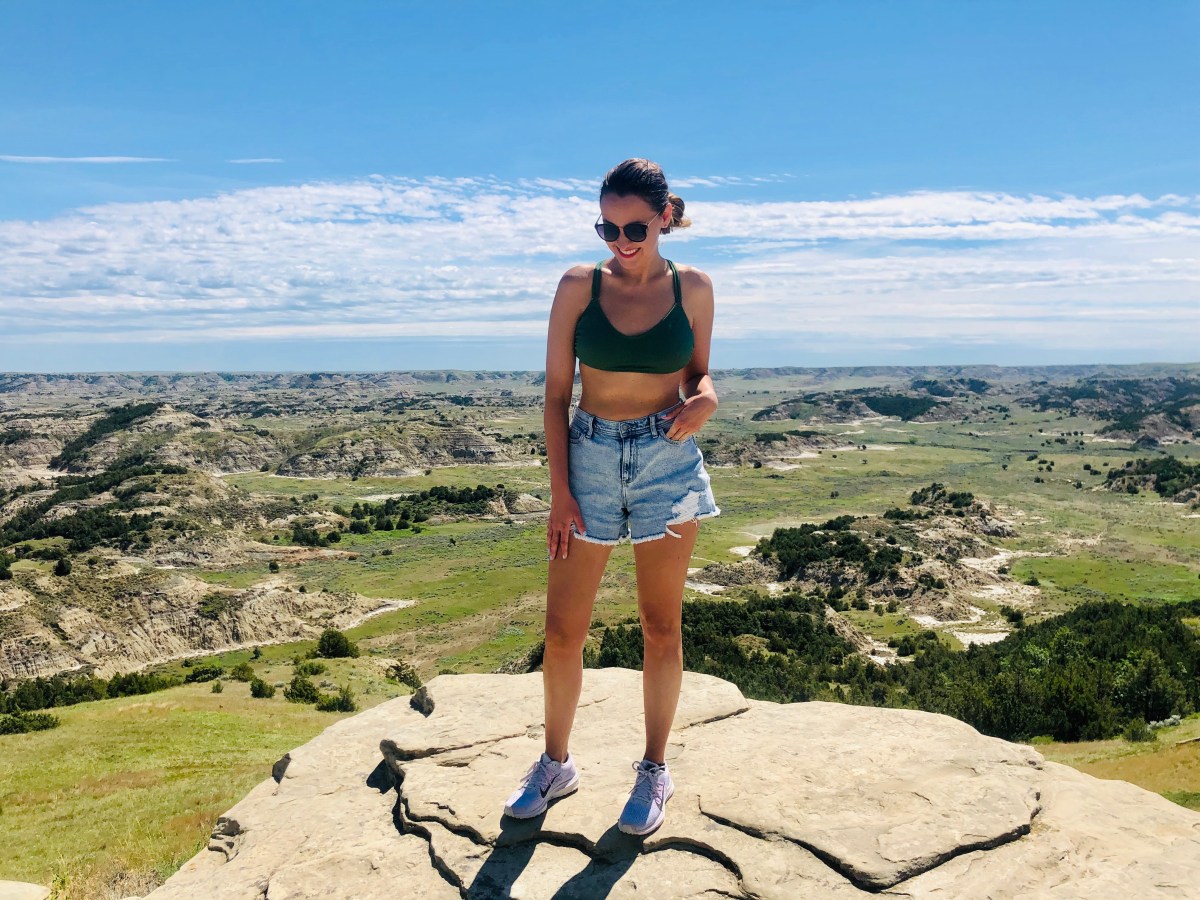

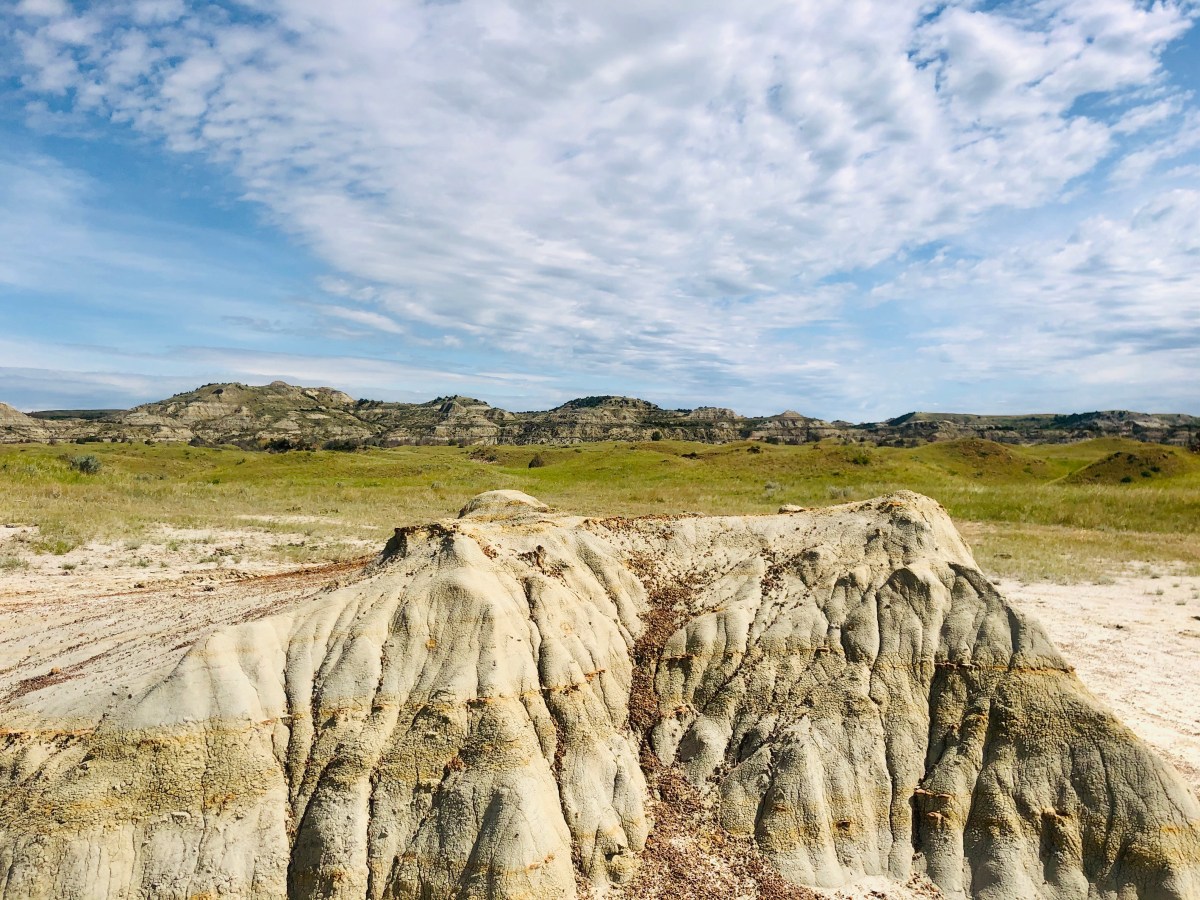
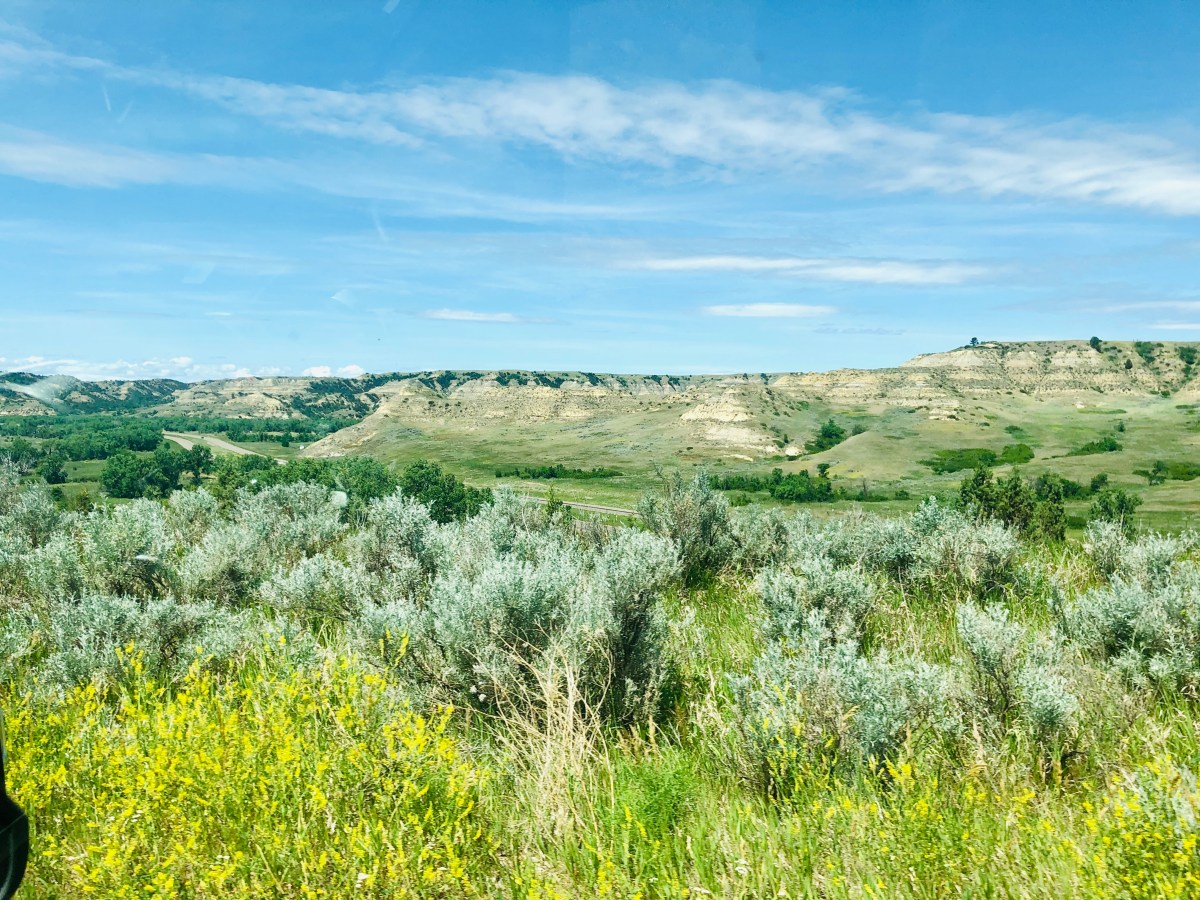
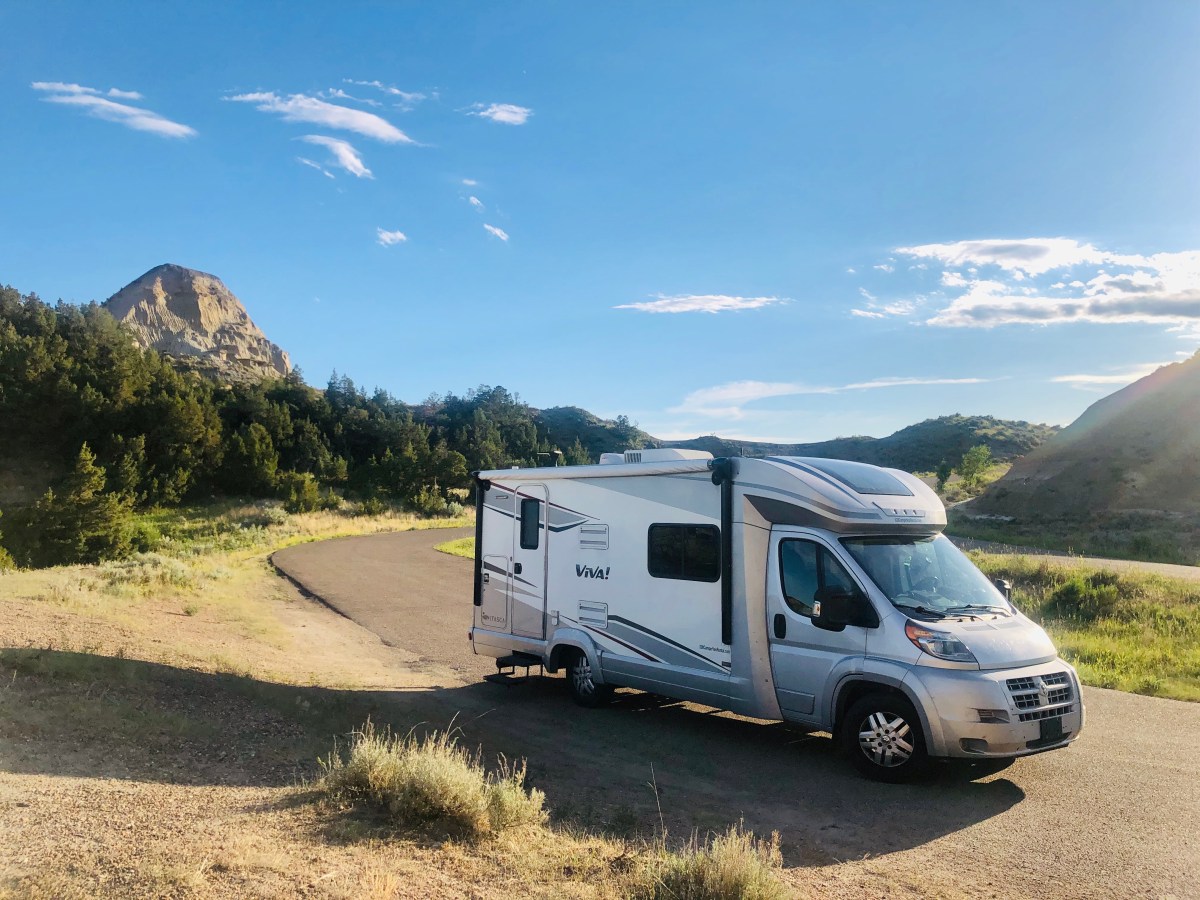
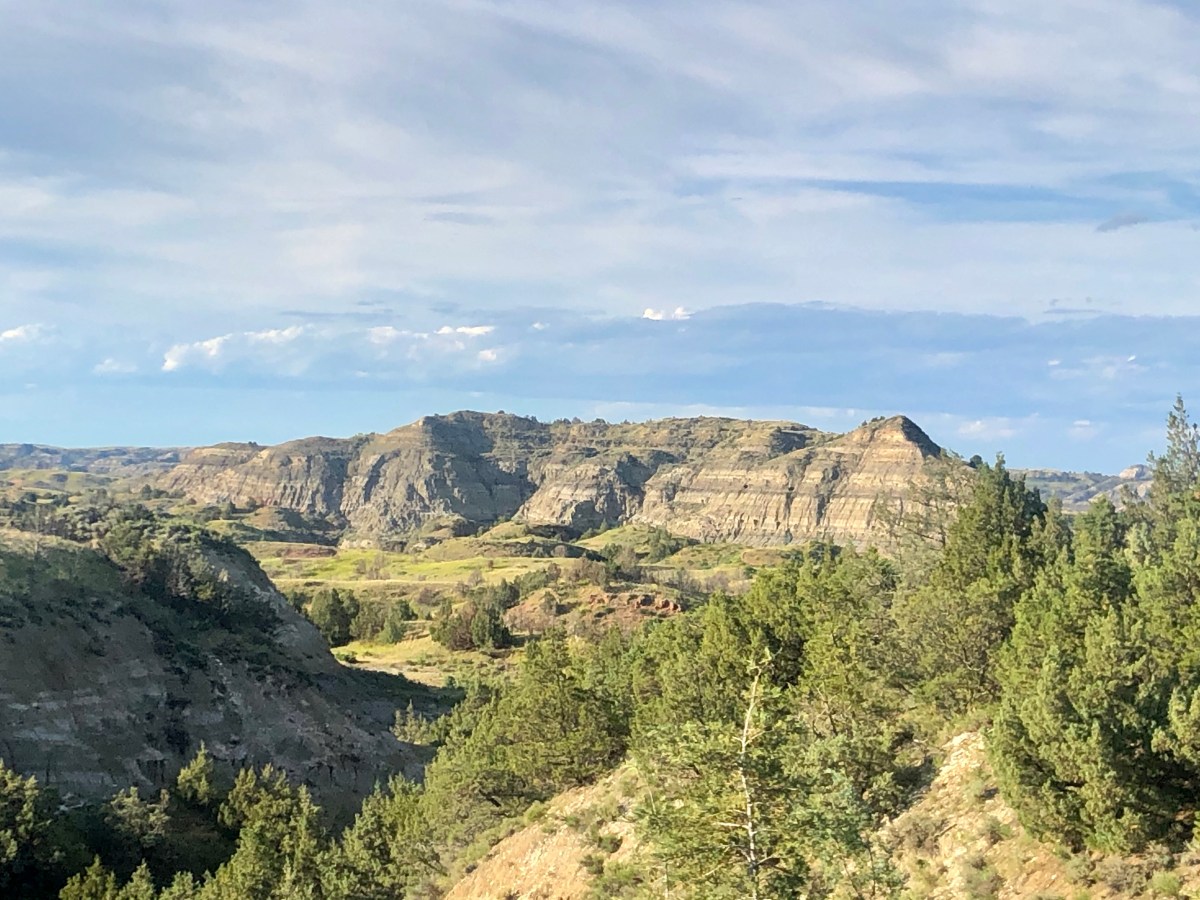
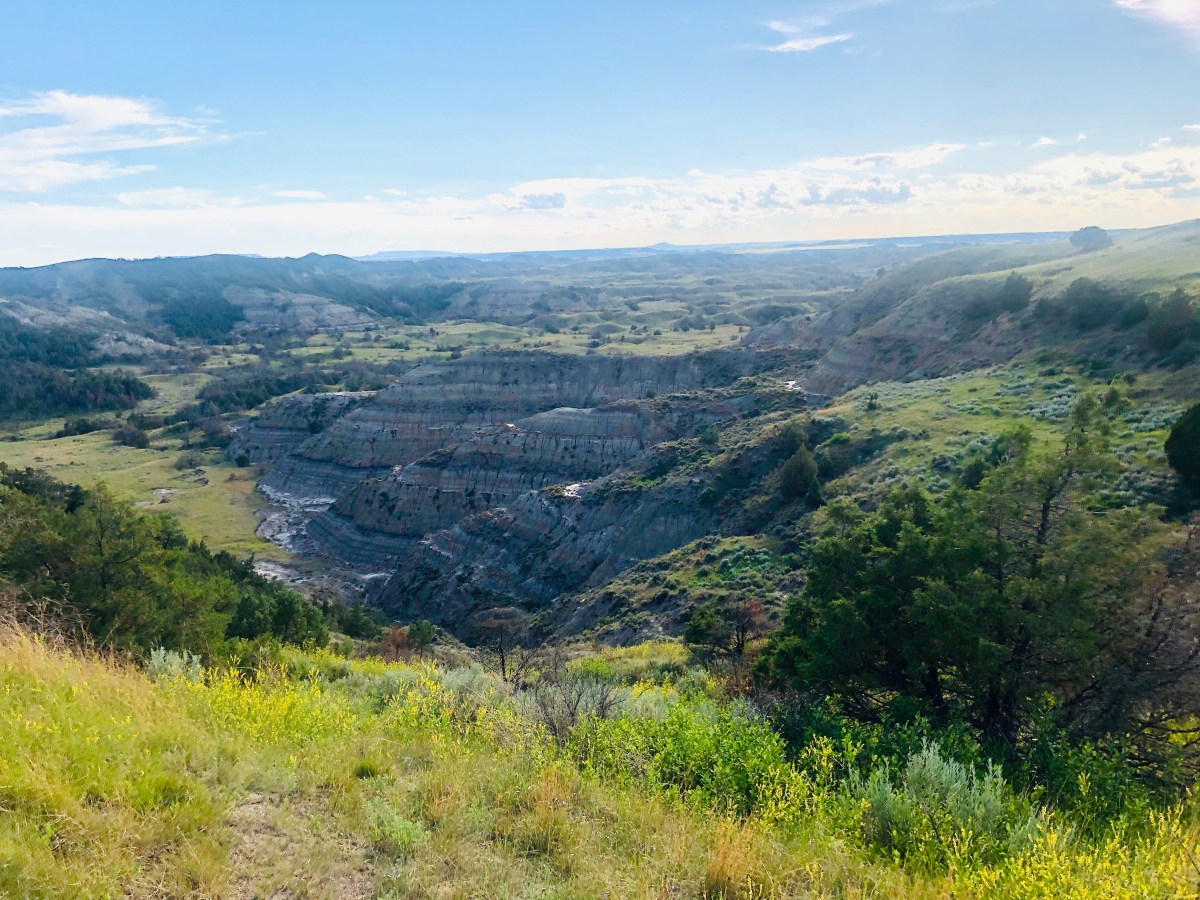
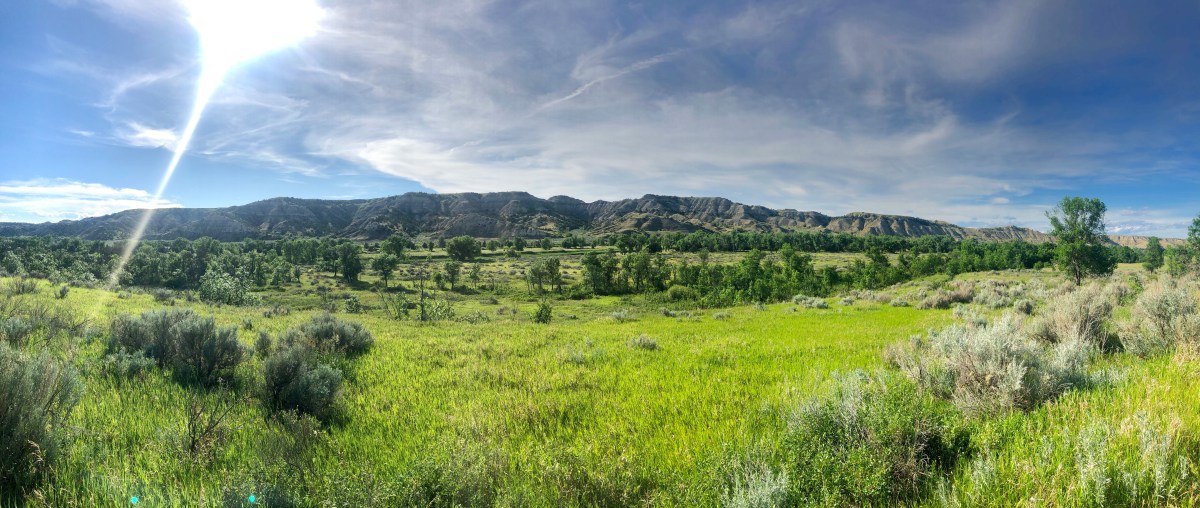
When researching, I made a list of a few of the hikes/ overlooks that were of interest: Painted Canyon Overlook (South Unit, short stop with incredible views, located outside of the Park technically), Wind Canyon Trail (South Unit, 0.4 miles, easy, 20 minutes, walk alongside a wind-sculpted canyon as you climb to the best views of the Little Missouri River), Boicourt Overlook Trail (South Unit, 0.2 miles, 15 minutes, easy, most beautiful view!, see Badlands stretch for miles here, and feel like you’re on top of the world, a little high up but worth it), and Buck Hill (South Unit, 0.2 miles, 15 minutes, somewhat steep climb up steps to the highest accessible point in the park.. we could see where we camped from here and it looked like a little dot in the distance!). We didn’t make it to Wind Canyon, but the others were great. If going to the South Unit, I would not miss Boicourt or Buck Hill. Make them must-sees on your list! You can also see the Maltese Cabin in the South Unit if you’re interested.

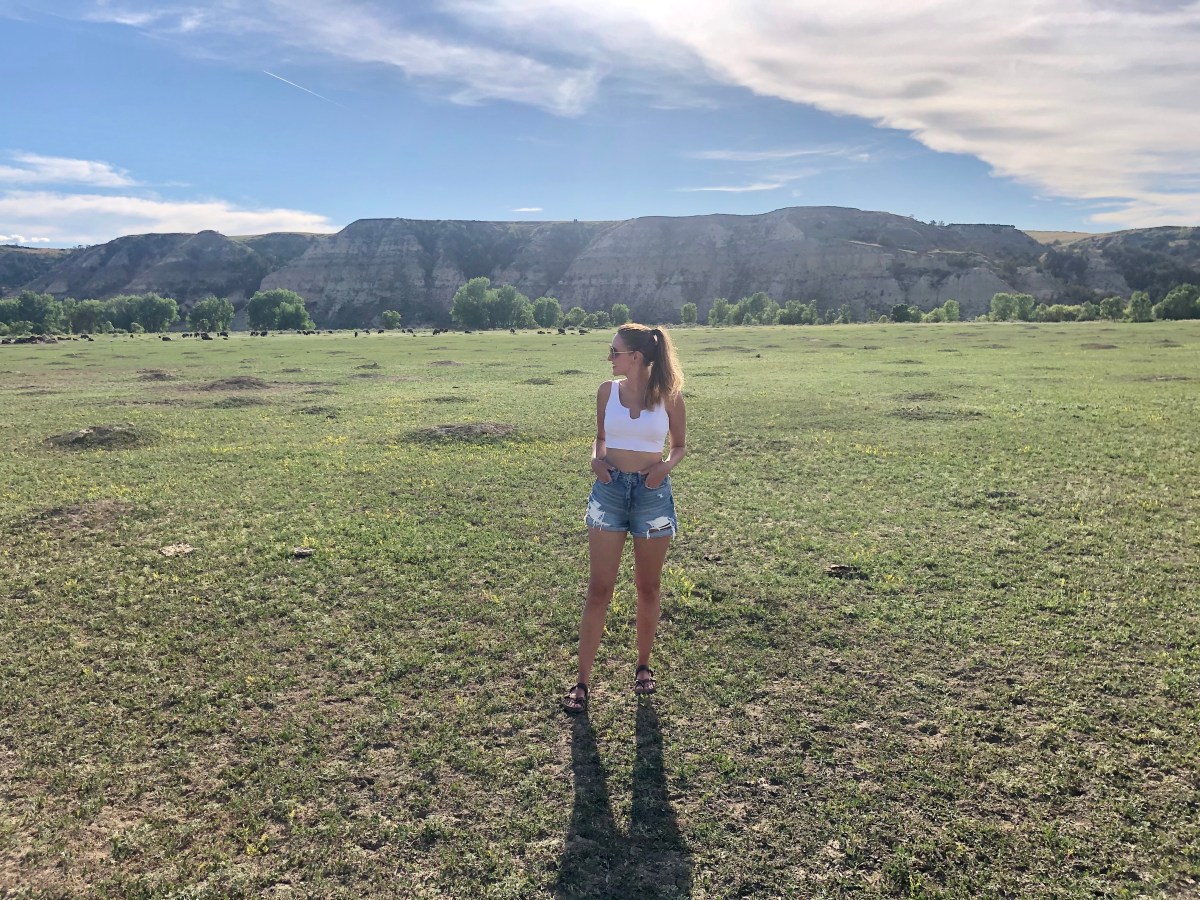
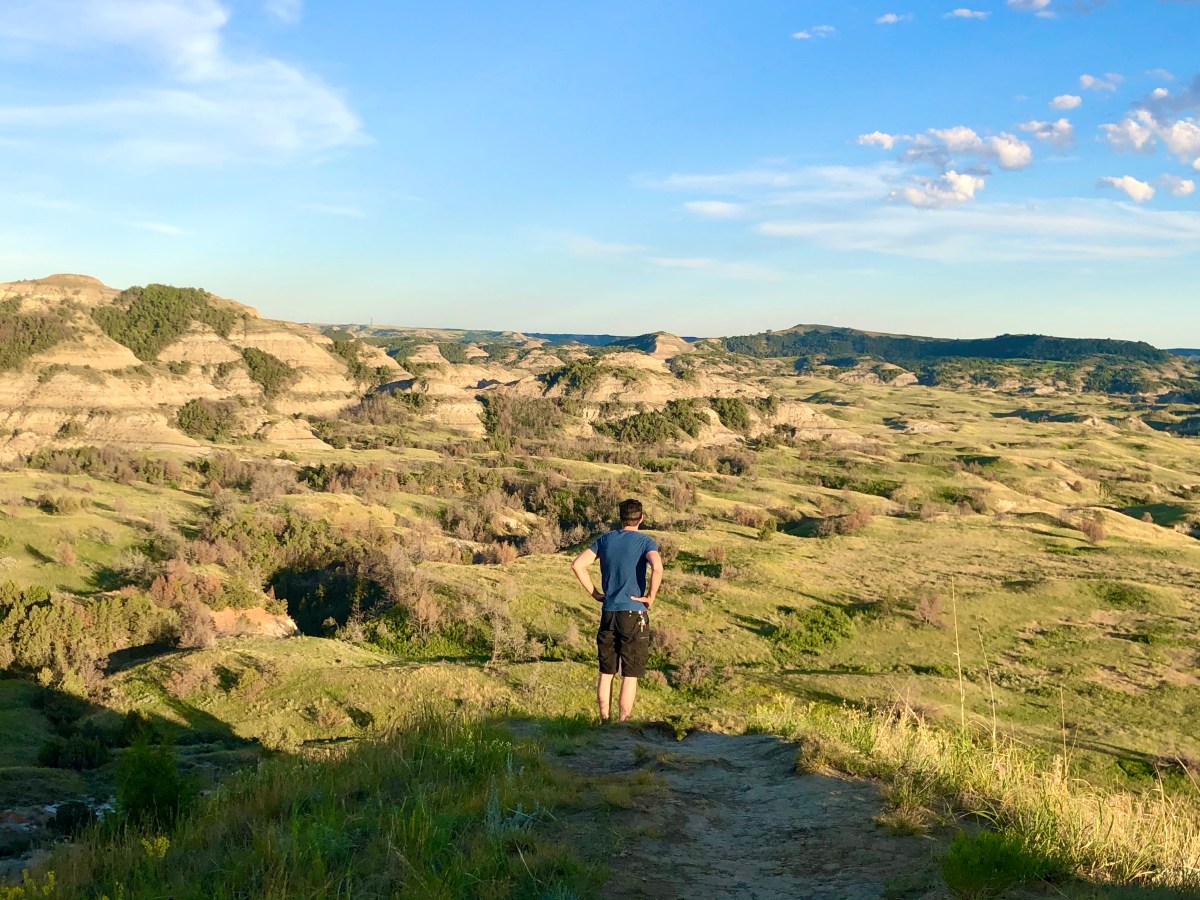
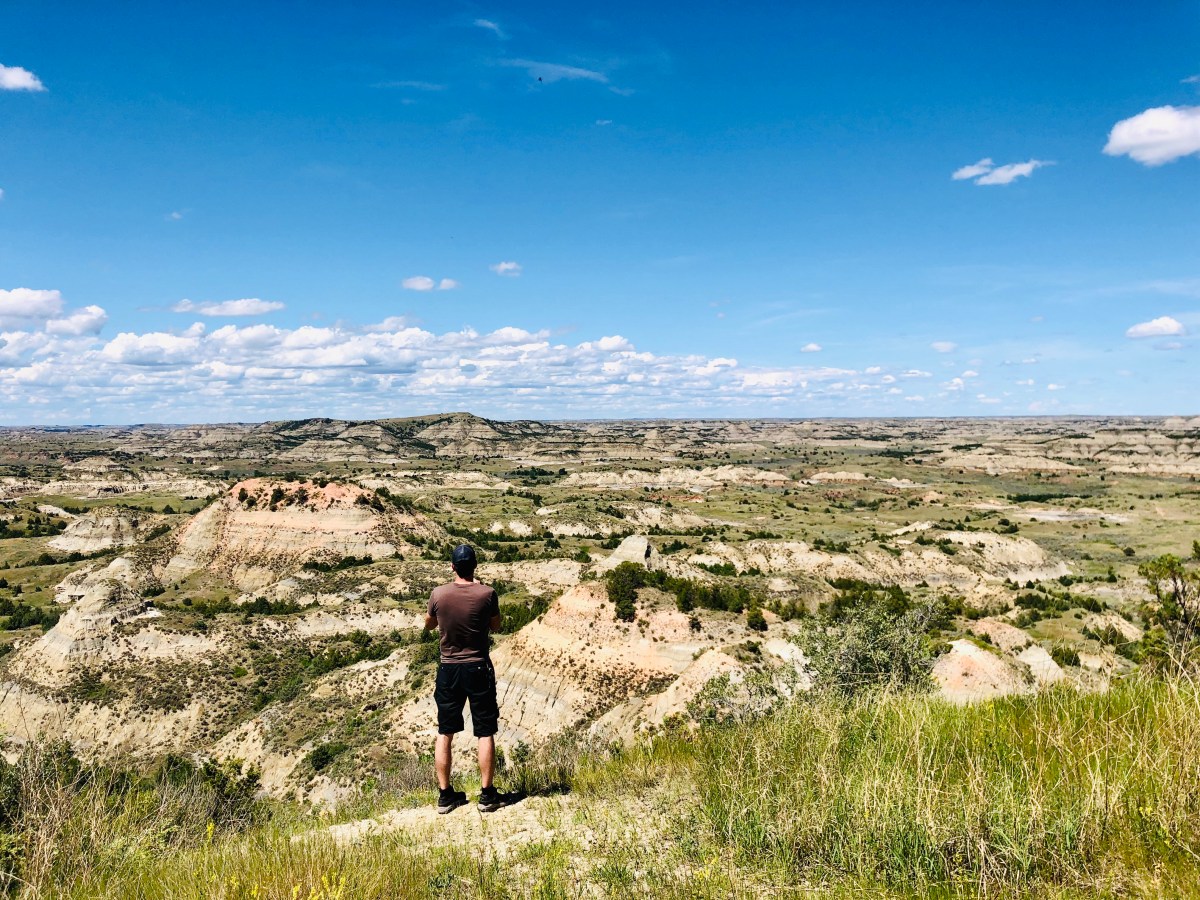
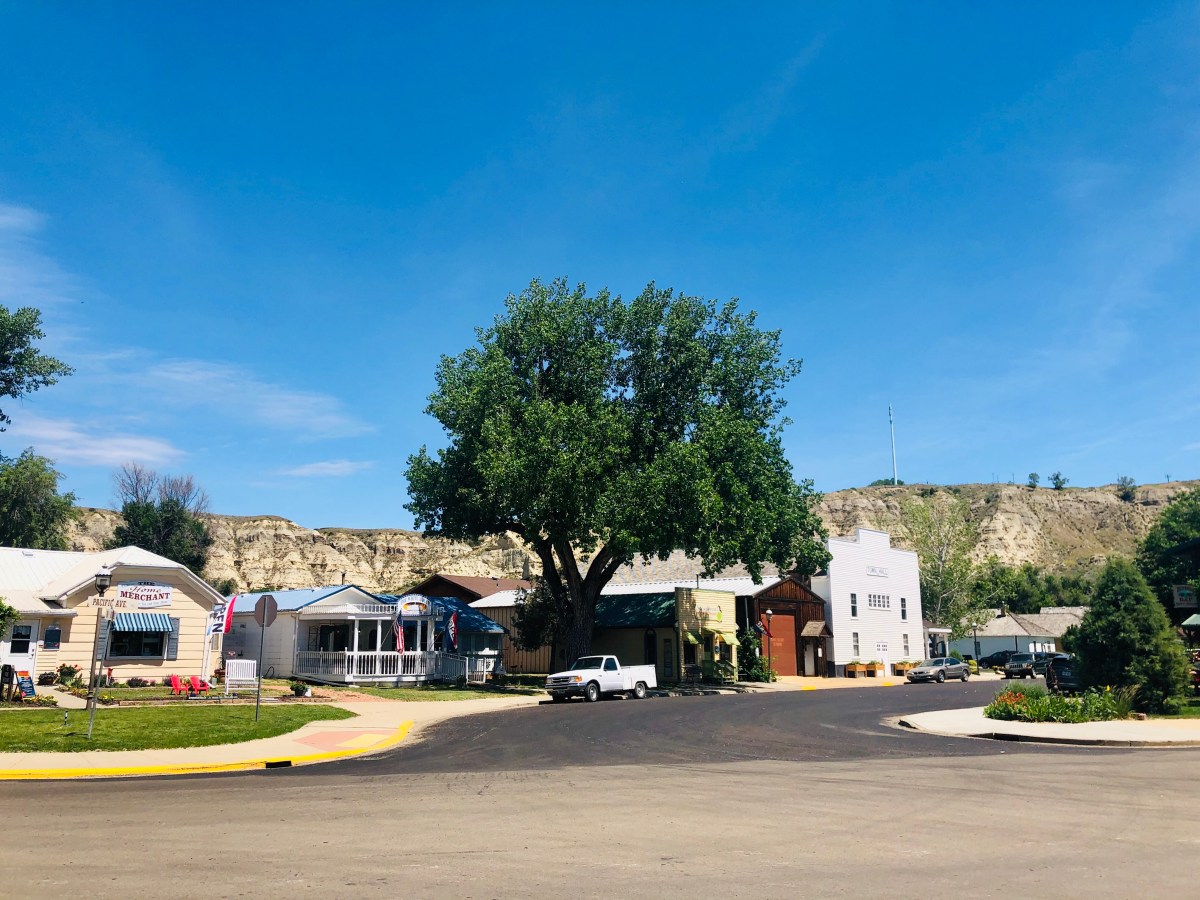
The South Unit’s entrance is located in Medora. When not in the time of Corona, it provides a touristy western experience, with wooden planked sidewalks, old fashioned ice cream parlors, and buggy rides. We walked around here a little bit, and found it was one of the cutest little towns we stopped in.
To Sum It Up
WHAT. AN. ADVENTURE.
I loved this trip so much, for a few reasons:
1.) It was my first big trip with the man I love. Let me tell you, if you’re wondering what a relationship will be like with someone, take an RV trip! Spending 10 days straight with someone without any other distractions really tells you if you could make it with them in the real world. There were plenty of issues that arose (getting the RvVstuck in two fields, running out of gas on a long stretch of highway in Iowa, figuring out boondocking locations, etc.) that tested our relationship, and I’m happy we passed them all together. This made me realize even more that Scott is a true partner in every sense, that we have each other’s backs, and have the patience and maturity to handle any issue that may arise. Plus, we have MAD FUN with each other. I truly enjoy spending time with him, and am glad I have a new, super cute adventure buddy! He has caught the adventure bug, and is already planning our next trip (can’t wait). Although I don’t mind traveling alone, life is so much sweeter with someone beside you who matches your excitement.
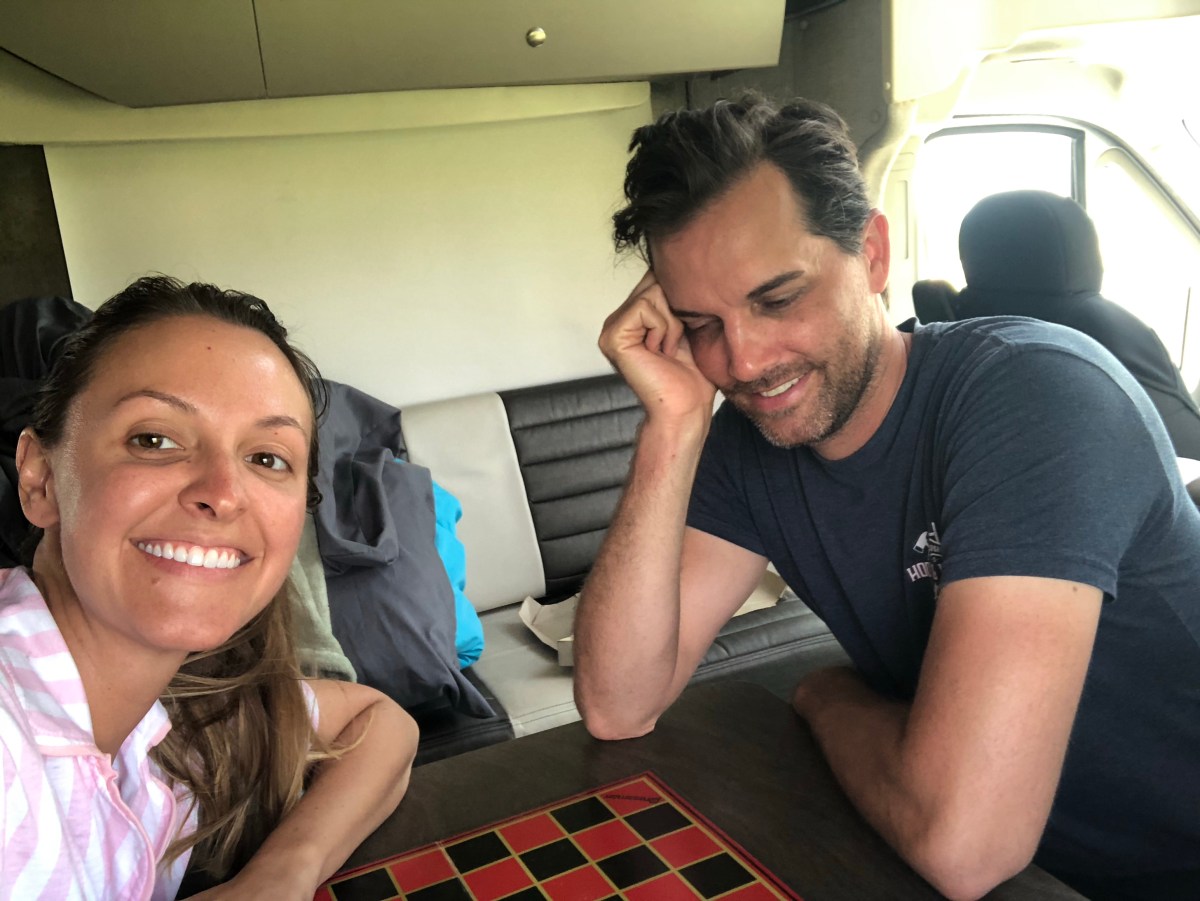
Playing checkers as we waited for gas on the side of the road in Iowa.
2.) It was challenging. I like learning. Every day we learned something new.. about the RV, about the places we were visiting, about each other, about ourselves.. I love that it challenged me to get out of my normal vacation routine, and opened up my eyes to a different kind of travel completely. RV’ing is fun!
3.) It took away normal distractions. Being out in nature away from television, people bickering on Facebook, the constant reporting of the Corona numbers.. It was needed. Great refresher and reminder that life is good.
4.) It was beautiful. Dang. Who would’ve guessed South Dakota would be so breathtaking? I’d never given it a thought, and I love that this vacation allowed me to see more of God’s creation.
During the time we are living in, I could not suggest an RV trip more. It was absolutely perfect.

 bedtravels